How Much Water Should a Puppy Drink?
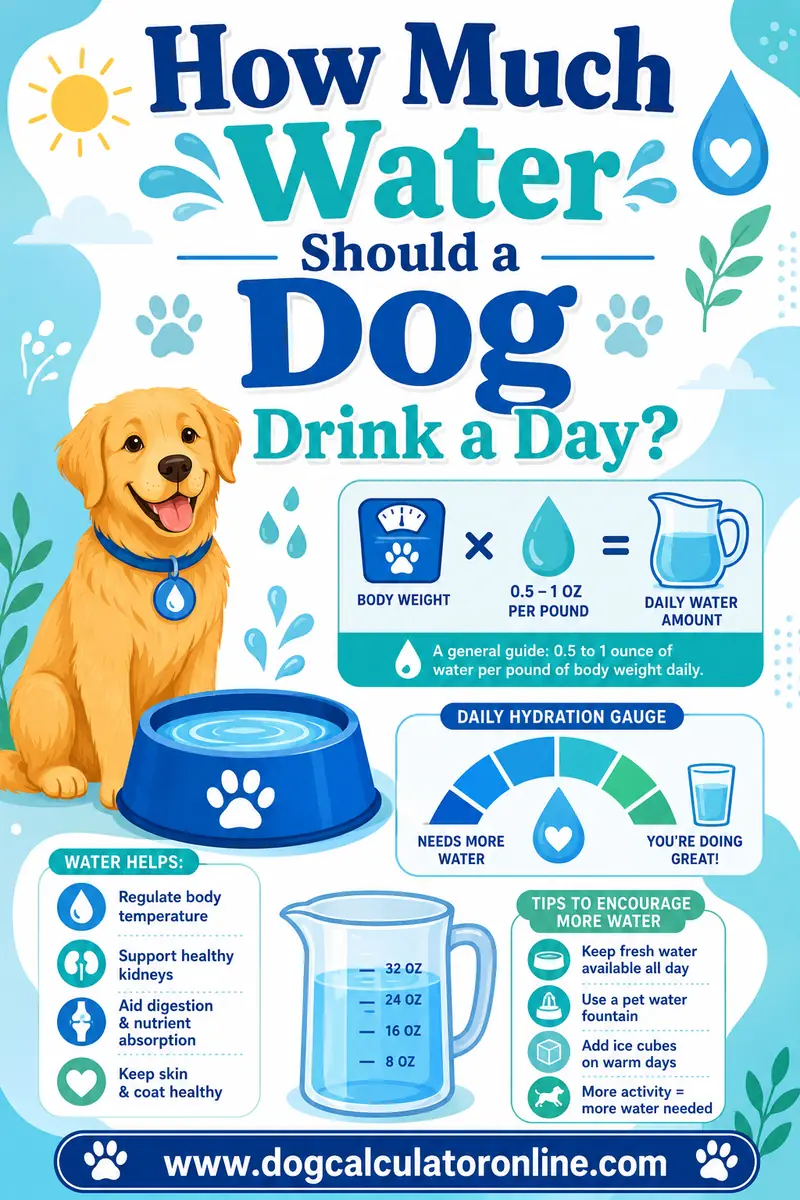
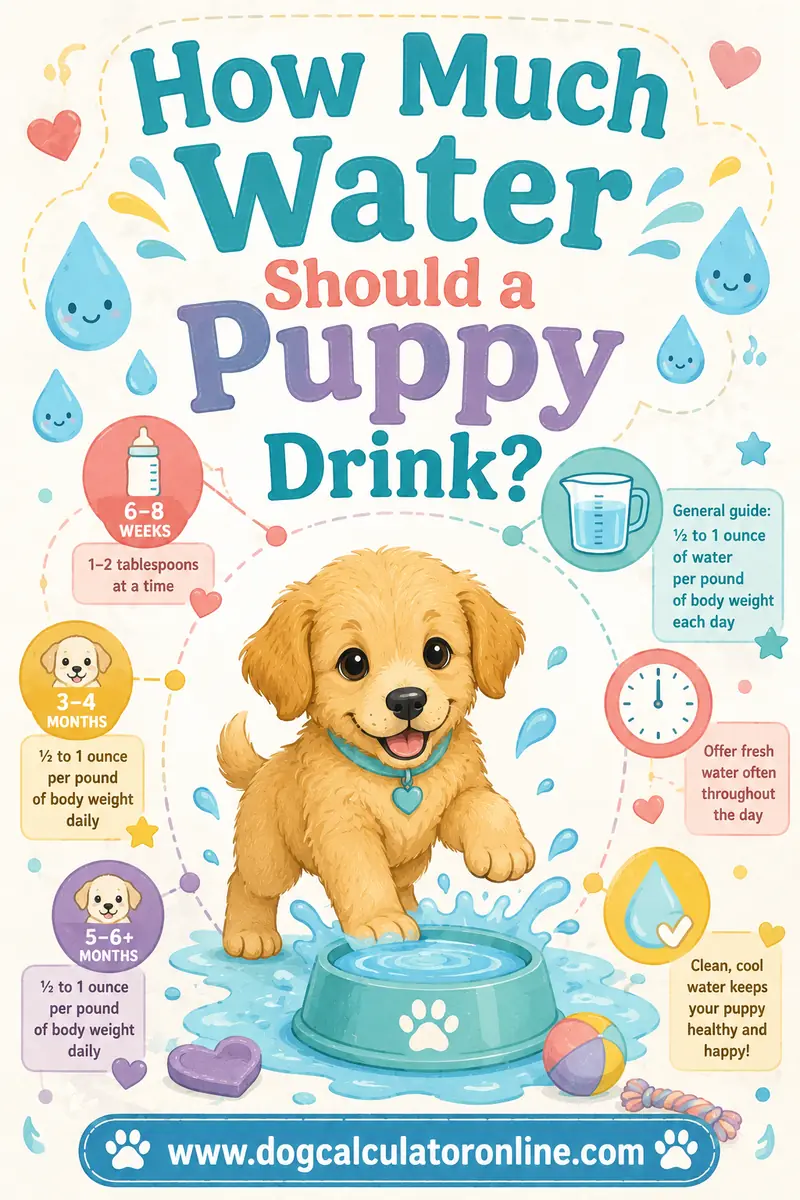
A young puppy that's newly weaned needs roughly a half cup of water every two hours during the day, and an older, growing puppy typically drinks about half an ounce to one ounce of water per pound of body weight per day — so a 10-lb puppy lands somewhere around 5–10 ounces daily, often more in warm weather or after play. Puppies drink more per pound than adult dogs because small, fast-growing bodies burn through water quickly, and they dehydrate faster than adults when something goes wrong.
Water and food needs scale together, and both track body weight. The free dog food calculator handles the food half of the equation in seconds; this guide covers the water half — how much is normal by age and weight, what changes the number, how to spot dehydration early, and the drinking patterns that deserve a vet call.
💧 Puppy water check
Tap your puppy’s weight for a typical daily water range:
Tap a weight above for an estimate. Age, weather, and diet shift the number.
Puppy Water Needs by Age
A puppy's relationship with water changes fast in the first few months, so age matters as much as weight:
- Birth to about 4 weeks: puppies get essentially all their fluid from their mother's milk. They don't need a water bowl yet, and most won't use one.
- 3 to 4 weeks (weaning begins): as solid food is introduced, puppies start lapping water. Shallow dishes work best — deep bowls are a face-plant hazard for wobbly pups.
- 4 to 8 weeks: water becomes a real part of the diet. The common guideline is about a half cup of water every two hours for pups this age, offered in small, frequent servings rather than free access to a giant bowl.
- 8 weeks and up: once a puppy is fully weaned and home with you, the working rule shifts to half an ounce to one ounce per pound of body weight per day, with fresh water available through the day.
Those numbers are guidelines, not quotas. A healthy puppy self-regulates surprisingly well when clean water is available — the numbers exist so you can recognize when your puppy leaves the normal range in either direction.
Puppy Water Chart by Weight
Here's the half-ounce-to-one-ounce rule laid out for growing puppies past the eight-week mark:
| Puppy's weight | Daily water (low end) | Daily water (high end) | In cups |
|---|---|---|---|
| 3 lb | ~1.5 oz | ~3 oz | up to ~⅓ cup |
| 5 lb | ~2.5 oz | ~5 oz | up to ~⅔ cup |
| 10 lb | ~5 oz | ~10 oz | up to ~1¼ cups |
| 20 lb | ~10 oz | ~20 oz | up to ~2½ cups |
| 30 lb | ~15 oz | ~30 oz | up to ~3¾ cups |
| 40 lb | ~20 oz | ~40 oz | up to ~5 cups |
| 60 lb | ~30 oz | ~60 oz | up to ~7½ cups |
Two notes on reading this chart. First, a puppy's weight changes weekly, so re-check the row your pup is in every couple of weeks — a Labrador puppy can move through three rows in two months. Second, hot days, zoomies, and dry kibble all push intake toward (or past) the high end, and that's normal. What matters is a sustained change from your puppy's usual pattern.
What Changes How Much a Puppy Drinks
Before you worry that the bowl is emptying too fast or too slowly, run through the honest explanations:
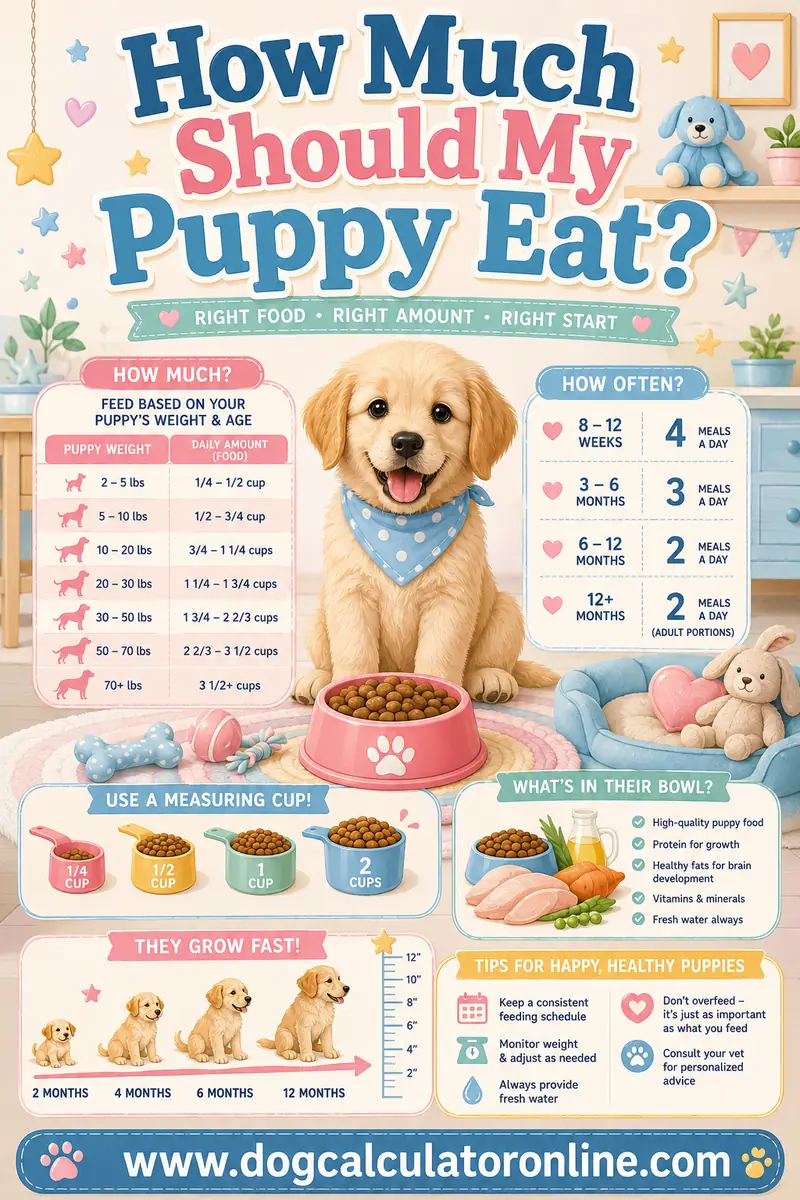
- Diet moisture. Dry kibble is roughly 10% water; canned food is roughly 75%. A puppy eating wet food gets a big share of its daily fluid at mealtimes and may visibly drink much less. A kibble-fed pup drinks noticeably more. Both are normal. (Sorting out the food side? See how much your puppy should eat.)
- Weather. Panting is how dogs cool off, and panting spends water. Summer intake that's well above winter intake is expected.
- Activity. A hard play session or a long sniffy walk raises water needs the same way exercise does for you. Offer water after play, and bring it along on warm-weather outings.
- Growth spurts. Puppies grow in bursts, and appetite and thirst often climb together during a spurt.
- Teething. Some teething puppies drink more (cool water feels good on sore gums); others get picky for a few days. Brief shifts around 3–6 months are common.
Dehydration in Puppies: Why the Stakes Are Higher
Adult dogs can coast through a low-water day. Puppies can't — small bodies have less fluid reserve, and vomiting or diarrhea can pull a young puppy into dehydration within hours rather than days. That's why puppy dehydration gets its own section.
The classic at-home checks:
- Gum check: a hydrated puppy's gums are wet and slick. Tacky, sticky, or dry gums are a warning sign.
- Skin tent: gently lift the loose skin between the shoulder blades and release it. It should snap back almost instantly. Skin that returns slowly suggests dehydration.
- Energy and eyes: a dehydrated puppy is often lethargic, and in more serious cases the eyes can look sunken.
When to call the vet the same day: a puppy who refuses water, can't keep water down, has vomiting or diarrhea alongside any dehydration sign, or is listless and uninterested in play. Don't wait overnight with a young puppy — dehydration compounds fast at this age, and your vet would much rather see a puppy early. This is genuinely a "call now, not tomorrow" situation.
Can a Puppy Drink Too Much?
Yes, in two different senses.
The behavioral version is common and mostly harmless: some puppies treat the water bowl as a toy, tanking up and then splashing. Bowl-diving usually fades with age. If your puppy gulps enormous amounts and then vomits water, offer smaller amounts more often instead of one big bowl.
The medical version is rarer but matters: drinking that's persistently far above the chart's range — especially paired with a puppy who urinates constantly, has accidents right after emptying the bowl, or seems unable to be satisfied — can be an early sign of a medical issue. Puppies can have congenital kidney problems and other conditions where excessive thirst is the first visible clue. Measure the actual intake for a day or two (fill the bowl with a known amount, subtract what's left), and bring the numbers to your vet. Never restrict water to "fix" heavy drinking — diagnose first, with your vet's help.
Water and House-Training: What's Fair to the Puppy
House-training and water access have an awkward relationship: what goes in must come out, usually 10–30 minutes later in a young pup. Here's the balance most trainers and vets land on:
- Daytime water stays available. Restricting daytime water to reduce accidents is unfair to the puppy and risks dehydration. Manage the schedule instead: water, then a potty trip shortly after.
- Lifting the bowl 1–2 hours before bed is acceptable during early house-training — as long as the puppy has had normal access all day and isn't hot or unwell.
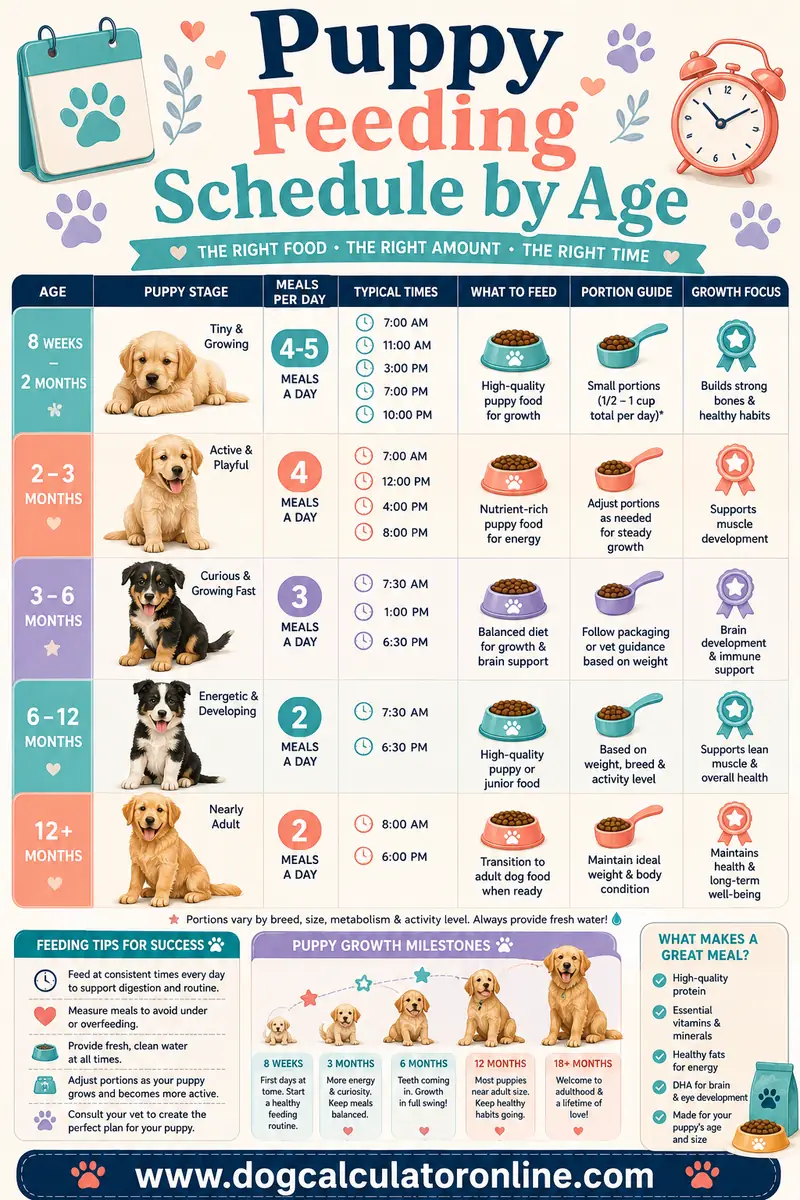
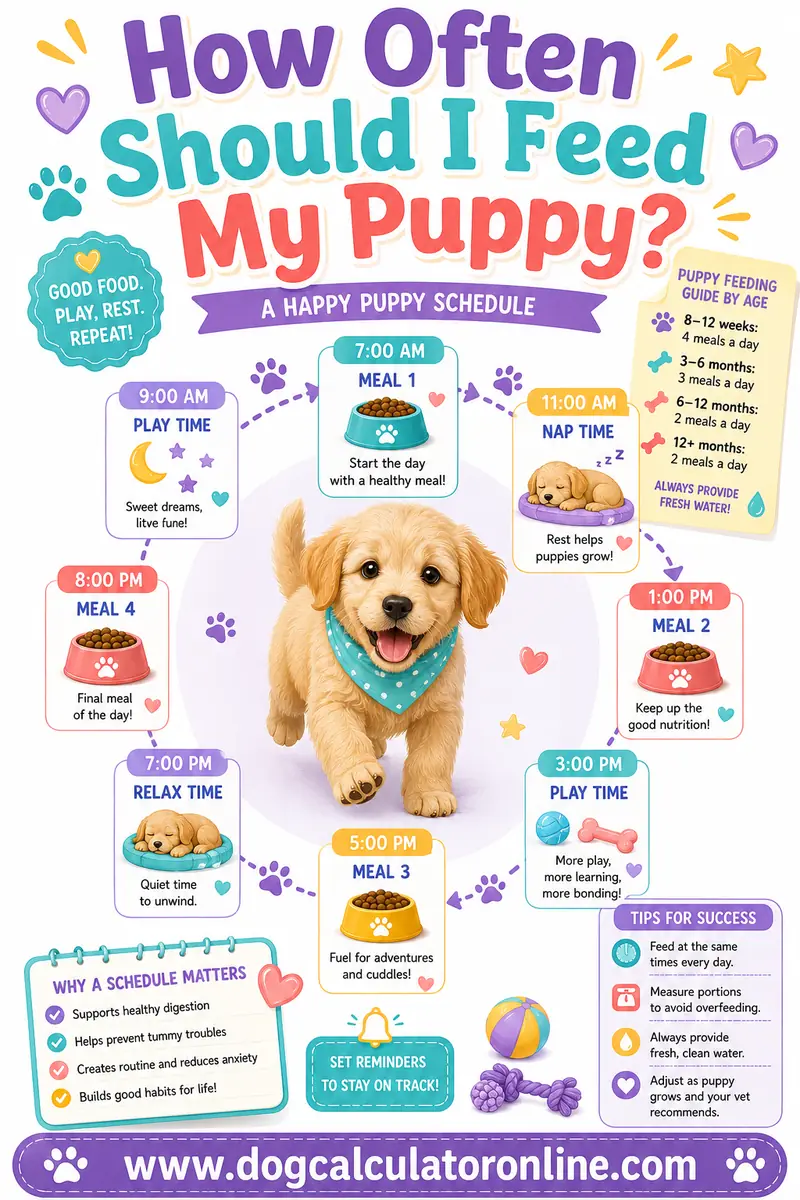
- Track the in-and-out rhythm. Most young puppies need a potty break within about 15–30 minutes of a good drink. Building that into your routine prevents most accidents without touching the water supply. A predictable feeding schedule makes the drinking schedule predictable too, since puppies typically drink around meals.
Bowl Logistics for Puppies
Small, practical details fix most puppy water problems:
- Wash the bowl daily. The slimy biofilm that forms in a day is the top reason picky drinkers snub the bowl. Stainless steel or ceramic beats scratched plastic, which harbors bacteria.
- Right-size the bowl. A shallow bowl for small pups; a heavier, non-tip bowl for enthusiastic splashers.
- Multiple stations. One bowl per floor of your home means a tired puppy doesn't have to trek for a drink — and you can see at a glance which bowls are emptying.
- Refresh, don't just top up. Dump and refill at least once a day rather than pouring new water over old.
- Supervise outdoor water. Puddles, ponds, and standing water can carry giardia and other parasites puppies are especially vulnerable to. Bring your own water on outings.
FAQ
How much water should a puppy drink a day?
After weaning, roughly half an ounce to one ounce per pound of body weight daily — about 5–10 oz for a 10-lb puppy. Very young pups (4–8 weeks) do better with about a half cup offered every two hours.
Should I leave water out all day for my puppy?
Yes, during the day — fresh water should be freely available. The one accepted exception is lifting the bowl an hour or two before bedtime during early house-training.
How do I know if my puppy is dehydrated?
Check the gums (should be moist, not tacky) and the skin tent between the shoulders (should snap back instantly). Lethargy, sunken eyes, or refusal to drink mean a same-day vet call — puppies dehydrate much faster than adult dogs.
Why does my puppy drink so much more than the chart says?
Heat, hard play, dry kibble, and growth spurts all legitimately raise intake. If drinking stays far above the range for days with no explanation — especially with constant urination — measure it and ask your vet.
Do puppies on wet food need less water?
They drink less from the bowl, yes — canned food is about 75% moisture, so a lot of their fluid arrives at mealtimes. Total hydration matters more than bowl consumption.
When do puppies start drinking water?
Around 3–4 weeks of age, as weaning begins. Before that, mother's milk covers all their fluid needs.
The Bottom Line
Offer a young puppy small drinks often — about a half cup every two hours at first — then plan on half an ounce to an ounce per pound per day as your pup grows, with the bowl clean, fresh, and always available during the day. Watch patterns more than totals: a puppy whose drinking suddenly jumps or crashes is telling you something worth a vet conversation.
Water is one half of the intake equation. For the other half, run your puppy's weight and food through the free dog food calculator, and see the puppy feeding schedule by age to line up meals and water breaks into one sane routine.