How Much Should a Senior Dog Eat?
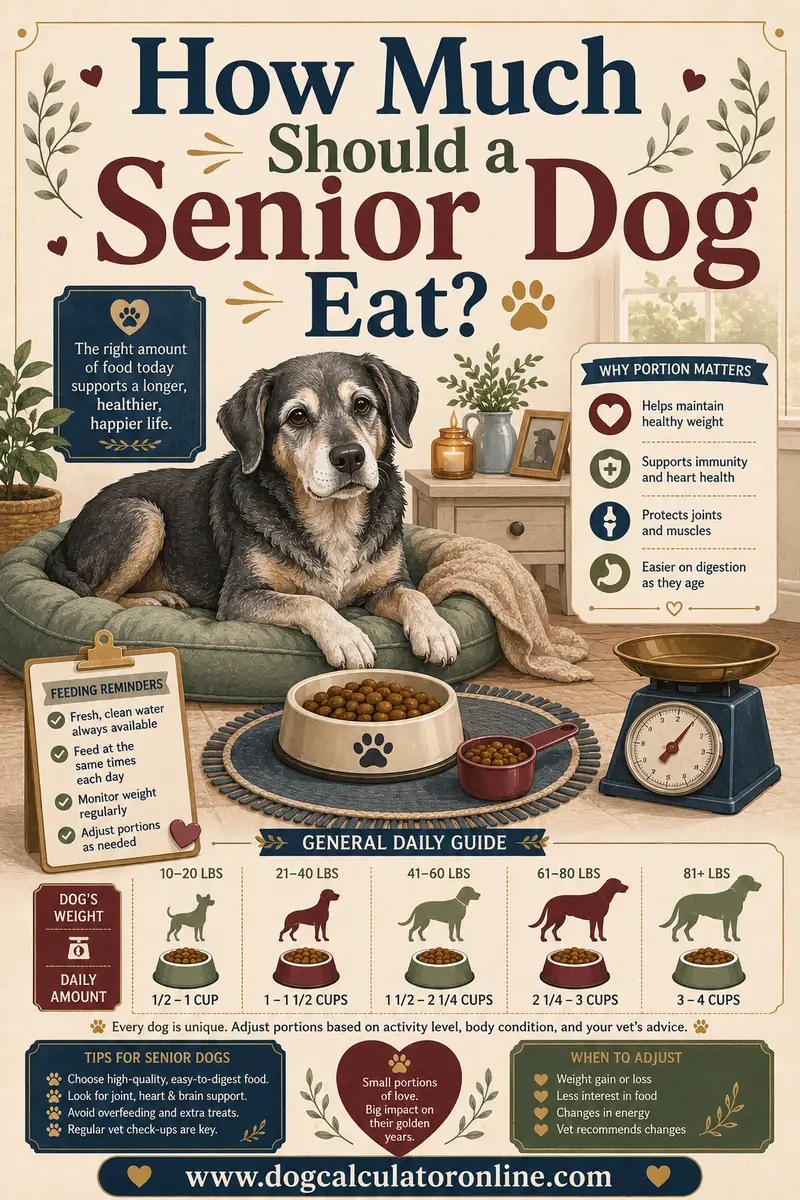
Most senior dogs need 10–20% fewer calories than they did as young adults, because activity and metabolism decline with age — a 50-lb senior often maintains on roughly 900–1,050 kcal a day (about 2½–2¾ cups of average kibble) where the same dog at four years needed 1,100 or more. But the headline hides the nuance: many older dogs need more protein even as they need fewer calories, some seniors lose weight and need more food, and appetite changes in an old dog are medical information before they're portion questions.
So senior feeding is really two jobs: right-sizing calories to a slower life, and watching the trendline closely enough to catch the changes that matter. The free dog food calculator gives you the calorie baseline for your dog's weight and age in seconds. Below: the senior portion chart, when to feed more rather than less, the protein question, and the appetite signals worth a vet call.
🐕 Senior portion check
Tap your senior dog’s weight for a typical daily range (less active senior, average kibble):
Tap a weight above. Activity, health, and your food’s calories shift the number.
When Is a Dog "Senior," Anyway?
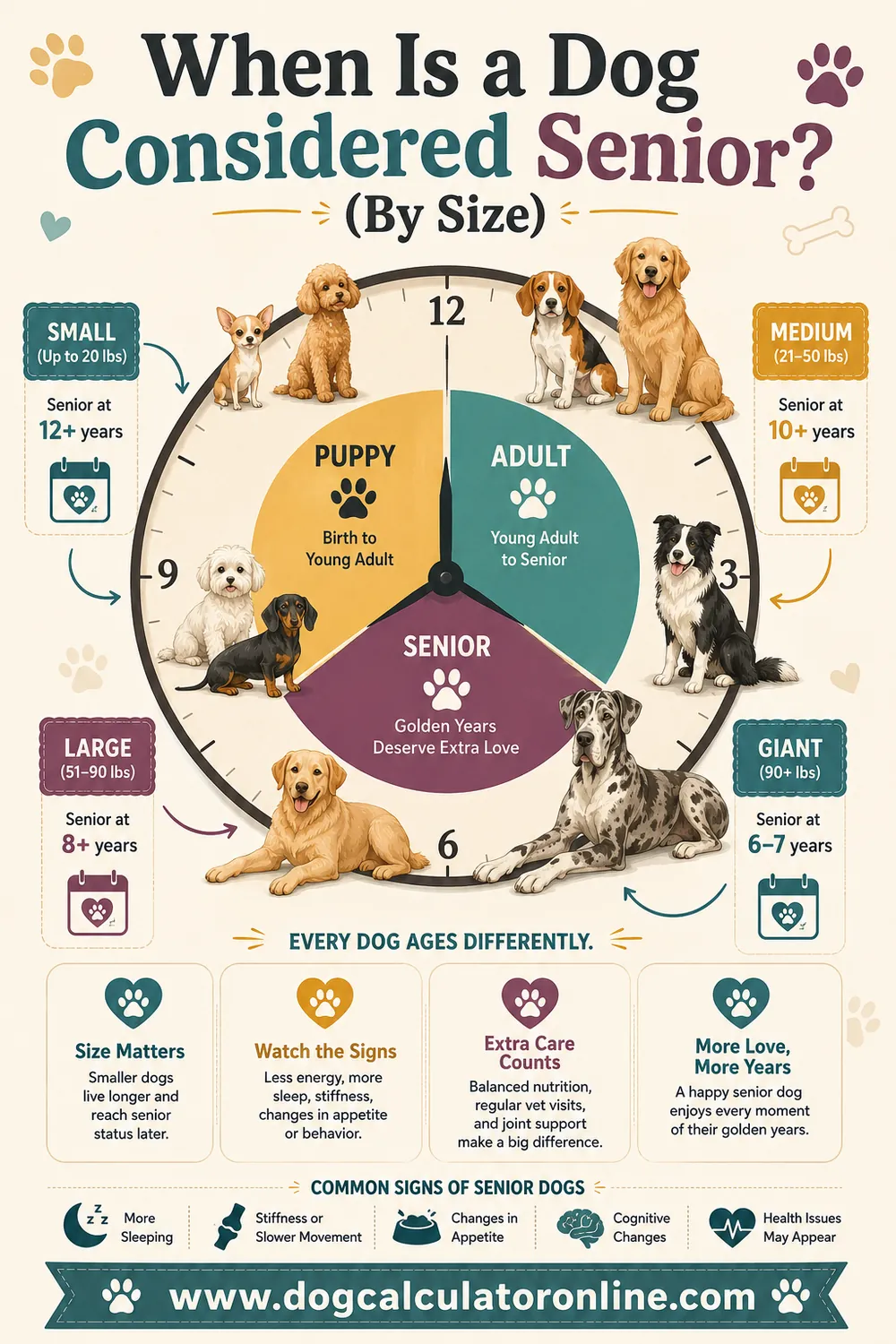
Senior status arrives on a size-based schedule: giant breeds are seniors around 6–7 years, large breeds around 7–8, medium dogs around 8–9, and small breeds not until 10–11 — the same size-adjusted aging that governs the whole dog-years conversation (the full breakdown is in when is a dog considered senior). For feeding purposes, though, the calendar matters less than the behavior: the portion conversation starts when the activity changes — shorter walks, longer naps, less spring in the fetch — whatever the birthday says.
The Senior Feeding Chart
Typical daily amounts for less-active senior dogs on average kibble (~375 kcal/cup), compared against their younger-adult baseline:
| Weight | Adult (moderate activity) | Senior (less active) | Senior in cups |
|---|---|---|---|
| 10 lb | ~300–350 kcal | ~250–300 kcal | ~⅔–¾ cup |
| 25 lb | ~600–700 kcal | ~500–600 kcal | ~1¼–1½ cups |
| 50 lb | ~1,000–1,150 kcal | ~900–1,050 kcal | ~2½–2¾ cups |
| 75 lb | ~1,350–1,550 kcal | ~1,150–1,400 kcal | ~3–3¾ cups |
| 90 lb | ~1,500–1,750 kcal | ~1,300–1,600 kcal | ~3½–4¼ cups |
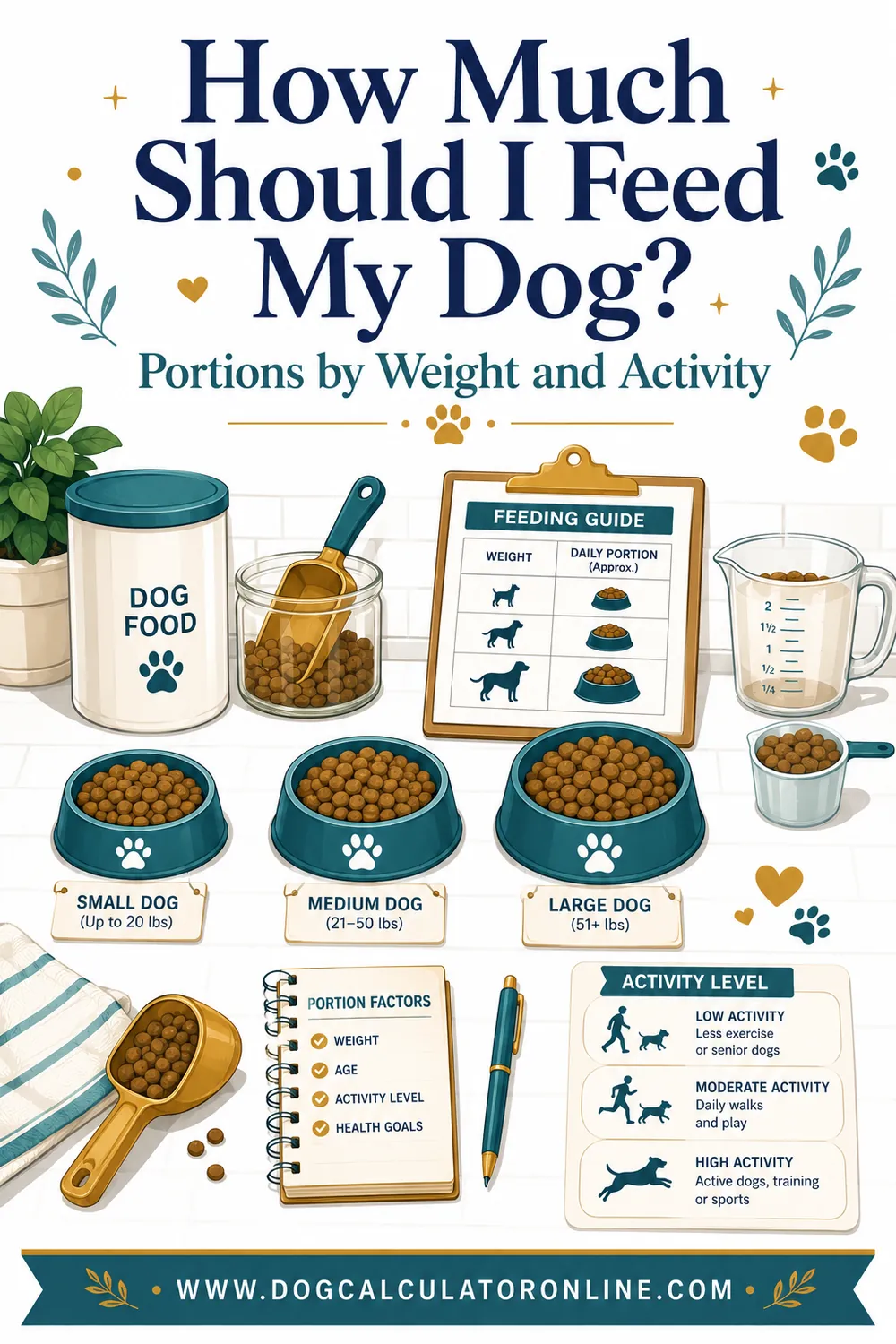
Use the chart as a starting point with the usual disclaimers doubled: check your own bag's kcal-per-cup, and treat a senior food's feeding table as calibrated to that formula. Senior formulas themselves vary widely — some run lower-calorie, some higher-protein, some both — which is why the calorie math beats brand assumptions. The general method (weight → calories → cups) is unchanged from how much should I feed my dog; age just moves the multiplier down.
Why Seniors Need Fewer Calories — Usually
Three forces push an older dog's calorie needs down:
- Less activity. The biggest factor by far. Walks shorten, play sessions thin out, sleep stretches — and the calorie budget follows.
- Slower metabolism. Lean muscle mass declines with age, and muscle is what burns calories at rest.
- The compounding trap. Extra weight makes arthritic joints hurt more, which reduces activity further, which adds more weight. Portion control is genuinely an arthritis intervention.
The stakes are worth stating plainly: obesity in senior dogs aggravates arthritis, heart and respiratory strain, and shortens comfortable years. If your senior is drifting plump, a 10% portion cut and a re-check in a month is the standard first move — and a vet visit is the right second one if it doesn't help, because weight gain without overfeeding can itself be a symptom (hypothyroidism is a classic).
When a Senior Needs MORE Food, Not Less
Here's where senior feeding differs from simple dieting: unintended weight loss is common in old dogs and always meaningful. Some seniors genuinely need more calories, or more digestible ones, because of:
- Dental pain making eating slow or unpleasant — one of the most common and most fixable causes of a thin senior.
- Declining senses. Weaker smell and taste dull appetite; warming food slightly or adding a splash of warm water restores aroma.
- Medical conditions. Kidney disease, cancer, heart disease, and other age-associated illnesses often show up first as weight loss or appetite change.
- Muscle-loss spirals. An underfed senior burns muscle, which weakens mobility, which reduces appetite-stimulating activity.
The rule that keeps you safe: a senior dog losing weight without a portion change gets a vet exam before a food increase. Feeding more calories on top of an undiagnosed condition can mask the signal without fixing the problem. Once medical causes are addressed, your vet may suggest calorie-dense or highly digestible food, smaller-and-more-frequent meals, or an appetite plan.
The Protein Question (and Other Senior Nutrition Notes)
An old myth says senior dogs should eat less protein to "spare the kidneys." Current veterinary thinking runs the other way for healthy seniors: older dogs tend to need as much or more high-quality protein than younger adults to slow the natural loss of muscle mass. Protein restriction is a targeted medical strategy for specific diagnosed conditions — a decision that belongs entirely to your vet, not to the marketing on a bag.
Other notes worth knowing, all "discuss, don't self-prescribe":
- "Senior" on a label isn't regulated tightly — formulas differ enormously, so pick by your dog's actual needs (calories, protein, digestibility) with your vet's input rather than the word on the front.
- Joint supplements (glucosamine and friends) are common in senior formulas and as add-ons; evidence is mixed, and your vet can tell you whether they make sense for your dog.
- Softer options help sore mouths. Wet food, or kibble moistened with warm water, keeps dental-pain dogs eating while the mouth gets treated.
- Water matters more with age. Kidney function declines in many seniors; fresh water everywhere, always, and drinking changes reported at checkups.
Meals, Treats, and the Senior Routine
- Two meals still works for most seniors; some do better on three smaller ones as digestion slows. Consistent times matter more than ever — an old dog's skipped meal is data you only get if meals are scheduled.
- Keep treats inside 10% of daily calories — a shrinking calorie budget shrinks the treat budget too, and soft senior-friendly treats still count. Vegetables (plain green beans, carrot bits) stretch the budget for chronic beggars.
- Raised bowls can help big dogs with neck or joint stiffness reach food comfortably — worth asking your vet, since recommendations vary by dog.
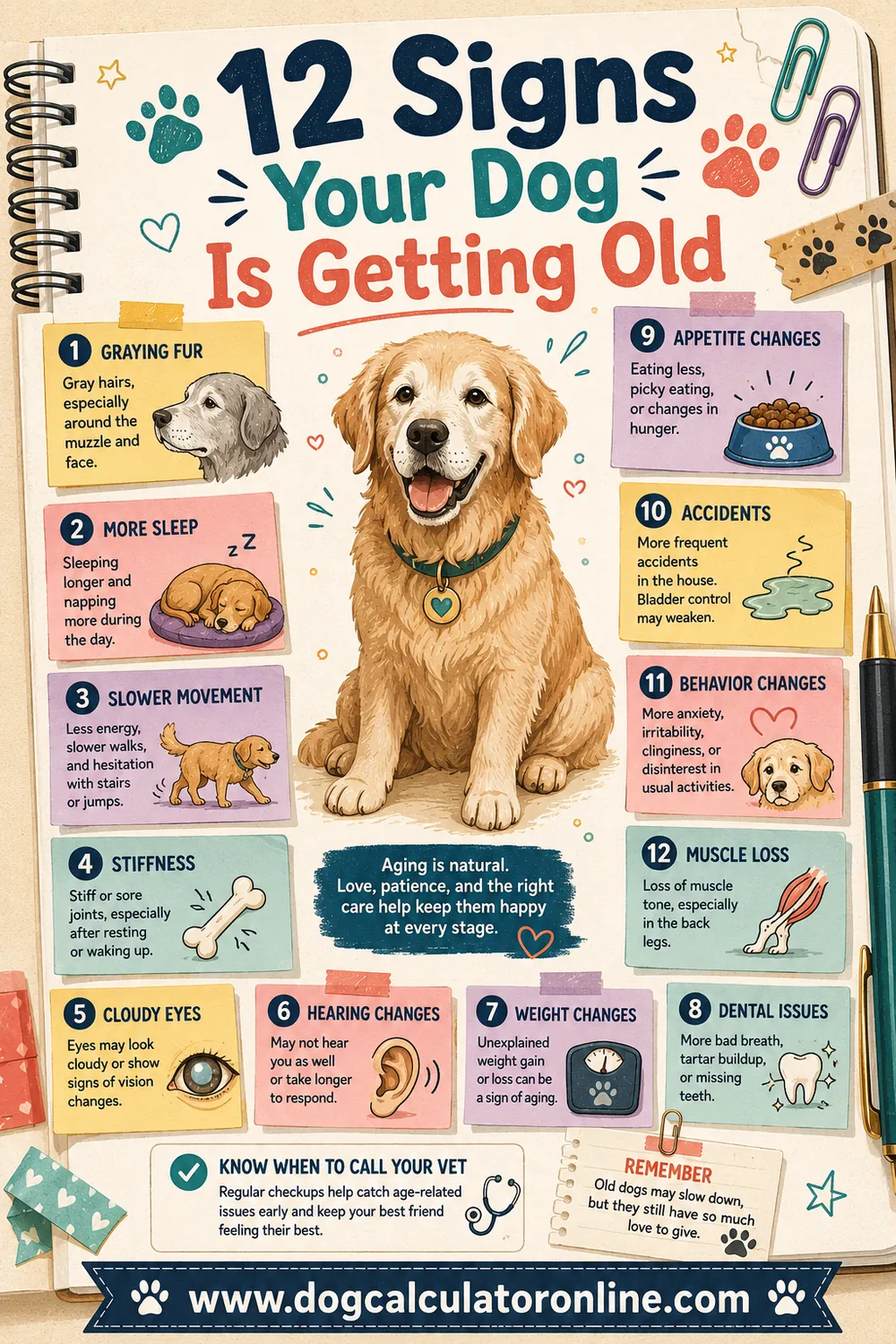
- Weigh monthly. The bathroom-scale trick (hold the dog and subtract) works to about 40 lb; bigger dogs can use the vet's walk-on scale, usually free at the front desk. Write the number down — senior weight problems announce themselves as trends, and memory is a bad chart. The broader signals of aging worth tracking alongside weight are covered in signs your dog is getting old.
Making the Portion Change Without a Mutiny
Cutting a senior's portions by 10–20% sounds simple until you meet the dog's opinion about it. A few tactics keep the diet humane:
- Cut gradually. Step down 5% at a time over a few weeks rather than shrinking the bowl overnight — slower is kinder and less likely to trigger counter-surfing or trash raids.
- Add volume, not calories. A spoonful of plain green beans or a little warm water bulks the bowl and slows the "that's all?" look. (Run new additions past your vet if your dog has any medical conditions.)
- Slow the meal down. A slow-feeder bowl or scattered kibble turns a 40-second meal into ten minutes — seniors enjoy the sniffing, and a longer meal reads as a bigger one.
- Re-time rather than re-fill. If the gap between dinner and breakfast produces 5 a.m. theatrics, move dinner later or split it — same calories, better politics.
- Retrain the family. The senior years are when a lifetime of "just one bite" habits catch up. Everyone in the house gets the new treat budget, or the diet exists only on paper.
Expect two to three weeks of adjustment. If genuine, persistent hunger continues on an appropriate portion — not begging, but weight loss or obsessive food-seeking — that's worth a vet conversation rather than a bigger scoop.
FAQ
How much should I feed my senior dog?
Typically 10–20% less than their younger-adult amount — roughly 500–600 kcal (1¼–1½ cups) for a 25-lb senior, 900–1,050 kcal (2½–2¾ cups) at 50 lb — adjusted to body condition and your food's actual calories.
Should senior dogs eat less protein?
Not by default — that's an outdated idea. Healthy seniors generally need as much or more quality protein to maintain muscle. Protein restriction is a medical decision for specific diagnosed conditions, made by your vet.
Why is my senior dog losing weight on the same food?
That's a vet visit, not a portion tweak. Dental pain, kidney disease, and other age-related conditions commonly show up first as weight or appetite loss — get the cause identified before adding calories.
Do senior dogs need special senior food?
Not automatically. "Senior" formulas vary widely and the label isn't tightly regulated. What matters is the right calories, adequate protein, and digestibility for your particular dog — your vet can say whether a senior formula genuinely fits.
How many times a day should an older dog eat?
Two meals suits most; smaller, more frequent meals help some seniors with slowing digestion or medication schedules. Keep times consistent so appetite changes are visible immediately.
My old dog is getting fat but barely eats — how?
Slowing metabolism plus shrinking activity can outpace even modest portions, and treats hide calories. Count everything honestly first; if weight still climbs, ask your vet about metabolic causes like hypothyroidism.
The Bottom Line
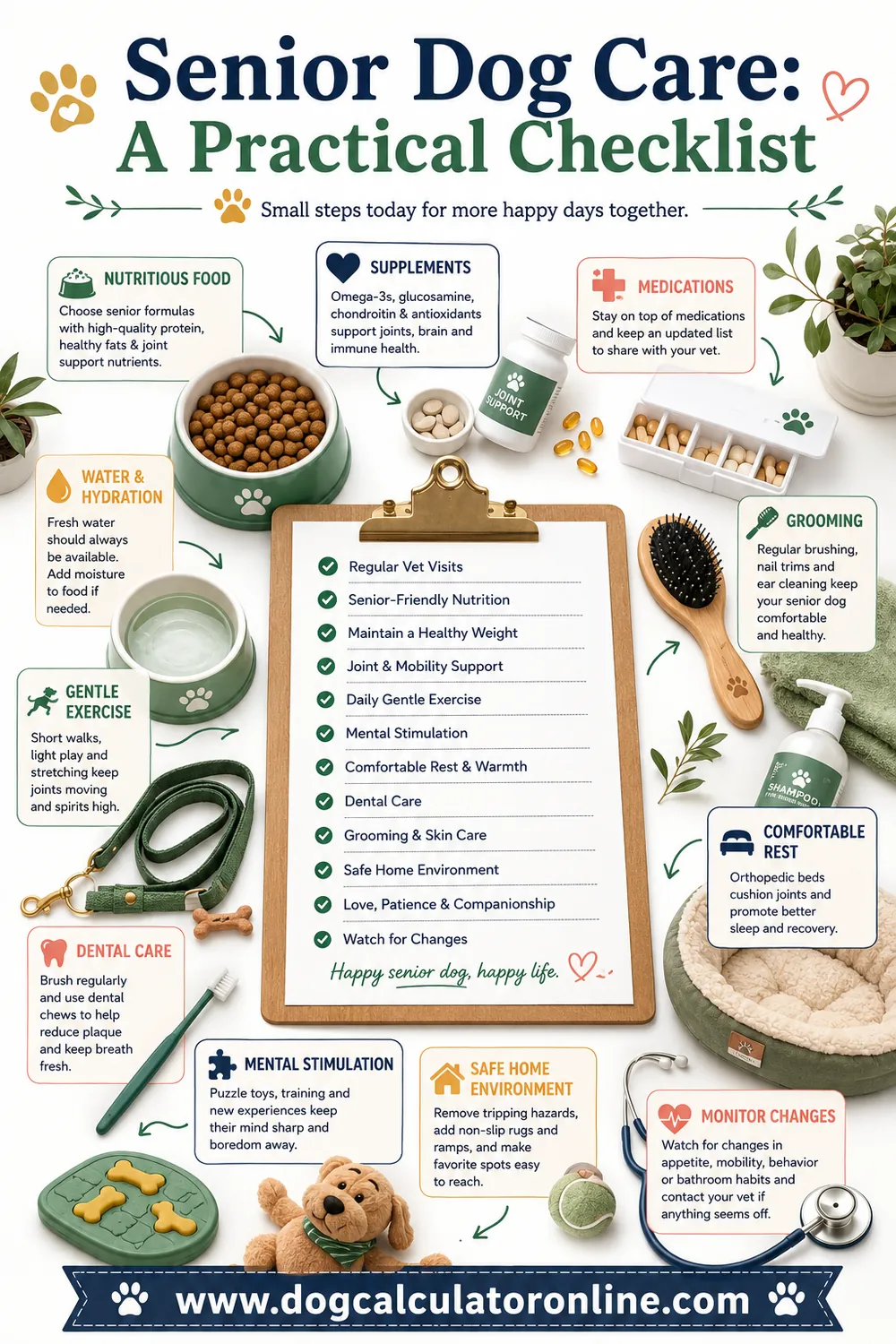
Feed the dog in front of you: most seniors thrive on 10–20% fewer calories with protein kept strong, but the real work is watching — monthly weigh-ins, honest treat math, and a low threshold for calling the vet when appetite or weight trends move on their own. Start with the right baseline from the free dog food calculator, and pair the portion plan with the bigger-picture senior dog care checklist.