Dog False Pregnancy Explained (Ask Your Vet)
The fact that surprises nearly every owner is this: false pregnancy in dogs is normal, common, and happens whether or not the dog has ever been near a male. It is not a disorder, not a psychological quirk and not a sign that something has gone wrong. Every unspayed female dog goes through the same hormonal sequence after every season — progesterone rises for two months and then falls — and that fall is exactly the signal that triggers mothering behavior and milk. Some dogs barely react. Others nest, mother a slipper and produce milk convincingly enough that owners start counting days. If you are trying to work out which you are looking at, start with the free dog pregnancy calculator.

🐾 Is this a false pregnancy?
Tap what you are seeing:
Tap an option above. Most cases resolve on their own; a few do not.
What a False Pregnancy Actually Is
The name is misleading. Nothing is being faked.
False pregnancy, or pseudopregnancy, is a normal hormonal state, not a condition the dog has developed. The proper description is that an unmated female dog is showing the physical and behavioral changes that would follow a real pregnancy.
It is extremely common. Studies put the proportion of unspayed female dogs showing some degree of it at somewhere between a third and three-quarters, depending on how the signs are defined. Mild cases are almost certainly under-recognized.
It is not caused by seeing puppies, wanting puppies, or a mating that "nearly" worked. The trigger is entirely internal and hormonal.
Wolves do it too, and that is the likely reason it exists. In a pack, non-breeding females that can produce milk are able to nurse the litter of the breeding pair. The trait is preserved in domestic dogs because it was never selected out.
It is generally self-limiting. Most cases resolve without any treatment within two to three weeks.
But it is worth understanding, because it is the single biggest reason owners misread a pregnancy — the two look almost identical from the outside, which is covered further in how to tell if your dog is pregnant at home.
Why It Happens After Every Season, Mated or Not
This is the mechanism, and it is worth reading once because it explains everything else.
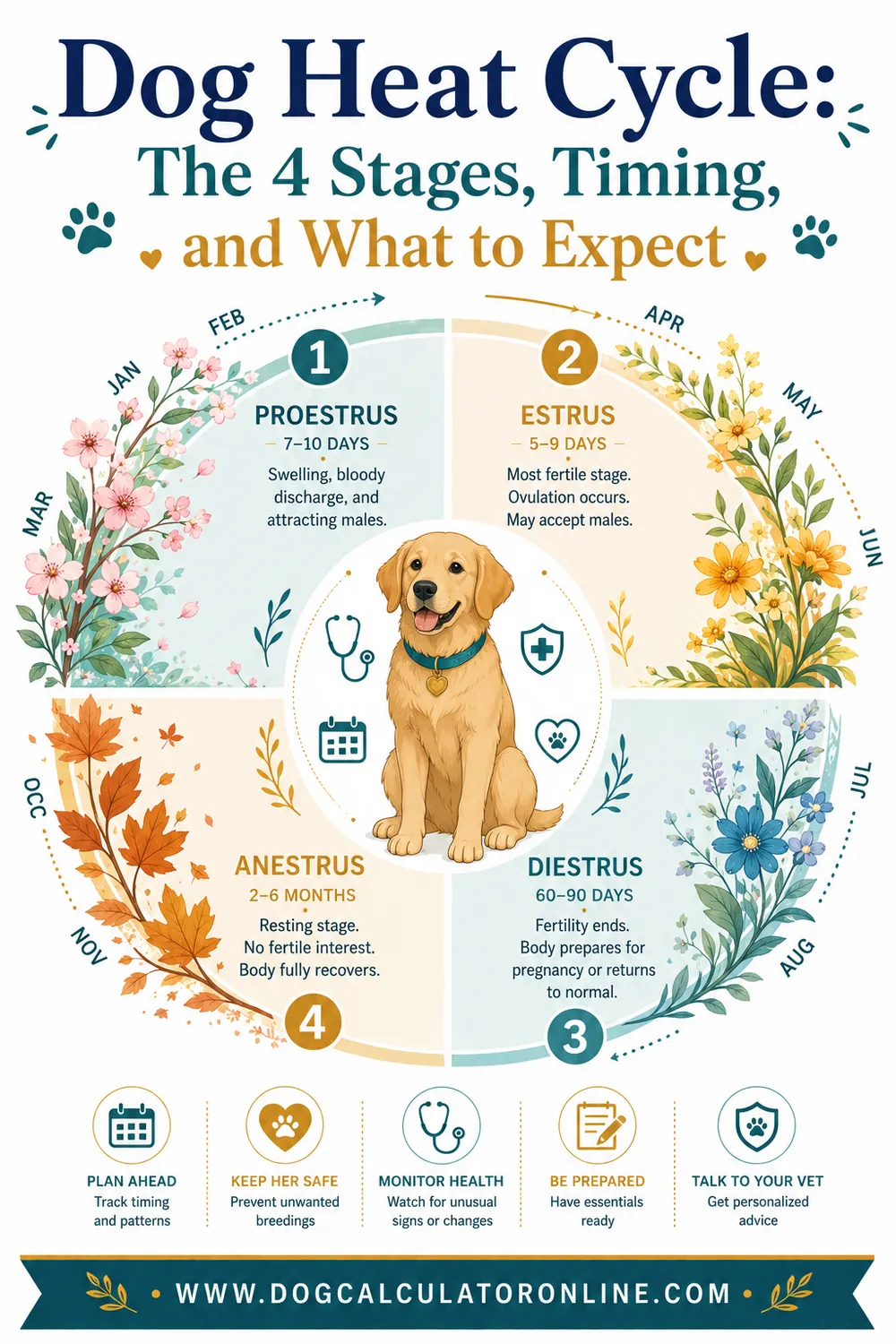
Every female dog has the same hormonal cycle after a season, pregnant or not. After ovulation, the corpora lutea in the ovaries produce progesterone for roughly 60 days. That is true of a pregnant dog and an unmated one alike. Dogs are unusual in this respect.
Progesterone then falls away. As it drops, prolactin — the hormone that drives milk production and mothering behavior — rises. In a genuine pregnancy that sequence coincides with whelping. In an unmated female dog it happens on exactly the same schedule, with no puppies at the end of it.
So the trigger is the drop, not the pregnancy. This is why the timing is so predictable: signs typically appear six to twelve weeks after the season ended.
Individual sensitivity to prolactin varies enormously. Two female dogs with identical hormone profiles can show completely different degrees of signs, which is why one dog nests dramatically and her sister does nothing at all.
Spaying during the wrong phase can trigger it. Removing the ovaries while progesterone is high causes an abrupt fall, which is precisely the trigger. This is one reason vets prefer to spay well away from a recent season — the timing question is set out in best age to spay or neuter a dog.
Nothing about the cycle itself is abnormal, and the general pattern of seasons is explained in dog heat cycle.
Signs, and When They Show Up
The picture ranges from barely noticeable to genuinely convincing.
Nesting is the most recognizable. She digs at bedding, drags blankets into corners, shreds paper, and creates a den somewhere inconvenient.
Mothering objects is the sign owners remember. Soft toys, slippers, socks — collected, carried, guarded, sometimes carefully arranged and returned to repeatedly. Some female dogs will growl if the object is removed.
Mammary development is the most common physical sign. The glands enlarge and may feel firm. In a proportion of cases actual milk is produced, and it can be a surprising amount.
Appetite goes either way. Some go off their food for several days; others become notably hungrier. Both are within normal.
Behavior softens or unsettles. Clinginess, restlessness, whining, reluctance to leave the nest, occasional low-level irritability with other dogs.
Some show mild abdominal enlargement, enough to be mistaken for a pregnancy bulge, though it is rarely as pronounced as the real thing. A comparison of what a genuine pregnancy looks like is in dog pregnancy signs.
Timeline From Season to Resolution
The predictable timing is one of the more useful diagnostic clues.
| Time since season started | Stage | What you might see |
|---|---|---|
| Weeks 0–3 | Season itself | Bleeding, swelling, attractiveness to males |
| Weeks 3–8 | Progesterone high | Nothing unusual |
| Weeks 6–9 | Progesterone falling | First behavior changes in sensitive dogs |
| Weeks 8–12 | Prolactin peak | Nesting, mothering, mammary development, milk |
| 2–3 weeks after signs start | Resolution | Signs fade without treatment in most dogs |
| Next season, ~6 months on | Recurrence | Common, often to a similar degree |
Six to twelve weeks after the season is the classic window, which is why keeping a note of season dates is so useful. If you do not track them, the interval question is covered in how often do dogs go into heat.
Two to three weeks is the usual duration. Signs that persist well beyond a month are a reason to have her checked rather than to keep waiting.
Severity does not predict the next one exactly, but a female dog who has had a strong false pregnancy once is more likely than average to have another.
What to Do at Home for a Mild Case
Most cases need management rather than medicine.
Increase distraction and exercise. Longer walks, new routes, training sessions, and anything that occupies her mind reduces the time spent nesting and shortens the episode in practice.
Quietly remove the adopted objects, a few at a time. Taking the whole collection away at once can distress a strongly affected female dog; removing them gradually while she is out of the room works better.
Do not scold the nesting or the guarding. She is not being naughty and she cannot decide to stop. Telling her off adds stress without changing the hormones.
Keep her food normal. Slightly reducing food for a few days is sometimes suggested to help reduce milk, but any change should be modest and discussed with your vet rather than improvised.
Watch the mammary glands daily. A quick, gentle check for heat, hardness or asymmetry takes seconds and is the single most useful thing you can do.
Keep a note of the dates. When it started, how severe, how long it lasted. That record makes the conversation about spaying or treatment far more productive next time.
The Mistake That Makes It Worse
There is one thing owners do with the best of intentions that reliably backfires.
Do not milk or express the glands. Emptying the mammary glands signals the body to produce more. It is the exact opposite of what you want, and it prolongs the episode.
Do not let her lick the glands persistently either. The same stimulation drives further production. A soft body suit or, if needed, a buster collar for a few days is more effective than any home remedy.
Do not apply hot compresses to a non-painful gland. Warmth encourages milk flow. If a gland is painful, that is a vet question, not a compress question.
Do not withhold water. Restricting fluid does not reduce milk meaningfully and creates a genuine risk of dehydration.
Do not use herbal or over-the-counter remedies without asking. Some products marketed to dry up milk are not appropriate for dogs, and the effective drug for this is prescription-only for good reasons.
And do not assume she needs mating "to sort her out". Breeding a female dog to resolve a false pregnancy is not a treatment; it simply produces a real pregnancy and a litter to place.
When It Needs a Vet
Most cases do not. These ones do.
Mammary glands that are hot, hard, painful, red or asymmetric. That picture suggests mastitis — an infection of the gland — and it needs veterinary treatment, usually antibiotics and pain relief, without delay.
Discharge from a nipple that is bloody or discoloured, rather than milky, is a same-day call.
Signs that persist beyond about three to four weeks. A false pregnancy that will not settle can be treated. The usual approach is a prolactin-suppressing drug such as cabergoline, given for several days, which is effective and prescribed by a vet.
Severe distress. Some female dogs become genuinely miserable — refusing to eat, refusing to leave the nest, panting and pacing. That is a reason to ask for treatment rather than to wait it out.
Any vaginal discharge, drinking noticeably more, or lethargy in the weeks after a season. These can point to pyometra, a serious infection of the uterus that occurs in the same window and is a genuine emergency. It is the most important thing not to mistake for a false pregnancy.
And if there is any chance she was mated, treat this as a pregnancy question first. A relaxin blood test or scan from about day 28 answers it.
Recurrence, Spaying and the Long View
This is where the conversation usually ends up.
Recurrence is common. A female dog who has one false pregnancy will frequently have another after her next season, and some do it after every single one.
Treating one episode does not prevent the next. Cabergoline resolves the current episode; it changes nothing about the following cycle.
Spaying is the only permanent answer, because it removes the ovarian cycle that drives the whole process. It is a genuine consideration for a female dog who suffers badly and repeatedly.
Timing of the spay matters. Spaying during an active false pregnancy, or soon after a season, can make signs worse or prolong them. Vets generally advise waiting until she is fully out of the episode and well clear of the cycle — typically around three months after the season.
Spaying is not a small decision and it is not only about this. The wider trade-offs, including the effect on other health risks, are set out in spaying your dog what to know.
For a mild, brief episode once a year, doing nothing is a perfectly reasonable plan. The severity of her episodes, not the fact they happen, is what should drive the decision.
FAQ
Can a dog have a false pregnancy without being mated?
Yes, and that is the usual situation. The trigger is the fall in progesterone that follows every season, mated or not. A female dog who has never met an entire male can nest, mother toys and produce milk.
How long does a false pregnancy last in dogs?
Typically two to three weeks from the first signs, resolving without treatment. Signs usually start six to twelve weeks after the season. Anything persisting beyond three to four weeks is worth a veterinary appointment.
Should I milk my dog if she has milk?
No. Emptying the glands signals the body to produce more and prolongs the episode. Stop her licking them too, using a body suit if necessary, and check daily for heat, hardness or pain.
Is false pregnancy in dogs dangerous?
Usually not. The main risks are mastitis if a gland becomes infected, and confusing it with pyometra, a serious uterine infection that occurs in the same post-season window. Hot painful glands, discharge or increased drinking need a vet.
Does spaying stop false pregnancies?
Yes, permanently, because it removes the ovarian cycle behind them. But spaying during an episode or shortly after a season can prolong the signs, so vets generally advise waiting until she is well clear of the cycle.
Can a false pregnancy be treated?
Yes. A prolactin-suppressing drug such as cabergoline is effective and given for several days on prescription. It is worth using for severe or prolonged cases, though it does not prevent the episode after her next season.
Normal, Common, and Usually Nothing to Fix
A dog nesting with a toy and producing milk without ever being mated is doing something ordinary, driven by a progesterone fall that happens after every season in every unspayed female dog. In most cases the sensible plan is distraction, longer walks, quietly removing the adopted objects, resisting any urge to express the glands, and waiting the two or three weeks it usually takes. The exceptions matter: hot or painful mammary glands, discharge, increased thirst, or an episode that drags past a month all deserve a veterinary opinion, and repeated severe episodes are a real argument for spaying once she is out of the cycle. If the mating question is still open, check the dates with the free dog pregnancy calculator.