Do Dogs Live Longer Indoors? What the Evidence Says
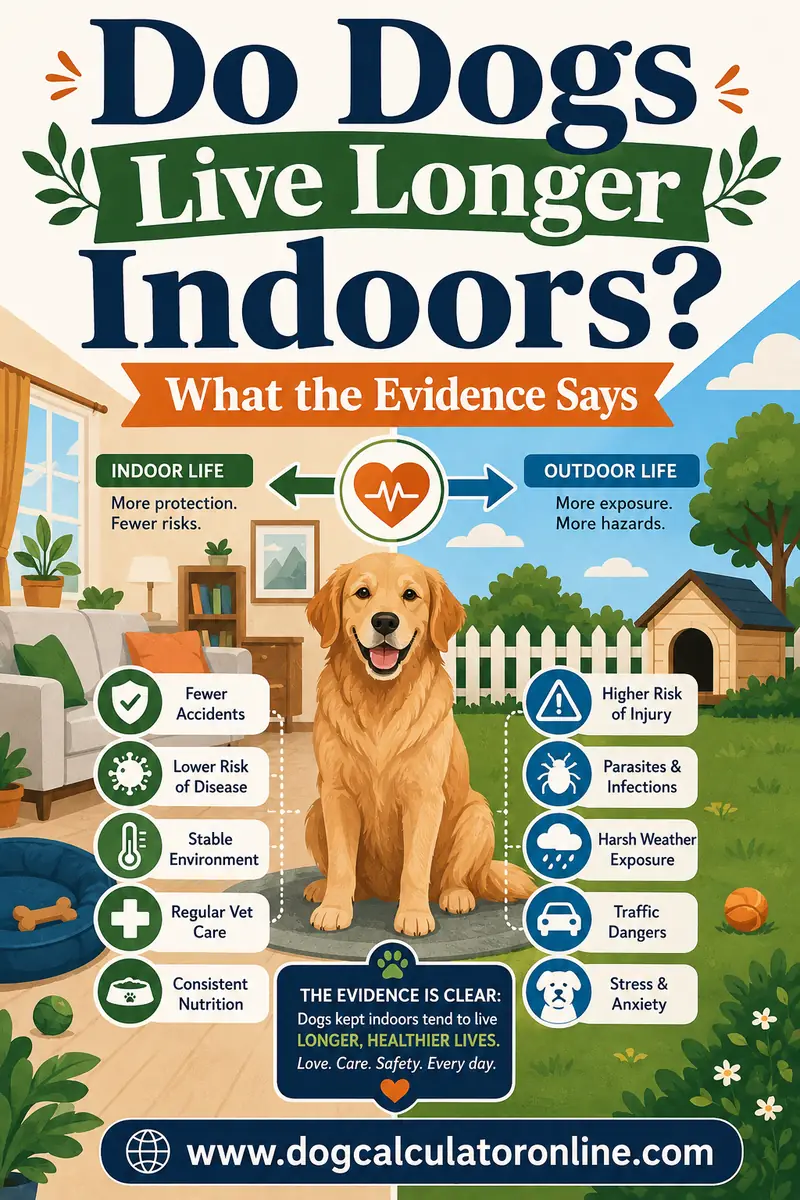
Yes — dogs who live primarily indoors generally live longer than dogs kept outdoors or allowed to roam freely. The reasons are practical, not mysterious: indoor dogs face far fewer traffic accidents, fights, poisonings, extreme temperatures, parasites, and infectious diseases, and their health problems get noticed sooner because someone is watching. Veterinarians consistently observe the difference, and it's most dramatic for free-roaming dogs versus supervised pets.
Wondering how your dog's years translate to human terms while you're here? The free dog age calculator converts any age with the vet-backed size adjustment instantly. Now, the honest breakdown of the indoor advantage — and what indoor dogs still need to actually cash it in.
🐾 Indoor vs outdoor: tap a risk factor
See how living situation changes each risk:
Tap a factor above to compare.
The Short Answer: Indoors Wins — Here's Why
"Indoor dog" doesn't mean a dog that never goes outside. It means a dog who lives in the house, sleeps in the house, and goes outdoors supervised — for walks, play, and yard time. Compare that with dogs kept permanently outside or allowed to roam, and the lifespan gap comes from a stack of avoided risks:
- Traffic. Vehicle strikes are among the most common causes of traumatic death in free-roaming dogs. A leash and a fence erase nearly all of it.
- Fights and animal encounters. Roaming dogs meet other dogs, wildlife, and — depending on region — snakes and predators, on unfavorable terms.
- Poisons. Antifreeze, rodenticides, toxic plants, discarded food. Unsupervised dogs find them; supervised dogs mostly can't.
- Weather extremes. Heatstroke and cold exposure are genuine killers of outdoor-kept dogs, and both are almost entirely preventable indoors.
- Parasites and infectious disease. Constant outdoor exposure means more ticks, more heartworm-carrying mosquito contact, more contact with contaminated water and other animals' waste.
- Theft and loss. A dog who roams can simply not come home.
None of these are about fresh air being unhealthy. They're about unsupervised exposure. Outdoor time itself — walks, sniffing, play — is excellent for dogs. The lifespan cost comes from outdoor living without human eyes on the risks.
Indoor vs Outdoor: The Risks Side by Side
The gap isn't really about walls. It's about which risks a dog is exposed to every day:
| Risk | Mostly indoor dog | Mostly outdoor dog |
|---|---|---|
| Traffic accidents | Very low — only on walks, on lead | A leading cause of preventable death |
| Theft or straying | Low | Meaningfully higher |
| Fights with other animals | Rare | Common, and bite wounds abscess fast |
| Infectious disease exposure | Lower | Higher (parvo, lepto, kennel cough, parasites) |
| Ticks, fleas, heartworm | Reduced, still needs prevention | Constant exposure |
| Heat stroke and hypothermia | Rare | A real seasonal danger |
| Toxins (antifreeze, baits, plants) | Controllable | Largely uncontrollable |
| Early illness detection | Excellent — you notice changes fast | Poor — signs get missed for days |
| Obesity risk | Higher if exercise is skipped | Usually lower |
| Boredom and under-stimulation | Higher without enrichment | Usually lower |
Read that last block carefully, because it's the honest part: indoor living removes most of the things that kill dogs early, but it introduces two of its own — weight gain and boredom. Those are entirely fixable with daily walks, real play, and portion control. The traffic risk isn't.
The Underrated Factor: Someone Is Watching
Ask veterinarians what quietly separates long-lived pets and they'll tell you: early detection. Indoor dogs live under constant, affectionate surveillance. You notice the day your dog eats half a breakfast. You feel the new lump during couch time. You see the hesitation on the stairs.
An outdoor-kept dog's limp, weight loss, or labored breathing can go unnoticed for weeks — and in dog-time, weeks are long. Remember the conversion: after age two, dogs age roughly 4–7 human-equivalent years per calendar year depending on size. A "we'll see if it improves" month for a large-breed senior is like half a human year of untreated symptoms. (See exactly how fast your dog's clock runs with the free dog age calculator.)
Early detection turns kidney trends into managed conditions, small lumps into simple removals, dental disease into a cleaning instead of extractions. It's not glamorous. It works.
The One Risk That's Higher Indoors
Fairness requires the flip side: indoor dogs face one significant elevated risk — obesity. Climate control, proximity to the treat jar, and optional exercise add up. And extra weight is no small thing: the landmark lifelong Labrador study found dogs kept lean lived significantly longer than overweight littermates. Obesity also aggravates arthritis, heart and airway strain, and diabetes risk.
Two secondary indoor risks worth knowing:
- Boredom. Understimulated dogs develop anxiety and destructive habits. A dull life isn't automatically shorter, but chronic stress helps nothing.
- Weekend-warrior injuries. Sedentary-all-week dogs asked to hike hard on Saturday get soft-tissue injuries. Consistency beats intensity.
The fix for all three is the same: daily walks, real play, sniffing time, and measured portions. An indoor dog with an active routine gets the safety of indoors and the fitness of outdoors — the actual longevity jackpot.
Indoor Living Done Right: The Checklist
To convert the indoor advantage into added years:
- Daily exercise, non-negotiable. Two walks a day plus play for most dogs; more for high-energy breeds. Sniff-heavy walks count double for enrichment.
- Measured meals, not free pours. Use the feeding guide on the label as an estimate, adjust to keep a visible waist and easily-felt ribs, and confirm with your vet.
- Keep prevention going. Indoor dogs still need vaccines, heartworm prevention, and flea/tick control — mosquitoes fly through screen doors, and parasites hitch rides on shoes and other pets. Ask your vet what's right for your region.
- Enrich the environment. Food puzzles, chew toys, training refreshers, window perches, new walking routes. A busy brain is a calmer, healthier dog.
- Secure the "indoors." Dog-proof the yard fence, secure trash and medications, and check that houseplants are pet-safe — indoor status only protects a dog from hazards it can't reach.
- Use the surveillance advantage. You're watching anyway — watch on purpose. Monthly nose-to-tail feels for lumps, an eye on water intake, and prompt vet calls for changes.
What About Cats — and Working Dogs?
Two common follow-ups deserve straight answers:
Cats: the indoor effect is even stronger. Indoor cats commonly live 12–18 years while free-roaming outdoor cats average dramatically shorter lives — the same risk logic, amplified by traffic and fights.
Working and farm dogs: plenty of livestock guardians and farm dogs live long, healthy lives outdoors — with shelter, food, vet care, and human attention. The lifespan penalty attaches to neglected or roaming outdoor living, not to outdoor jobs done with good husbandry. A well-cared-for farm dog beats a neglected apartment dog every time. Supervision and care are the real variables; the roof is a proxy.
Making Outdoor Time Safer (Because Dogs Still Need It)
The goal isn't less outdoors — it's outdoors with the risks managed. The high-value precautions:
- Fence audit twice a year. Gaps, dig spots, and gate latches are how "indoor dogs" become roaming dogs for an afternoon. Most escapes exploit a known weakness.
- Leash near roads, every time. Recall is wonderful until a squirrel crosses a street. Traffic is the single biggest hazard the indoor lifestyle removes — don't hand it back.
- ID tag plus microchip. If an escape happens anyway, identification converts most losses into reunions. Keep the chip registration current; an outdated phone number is the most common failure.
- Weather rules. Skip midday walks in heat (pavement-back-of-hand test), watch cold exposure for thin-coated and senior dogs, and always have water on longer outings.
- Know your regional hazards. Depending on where you live: snakes, foxtails, blue-green algae in ponds, ticks in tall grass. Your vet knows the local list — ask.
Do these consistently and your dog gets the full benefit of the outdoors — exercise, sniffing, sunshine, novelty — while keeping the statistical profile of an indoor pet. That combination, not the couch itself, is what the longevity numbers reward.
Common Myths About Indoor Dogs
A few persistent claims deserve quick corrections:
- "Indoor dogs get weak and soft." Only unexercised ones. A walked, played-with indoor dog is fitter than a bored backyard dog who spends the day sleeping by a fence.
- "Big dogs can't live indoors." Size determines exercise needs, not housing needs. Great Danes are famously content indoor dogs — they need walks, not acreage.
- "Dogs need to be outside to be happy." Dogs need activity, company, and stimulation. Study after study of canine behavior points to social contact as the thing dogs crave most — and that's indoors, with you.
- "An indoor dog doesn't need heartworm or flea prevention." Mosquitoes bite through screen time, and fleas ride in on pant legs. Prevention is non-negotiable either way; your vet can tailor it to your region.
- "Dogs did fine outside for thousands of years." Village dogs also lived far shorter lives than modern pets. The lifespans we now consider normal — 10 to 16 years — are largely a product of the indoor era: supervision, nutrition, prevention, and vet care. Nostalgia isn't a longevity plan.
How the Indoor Advantage Shifts With Life Stage
The indoor edge isn't one flat bonus — it protects different things at different ages:
- Puppies: The stakes are infectious disease. Until the vaccine series is complete, unsupervised outdoor exposure — shared water, other dogs' waste, strange dogs — carries real risk from illnesses like parvovirus. Supervised indoor living plus careful, controlled socialization is the standard vet-recommended playbook for the first months. This is also the age of eating things: socks, cords, mystery objects. Indoor supervision is the difference between "drop it" and an emergency visit.
- Adolescents and adults (1–7 years): Now it's mostly about trauma. This is the age of confident escapes, squirrel-chasing bolts, and boundary testing — and traffic doesn't grade on a curve. The fence audit and leash discipline matter most in exactly these years, when the dog is fast, bold, and sure it knows better.
- Seniors: The advantage swings to climate and detection. Old dogs regulate temperature poorly — heat taxes aging hearts, cold locks up arthritic joints — so a climate-controlled home is genuinely therapeutic. And the surveillance benefit peaks now: the early signs of kidney, heart, and dental disease are subtle appetite and behavior changes that only someone sharing a living room catches at the "still just a trend" stage.
The through-line: at every age, the indoor lifestyle's real product is proximity — a human close enough to prevent the preventable and notice the treatable.
Moving an Outdoor Dog Indoors: A Realistic Transition Plan
Maybe this article found you mid-decision: there's a dog in the yard, and you're considering bringing them in. Good instinct — and it goes smoother with a plan than with a single dramatic night on the kitchen floor:
- Start with a den, not the whole house. One room or a large crate with bedding gives an overwhelmed dog a defensible, low-stakes base. The full house tour can wait a week.
- Assume house training needs a refresher. Even adult dogs who were once house trained lose the habit living outside. Run the puppy protocol — frequent scheduled trips out, praise for success, zero drama about accidents — and most adults relearn fast.
- Keep the outdoor rhythm at first. If the dog is used to morning yard patrol, keep morning outdoor time and add indoor evenings, shifting the balance over a couple of weeks. Gradual beats cold turkey.
- Expect some noise and pacing. New sounds — dishwashers, TVs, stairs — take adjustment. Calm exposure and food rewards convert scary to boring in days for most dogs.
- Book a vet check early. A dog transitioning from outdoor living should be current on prevention and screened for parasites and dental issues before becoming a couch resident — for the household's sake as well as the dog's.
- Watch the waistline from day one. The move indoors usually cuts daily calorie burn. Measure meals from the start rather than discovering the weight gain at the next vet visit.
Most outdoor dogs adapt astonishingly fast — often within weeks they're behaving like the couch was always theirs. Whatever adjustment bumps you hit, they're temporary; the longevity benefits run for the rest of the dog's life.
The Apartment Question: Is Indoor-Without-a-Yard Enough?
A yard is the most overrated item in dog ownership. What the longevity evidence rewards is supervision, exercise, enrichment, and early detection — none of which require grass you own.
Consider what a yard actually provides an unaccompanied dog: the same quarter-acre of smells it memorized months ago, no social contact, and exercise that amounts to sunbathing with occasional barking. Now compare a yardless apartment dog who gets two leashed walks a day: novel scent trails, neighborhood dogs and people to observe, and a human attached to the other end of the leash noticing everything from limps to loose stools.
Vets see this pattern constantly: structured-walk dogs are often fitter than yard dogs, because a yard makes exercise available while a walk schedule makes it actual. The honest requirements for apartment success are a real commitment to daily walks in all weather, potty trips on a schedule the dog can rely on, and enough enrichment to occupy a dog who can't self-entertain by digging. Meet those, and apartment dogs enjoy the full indoor longevity profile — arguably with a better daily exercise routine than most yard dogs get.
If you have both — a yard and the walk habit — you're simply running the best version of the experiment.
Related Guides
If this helped, these go deeper on the same question:
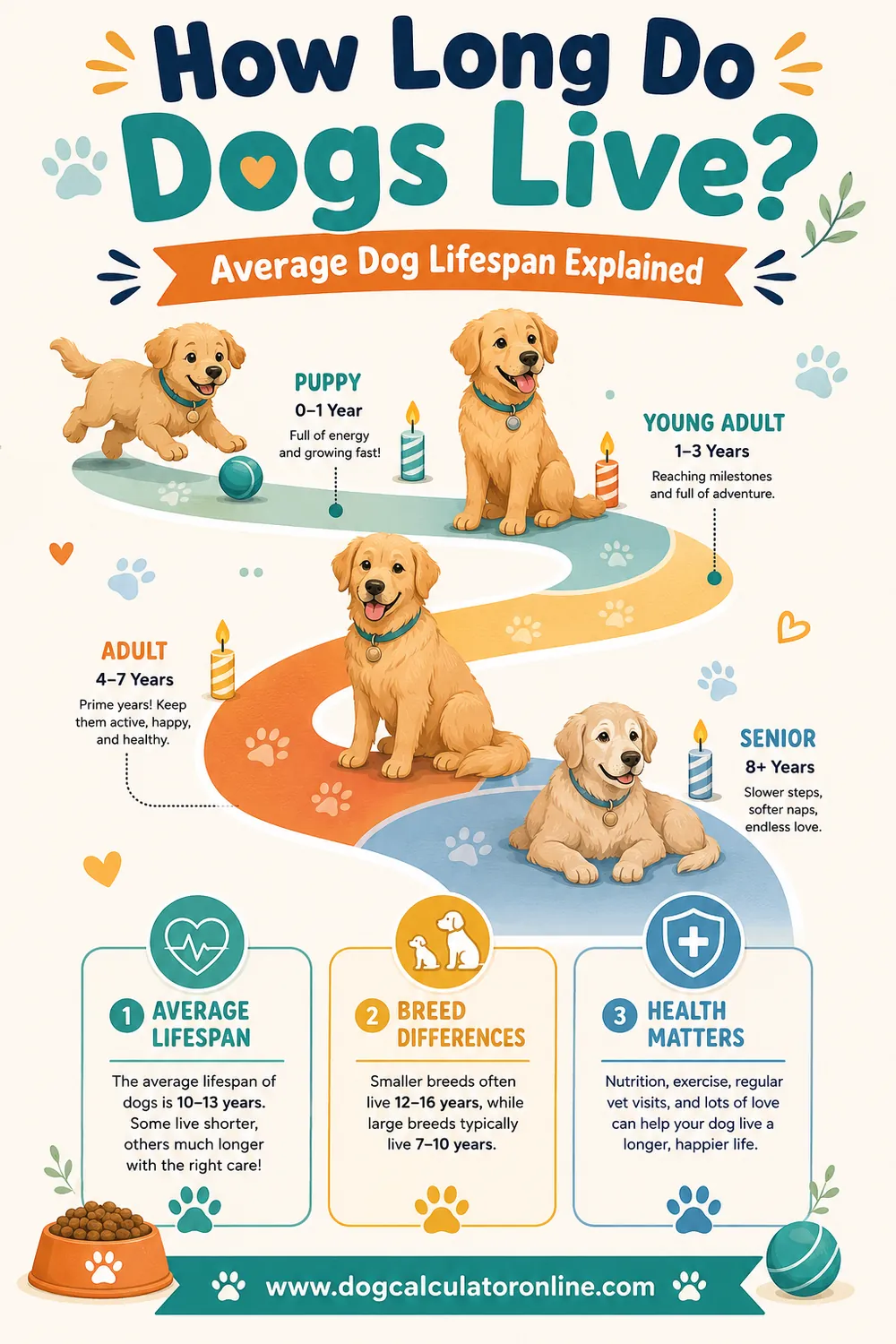
- How Long Do Dogs Live? Average Dog Lifespan Explained
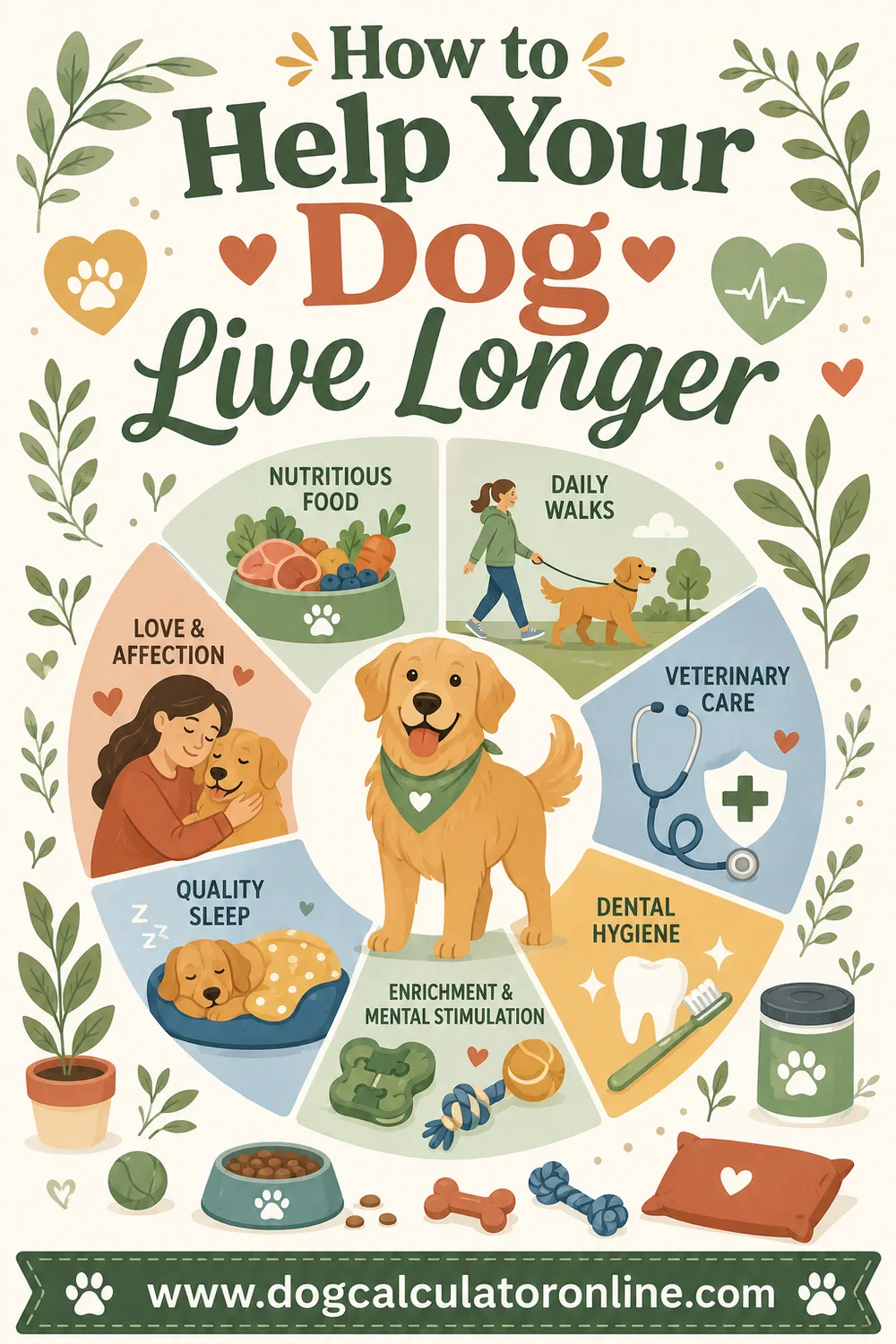
- How to Help Your Dog Live Longer
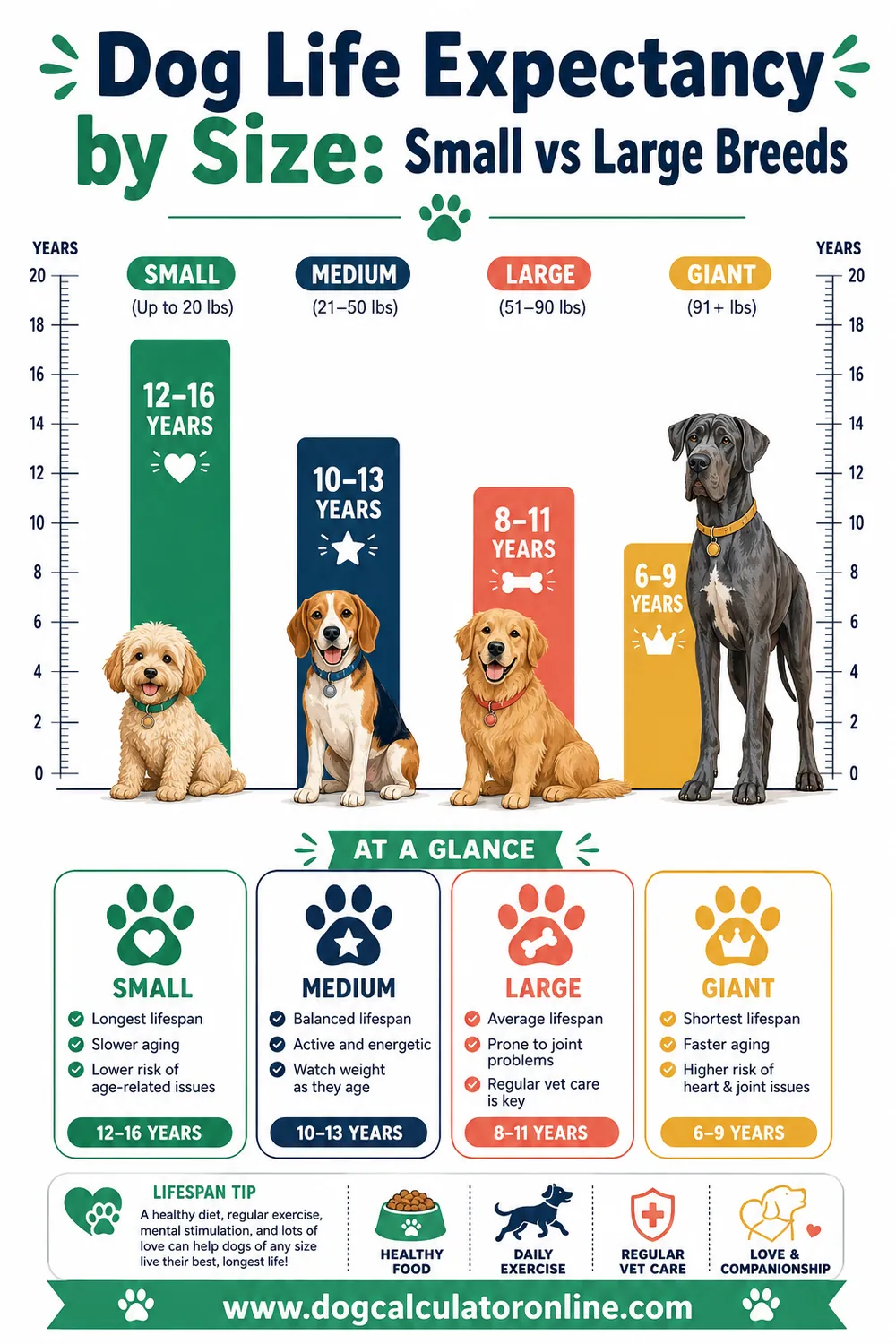
- Dog Life Expectancy by Size: Small vs Large Breeds
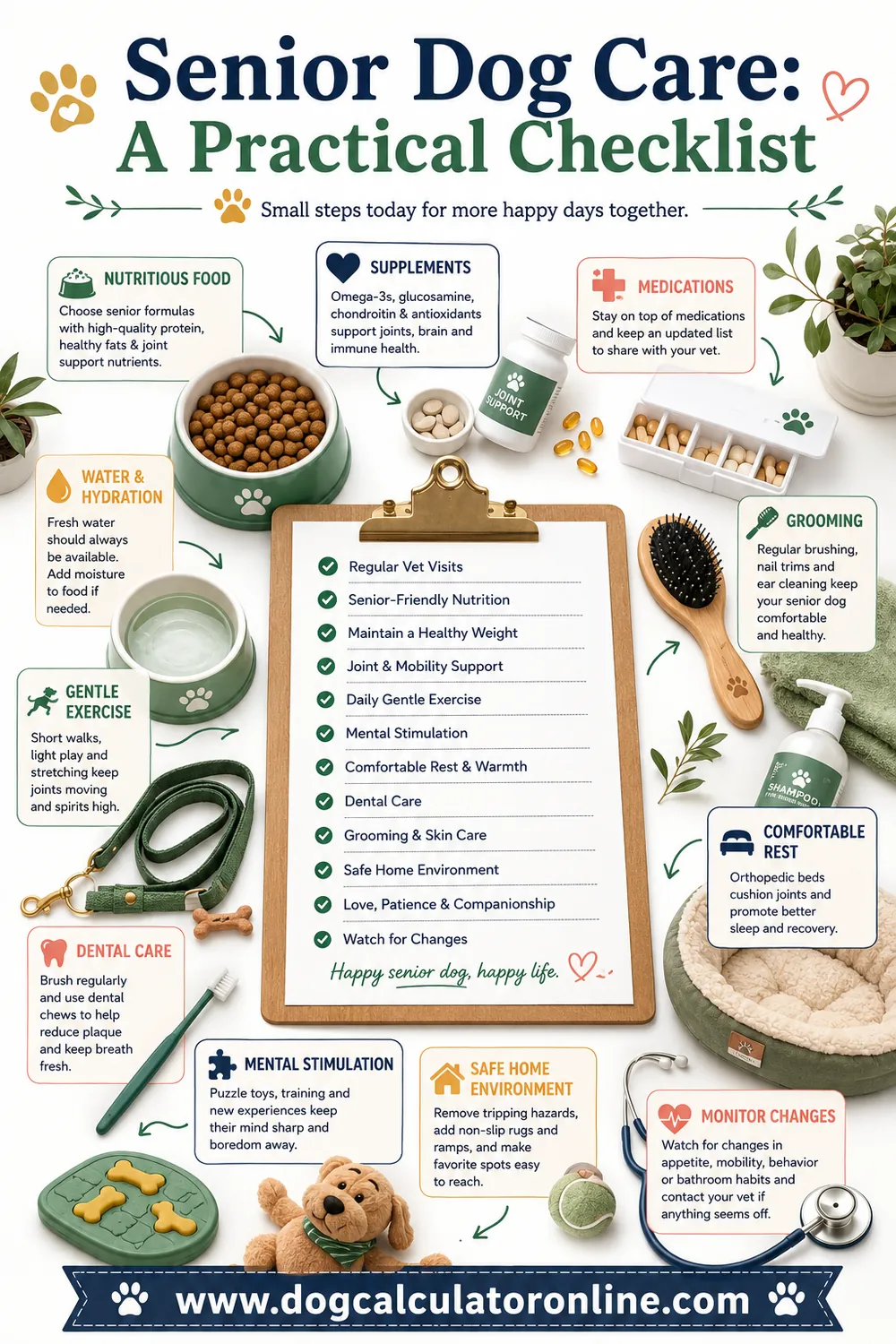
- Senior Dog Care: A Practical Checklist
And if you just want your own dog’s number, the free dog age calculator does it in one tap.
FAQ
Do indoor dogs really live longer than outdoor dogs?
Generally, yes. Indoor and supervised dogs avoid the major killers of roaming dogs — traffic, fights, poisoning, weather extremes, and disease exposure — and their illnesses get noticed and treated earlier.
How much longer do indoor dogs live?
There's no single reliable figure — it varies with region, roaming freedom, and care quality. The gap is largest between free-roaming dogs and supervised pets, and smallest between well-cared-for outdoor working dogs and indoor pets.
Is it cruel to keep a dog indoors?
No — provided the dog gets daily outdoor exercise, enrichment, and company. Indoor living with an active routine is the setup veterinarians generally recommend for pet dogs.
What's the biggest health risk for indoor dogs?
Obesity. Measured portions and daily exercise counter it — and leanness is the single best-documented owner-controlled longevity factor in dogs.
Do indoor dogs still need vaccines and parasite prevention?
Yes. Mosquitoes, fleas, and ticks reach indoor dogs easily, and every walk is outdoor exposure. Keep the full preventive schedule your vet recommends.
Is it okay for a dog to sleep outside at night?
It depends heavily on climate, coat, age, and shelter quality. Healthy, thick-coated adults with proper insulated shelter can do fine in mild regions; puppies, seniors, thin-coated breeds, and any dog in temperature extremes should sleep indoors. Nighttime is also when escapes, animal encounters, and theft happen unobserved — worth weighing even in perfect weather. Ask your vet what's reasonable for your dog and region.
Is a yard enough exercise on its own?
Usually not. Most dogs don't self-exercise meaningfully in a familiar yard — they patrol briefly, then nap. Yard access is a convenience, not a fitness plan. Structured walks and play deliver the actual activity, plus the mental stimulation of new smells and sights that a memorized yard can't offer.
How old is my dog in human years?
Depends on age and size — small dogs add about 4 human years per year after age two, giants about 7. The free dog age calculator gives your dog's exact equivalent instantly.
The Bottom Line
Indoor dogs live longer because they're protected from the accidents, exposures, and slow-burning neglect that shorten outdoor and roaming dogs' lives — and because their humans catch problems early. The deal comes with one obligation: keep the indoor dog exercised, enriched, and lean, or the couch quietly takes back what the roof gave.
Want to see your dog's age the way vets do? Convert it to human years — size-adjusted, with the DNA-study formula included — free at the dog age calculator.