Caring for a Dog in Heat at Home
Caring for a dog in heat at home is mostly about routine, hygiene, and containment — not treatment. For the 2-to-4-week cycle, you'll keep her comfortable, manage the bleeding, prevent an unwanted mating, and give her a little extra patience. Most dogs need nothing fancy: washable bedding, washable diapers if she's bleeding, secure fencing, leash-only walks, and a calm home. There's no medicine to give and nothing to cure — just a steady, supportive daily rhythm.
This is the practical, day-by-day version of heat care. If a mating happens during the fertile window, the free dog pregnancy calculator turns a mating date into a due-date window in seconds. Below: a simple daily routine, hygiene, mess management, containment, comfort, and the few times to check in with your vet.

🏠 Daily heat-care checklist
Tap a task to see how to handle it at home:
Tap a task above. Home care is routine and hygiene — not treatment.
A Simple Daily Routine
Heat care fits neatly into your existing day. A workable rhythm looks like this:
- Morning: Check and change her diaper, do a quick hygiene wipe if needed, and take her out on leash for a calm bathroom break and short walk. Fresh water and breakfast as usual.
- Midday: Another supervised, leashed bathroom break. Swap bedding if it's soiled. A little gentle play or a food puzzle for enrichment.
- Evening: Calm leashed walk, fresh diaper, and a quiet wind-down. Give her a cozy resting spot away from household chaos.
- Overnight: A clean diaper and a washable blanket over her sleeping area. Most dogs settle fine; a restless one may appreciate being near you.
The whole point is predictability. A steady routine is grounding for a dog whose hormones have her feeling off. Here's the whole care plan at a glance:
| Care area | The daily habit | Watch for |
|---|---|---|
| Hygiene | Damp-cloth wipe of her rear as needed; change diapers regularly | Skin irritation or matting from a diaper left on too long |
| Mess management | Washable diapers indoors, washable blankets on favorite spots, spares in rotation | Heaviest bleeding in the first week — lean on diapers hardest then |
| Containment | Leash-only outings, supervised yard breaks, secure latches, no parks or daycare | Lighter discharge — that often means peak fertility, not the end |
| Comfort | Calm routine, quiet retreat, patience for moodiness | Whether she wants cuddles or space — follow her lead each day |
| Exercise | Gentle leashed walks and enrichment, skip high-excitement outings | Restlessness building — a sniffy walk or food puzzle burns it off |
| Health watch | Quick daily check that she's eating, drinking, and acting like herself | Foul-smelling discharge, lethargy, heavy drinking, vomiting — pyometra signs, call your vet urgently |
Hygiene and Mess Management
Bleeding is heaviest early in the cycle and lightens as it goes (see how long does a dog stay in heat). To keep her and your home clean:
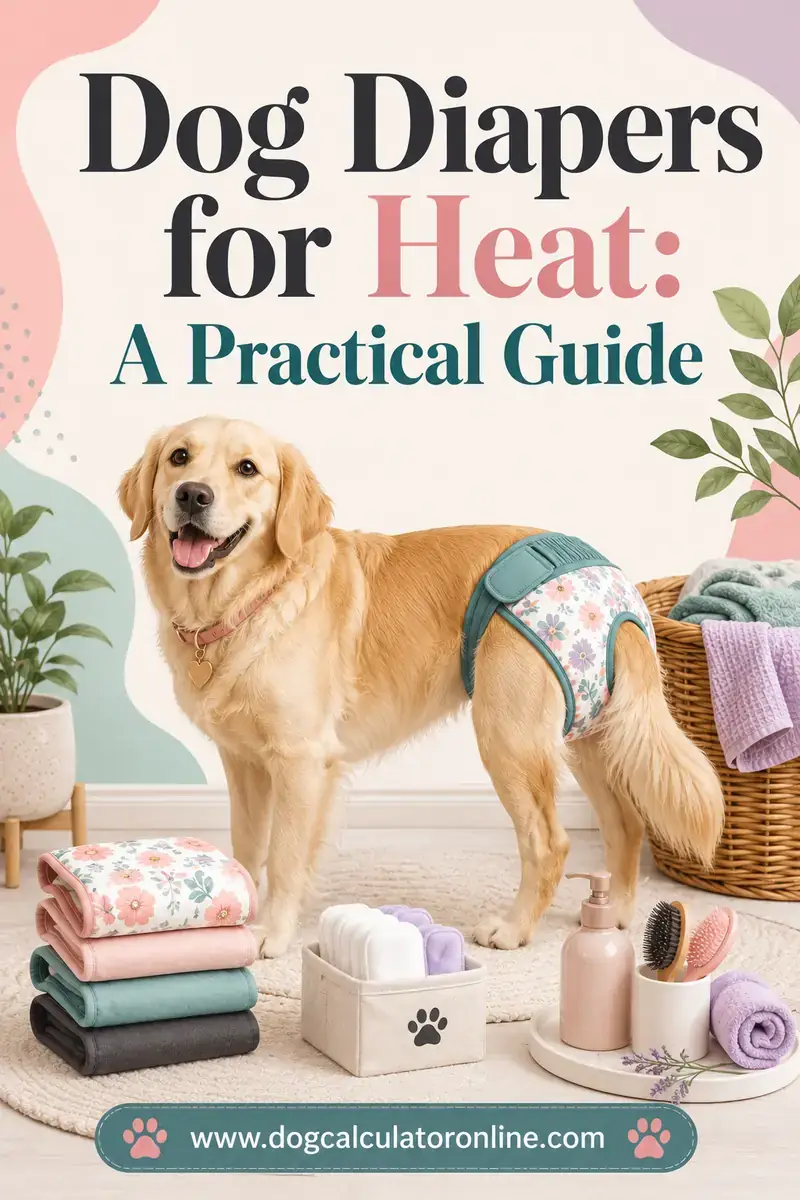
- Washable dog diapers or heat pants for indoor bleeding. Most dogs accept them within a day or two. Keep at least two so one is always clean. Change them regularly — a soiled diaper left on too long can irritate skin or cause infection. Our dog diapers for heat guide covers fit and sizing.
- Washable blankets or towels over her favorite couch and bed spots for easy laundering.
- Gentle cleanup. If she isn't keeping herself tidy, a damp cloth on her rear keeps her comfortable and prevents matting or irritation. Don't over-bathe — spot-cleaning is plenty.
A quick note on grooming: many dogs clean themselves thoroughly during heat, so you may not see much mess at all. Let her groom; just step in with a wipe-down when she needs the help.
Keeping Her Safely Contained
This is the part you can't relax on. During the fertile window especially, both your dog and every intact male nearby are highly motivated to reach each other:
- Leash-only outings, every time — even in a fenced yard during the fertile stage.
- No dog parks, off-leash trails, or daycare for the whole heat.
- Secure your fence and gate latches. Assume they'll be tested; intact males dig, climb, and push.
- Separate from intact males at home. Physical separation is the only reliable method — determined dogs defeat baby gates and closed-but-unlocked doors.
- Supervise bathroom breaks in the yard instead of letting her out alone.
Keep this up until all signs of heat have been gone for several days, since the fertile window can outlast the visible bleeding.
Comfort and Emotional Support
Behavior shifts are part of heat — clinginess, restlessness, or moodiness are all common and hormonal (the full breakdown is in dog in heat behavior explained). To help her feel settled:
- Follow her lead. Some dogs want extra cuddles; others want to be left alone. Read the day and respond.
- Keep exercise gentle. Leashed walks and enrichment burn off restless energy without overstimulating her.
- Offer a calm retreat. A quiet, cozy spot away from noise helps an anxious dog decompress.
- Be patient. Odd behavior isn't disobedience. Never punish her for it.
Feeding, Water, and Exercise During Heat
Heat doesn't require a special diet, but a few small adjustments help:
- Keep meals normal. Feed her usual food on her usual schedule. Don't switch foods or add supplements to "support" a heat — there's no need, and diet changes can upset her stomach when she's already a bit off.
- Watch appetite, gently. A mild dip is common and usually nothing to worry about. Make sure she's still eating something each day and drinking normally. A dog who refuses all food, though, is worth a vet call.
- Keep fresh water available. Some dogs drink a little more during heat. Just make sure clean water is always on hand.
- Exercise, but calmly. Leashed walks and enrichment burn off restless energy, which many dogs need during heat. Skip the high-excitement outings — dog parks, off-leash trails, intense play with strange dogs — both for containment and to avoid adding stress.
The theme throughout: small, steady, normal. Heat isn't the time for big changes to her routine.
Managing a Multi-Dog Household
If you have other dogs, heat changes the household dynamic for a few weeks:
- Intact males must be fully separated. A closed but unlocked door or a baby gate won't stop a determined male. Use solid physical separation, and never leave them together unsupervised, even briefly.
- Other females may get tense. Some spayed or non-cycling females become irritable around a dog in heat. Watch for friction and give everyone space if needed.
- Rotate access to shared areas so the dog in heat gets calm, private time and the others aren't constantly stirred up.
- Keep bedding separate for hygiene, and manage the diaper routine so she stays clean around housemates.
It's a temporary juggle, but a firm one — the separation from intact males in particular is non-negotiable for the whole cycle.
What Not to Do
A few home-care mistakes worth avoiding:
- Don't give any medication for discomfort — human medicines can be toxic, and any drug decision belongs to your vet.
- Don't rely on scent sprays or "masking" products to prevent mating. They're unreliable; containment is what works.
- Don't skip supervision when bleeding lightens. Lighter discharge can mean peak fertility, not the end of heat.
- Don't over-bathe in an attempt to "clean away" the heat. You can't, and it can irritate her skin.
A Realistic Week-by-Week Picture
It helps to know roughly how the few weeks tend to unfold, so you can pace yourself:
- Days 1–7 (heaviest bleeding): This is the messiest stretch. Lean hardest on diapers and washable bedding now, change often, and expect more frequent cleanups. Males are already interested, so containment starts on day one even though she's not yet fertile.
- Days 7–14 (discharge lightens): The mess eases, but this is the danger zone — lighter discharge often means the fertile window is opening. Do not relax supervision here. If anything, tighten it: this is when escape attempts and determined males cause unplanned litters.
- Days 14–21+ (winding down): Signs fade, discharge stops, and she loses interest in males (and they in her). Keep supervision going for several days after the last signs to be safe, then return to normal routines.
Every dog runs her own timeline, so treat these as a general shape rather than a schedule. The point is that the calmest-looking middle stretch is actually when vigilance matters most.
Overnight Care
Nights are usually easy, but a little setup helps:
- Protect her sleeping area with washable blankets, and put a fresh diaper on at bedtime if she's bleeding.
- Keep her close if she's restless. A dog unsettled by heat hormones often sleeps better near her people. A bed in your room can help her settle.
- Don't stress about diaper-free nights if she's settled and you've protected her bedding — letting her skin breathe overnight is fine as long as the bedding is washable.
- Stick to the routine. A calm wind-down and a predictable bedtime are grounding when she's feeling off.
Most dogs sleep through heat nights without trouble; the main job is protecting bedding and keeping her comfortable.
When to Check In With Your Vet
Home care handles the vast majority of heats, but call your vet if you notice:
- Foul-smelling, green, or pus-like discharge — especially in the weeks after a heat, when pyometra (a serious womb infection) classically appears. With lethargy, heavy drinking, vomiting, or a swollen belly, treat it as urgent.
- Bleeding beyond about four weeks, or unusually heavy bleeding.
- Genuine illness — refusing food entirely, lethargy, or apparent pain, rather than mild moodiness.
- A suspected unwanted mating — call promptly, since options are time-sensitive.
- Persistent false-pregnancy signs weeks after heat — ongoing nesting, distress, or milk production.
For the broader comfort-and-safety playbook, our how to help a dog in heat guide pairs well with this one.
FAQ
How do I take care of my dog while she's in heat?
Keep a calm, predictable routine, manage bleeding with washable diapers and bedding, keep her rear clean, and lock down containment — leash-only walks, secure fencing, and separation from intact males. Give her comfort and patience for moodiness. There's no medication to give; home care is routine and hygiene.
Do I need to bathe my dog during heat?
Not fully or frequently. Most dogs groom themselves, so spot-cleaning her rear with a damp cloth when needed is usually enough. Over-bathing can irritate her skin, and it won't shorten or "clean away" the heat.
How do I keep my house clean with a dog in heat?
Use washable dog diapers or heat pants for indoor bleeding and washable blankets over her favorite spots. Keep spares so one set is always clean, and change diapers regularly to prevent irritation. Bleeding usually lightens as the cycle progresses.
Can my dog still go for walks during heat?
Yes, on leash and ideally at quieter times and places. Skip dog parks and off-leash areas entirely, since she can attract intact males from a distance. Supervised, leashed walks also help burn off restless heat energy.
Should I keep my dog in heat separated from my male dog?
If he's intact, yes — physical separation is the only reliable way to prevent mating, since determined dogs get past gates and unlocked doors. Keep them apart for the whole heat and until all signs are gone for several days.
When should I call the vet about my dog in heat?
Call for foul-smelling discharge, lethargy, heavy drinking, vomiting, refusing food, bleeding beyond about four weeks, a suspected unwanted mating, or persistent false-pregnancy signs after heat. The weeks after a heat are when pyometra can appear, so stay alert then.
Steady Routine, Safe Dog
Caring for a dog in heat at home comes down to a calm daily rhythm, good hygiene, smart mess management, and airtight containment for a few weeks — no treatment required. Follow her lead on comfort, keep her safely away from intact males, and stay alert to the handful of signs that mean a vet call. If a mating does happen during the fertile window, get ahead of the next 63 days: the free dog pregnancy calculator turns the date into a due-date window and week-by-week plan in seconds.