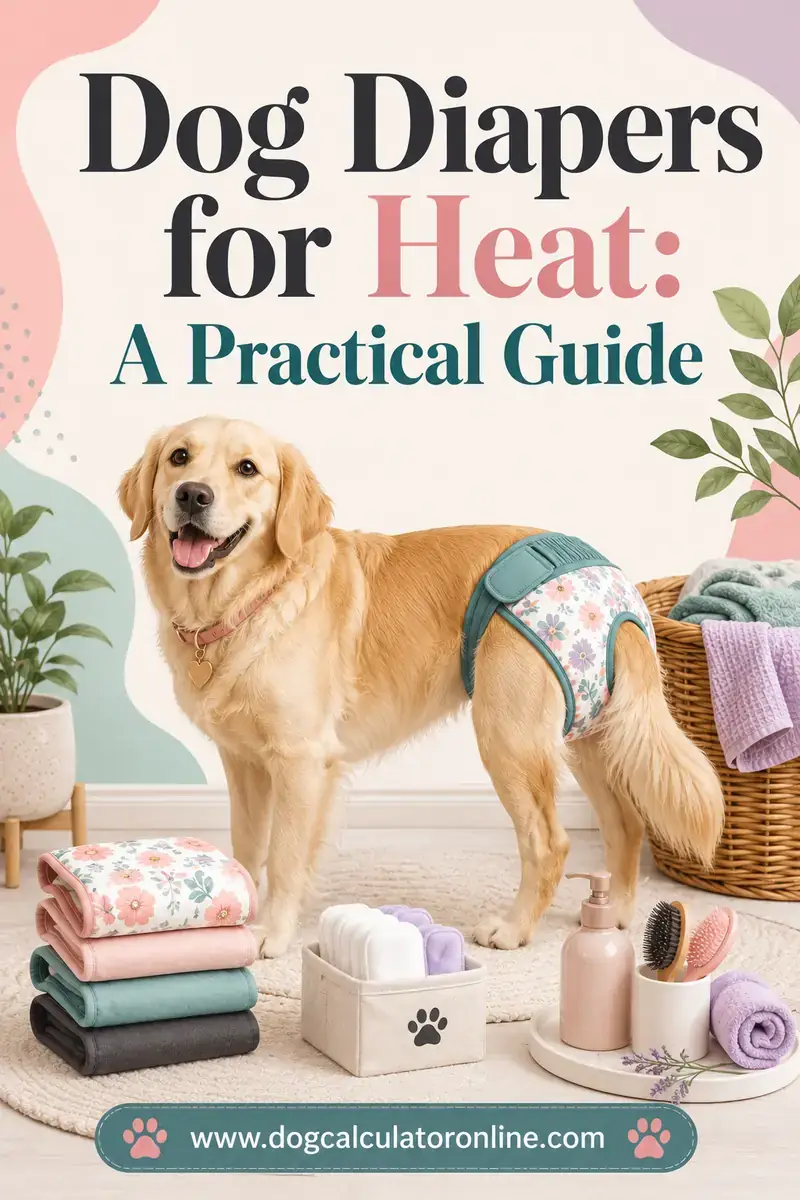
Dog Diapers for Heat: A Practical Guide
Dog diapers are one of the simplest ways to manage bleeding while your dog is in heat — they keep your home clean and let her move around the house normally during the messiest days. The two main choices are washable cloth diapers (reusable, economical, eco-friendlier) and disposable diapers (convenient, single-use). Either works; the keys are getting the size right, changing them often, and keeping her skin clean underneath. A well-fitted diaper is comfortable and secure; a poorly fitted one leaks, slips, or irritates.
Diapers handle mess, but they do not prevent mating — containment does that. Below: washable versus disposable, how to measure and size, getting her used to wearing one, hygiene, and a few common problems and fixes. For the bigger picture on managing bleeding, see how long does a dog bleed in heat.
🧷 Dog diaper picker
Tap what you want to sort out:
Tap an option above. Diapers manage mess — they do not prevent mating.
Washable vs. Disposable: Which to Choose
Both types do the same job — catching discharge — so the choice is about convenience, cost, and preference.
| Washable (cloth) | Disposable | |
|---|---|---|
| Cost over time | Lower (reusable) | Higher (single-use) |
| Convenience | Needs laundering | Grab and go |
| Environment | Less waste | More waste |
| Best for | Repeat cycles, budget-minded | Travel, quick needs |
Washable cloth diapers are reusable fabric wraps, often with a pocket for an absorbent liner. They're the economical long-term pick, especially since your dog will have many heats over her life, and they cut down on waste. The trade-off is laundry — you'll want at least two or three so one is always clean while others wash.
Disposable diapers are single-use and effortless: put one on, toss it when soiled. They're handy for travel, overnight trips, or if you'd rather not deal with washing. The trade-off is ongoing cost and waste.
Plenty of owners keep both — washables for everyday home use and a few disposables for outings. There's no wrong answer.
How to Measure and Size
Fit is everything. A diaper that's too big slips off; too small is uncomfortable and can leak. To size correctly:
- Measure her waist — the circumference just in front of her hind legs, where the diaper sits. Use a soft tape measure and don't pull it tight.
- Check the brand's size chart. Sizing varies a lot between makers, so always match your measurement to that specific brand's chart rather than assuming a "medium" is universal.
- Consider her build and weight, which many charts also reference.
- When between sizes, size up and rely on the adjustable closures for a snug fit.
A good fit is snug but not tight, sits comfortably around the waist, and has the tail opening lined up so her tail pokes through cleanly. If the diaper gaps, leaks, or slides, the size or fit is off.
A practical tip: many diapers rely on the tail as an anchor, which is why they can be trickier on breeds with very short or docked tails. For those dogs, suspenders or an onesie over the diaper can help keep it in place.
Getting Your Dog Used to a Diaper
Most dogs accept diapers surprisingly quickly, but a calm introduction helps:
- Introduce it positively. Let her sniff the diaper, then put it on paired with treats and praise. Keep the mood light and matter-of-fact.
- Start with short sessions. A few minutes at first, building up as she gets comfortable.
- Distract her. A walk, a chew, or a food puzzle takes her mind off the new sensation. Movement often helps a dog forget she's wearing it.
- Expect some initial fuss. A little freezing, walking oddly, or trying to remove it is normal at first. Most dogs settle within a day or two.
If she's determined to remove it, a snug (not tight) fit and a distraction usually solve it. Never scold her for the discomfort — patience wins.
Hygiene: The Part That Matters Most
A diaper is only as good as your hygiene routine. Skin problems come from diapers left on too long, not from diapers themselves:
- Change regularly. Swap a soiled diaper promptly. How often depends on her flow, which is heaviest early in the cycle (see how long does a dog stay in heat).
- Wipe her rear with a damp cloth or dog-safe wipe at changes if she isn't keeping herself clean, to prevent matting and irritation.
- Give diaper-free breaks. Let her skin breathe during supervised time, and overnight if she's settled and you've protected her bedding.
- Watch the skin. Redness, rash, or a bad smell means the diaper's staying on too long or fit is poor — adjust the routine, and see your vet if irritation persists.
- Launder washables well between uses, following the product's care instructions.
Good hygiene is the difference between diapers being a clean, comfortable help and becoming a source of skin trouble.
Common Problems and Fixes
- Diaper keeps falling off → size may be too big, or she has a short tail. Size for a snug fit and consider suspenders or a onesie over it.
- Leaks → change more often, add or replace the absorbent liner, or check that the fit isn't gapping.
- She keeps removing it → make sure the fit is snug, distract with activity, and try a onesie layer to block access.
- Skin irritation → change more frequently, add diaper-free breaks, wipe the area at changes, and see your vet if it doesn't clear.
- Won't tolerate it at all → go slower with the positive introduction, and lean more on washable blankets over her resting spots in the meantime.
Diapers vs. Belly Bands and Other Options
"Dog diaper" covers a couple of different products, and it's worth knowing which you actually want:
- Full diapers (heat pants) wrap around the hindquarters with a hole for the tail and cover the vulva — the right choice for a female in heat, since they catch discharge.
- Belly bands wrap only around the waist/belly and are designed for male marking, not female heat. They won't work for heat bleeding, so don't grab one by mistake.
- Onesies and full-body suits cover more of the dog and can be used over a diaper to keep it in place or add protection, especially handy for dogs who wriggle out of a plain diaper.
For a dog in heat, you want a proper diaper or heat pant. A belly band is the common mix-up to avoid.
Alternatives if Diapers Aren't Working
Some dogs simply won't tolerate a diaper, and that's okay — you have other ways to manage the mess:
- Confine to easy-clean areas. Set her up in a room with hard floors or washable rugs during the heaviest bleeding days.
- Washable blankets everywhere. Cover her beds, crate, and favorite couch spots with washable throws you can swap out and launder.
- Frequent gentle cleanups. Wipe her rear with a damp cloth or dog-safe wipe as needed to keep her comfortable.
- Lean on her grooming. Many dogs keep themselves surprisingly clean during heat, which reduces how much you need to manage at all.
There's no rule that says you must use a diaper — it's just one convenient tool. If she hates it, protect your surfaces and keep her clean the low-tech way.
What Diapers Don't Do
One important limit: diapers do not prevent mating. They manage bleeding, nothing more. During the fertile window you still need full containment — leash-only outings, no dog parks, secure fencing, and separation from intact males. Don't let a diaper create false confidence. The complete containment and comfort routine is in how to help a dog in heat and caring for a dog in heat at home.
FAQ
Do dog diapers work for a dog in heat?
Yes, for managing bleeding. Diapers catch discharge and keep your home clean during the messiest days, letting your dog move around normally. They do not prevent mating, though — you still need full containment during the fertile window.
Are washable or disposable dog diapers better for heat?
Both work; it's a matter of preference. Washable cloth diapers are reusable, cheaper over time, and create less waste but need laundering. Disposables are convenient and travel-friendly but cost more and add waste. Many owners keep some of each.
How do I know what size dog diaper to buy?
Measure her waist circumference just in front of the hind legs with a soft tape, then match it to the specific brand's size chart, since sizing varies between makers. Aim for a snug but not tight fit with the tail opening lined up. If between sizes, size up.
How often should I change my dog's diaper during heat?
Change it whenever it's soiled — more often early in the cycle when bleeding is heaviest, less as it lightens. Leaving a soiled diaper on too long can irritate skin or cause infection, so err on the side of changing more frequently and wipe her rear as needed.
Will my dog hate wearing a diaper?
Most dogs accept diapers within a day or two if you introduce them calmly with treats and praise, start with short sessions, and distract her with a walk or toy. Some initial fuss is normal. A snug fit and a onesie layer help with dogs who try to remove them.
Can a dog still get pregnant while wearing a diaper?
Don't rely on it. Diapers manage bleeding, not mating — they're not a barrier method. Preventing pregnancy during heat requires real containment: leash-only outings, secure fencing, and keeping her away from intact males.
Clean, Comfortable, and Contained
Dog diapers make the bleeding days of heat far easier to manage — pick washable or disposable to suit your routine, measure carefully for a snug fit, introduce them calmly, and stay on top of hygiene with regular changes and skin checks. Just remember they handle mess, not mating, so keep your containment tight during the fertile window. If a mating does happen, get ahead of the next 63 days: the free dog pregnancy calculator turns the date into a due-date window and week-by-week plan in seconds.