2 Dog Years in Human Years: How Old Is a 2-Year-Old Dog?
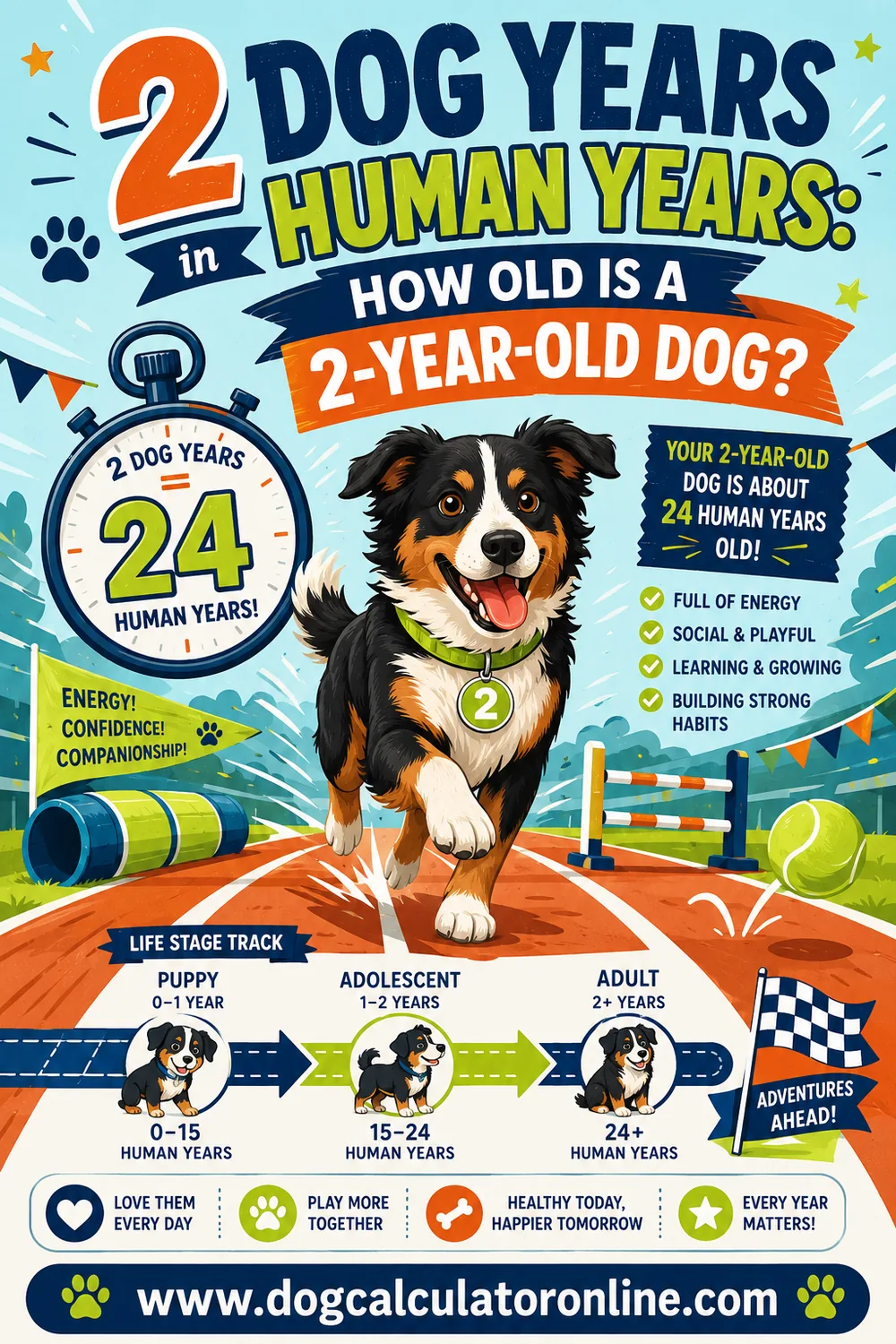
A 2-year-old dog is about 24 in human years — and unusually, that answer is the same for every breed size. The vet-backed conversion gives year one about 15 human years and year two about 9 more, landing all dogs at roughly 24 on their second birthday. Size only starts changing the math from age 3 onward.
If you want the precise figure for your dog's age and weight, the free dog age calculator gives you the size-adjusted answer plus the 2019 DNA-study number in seconds. Here's the full story behind "24."
🐾 Quick converter: nearby dog ages → human years
Tap an age to see the equivalent for a medium-sized dog (21–50 lb):
Tap an age above to see the human-year equivalent.
The Short Answer: 2 Dog Years ≈ 24 Human Years
The size-adjusted method used by veterinary organizations like the AVMA works in three steps:
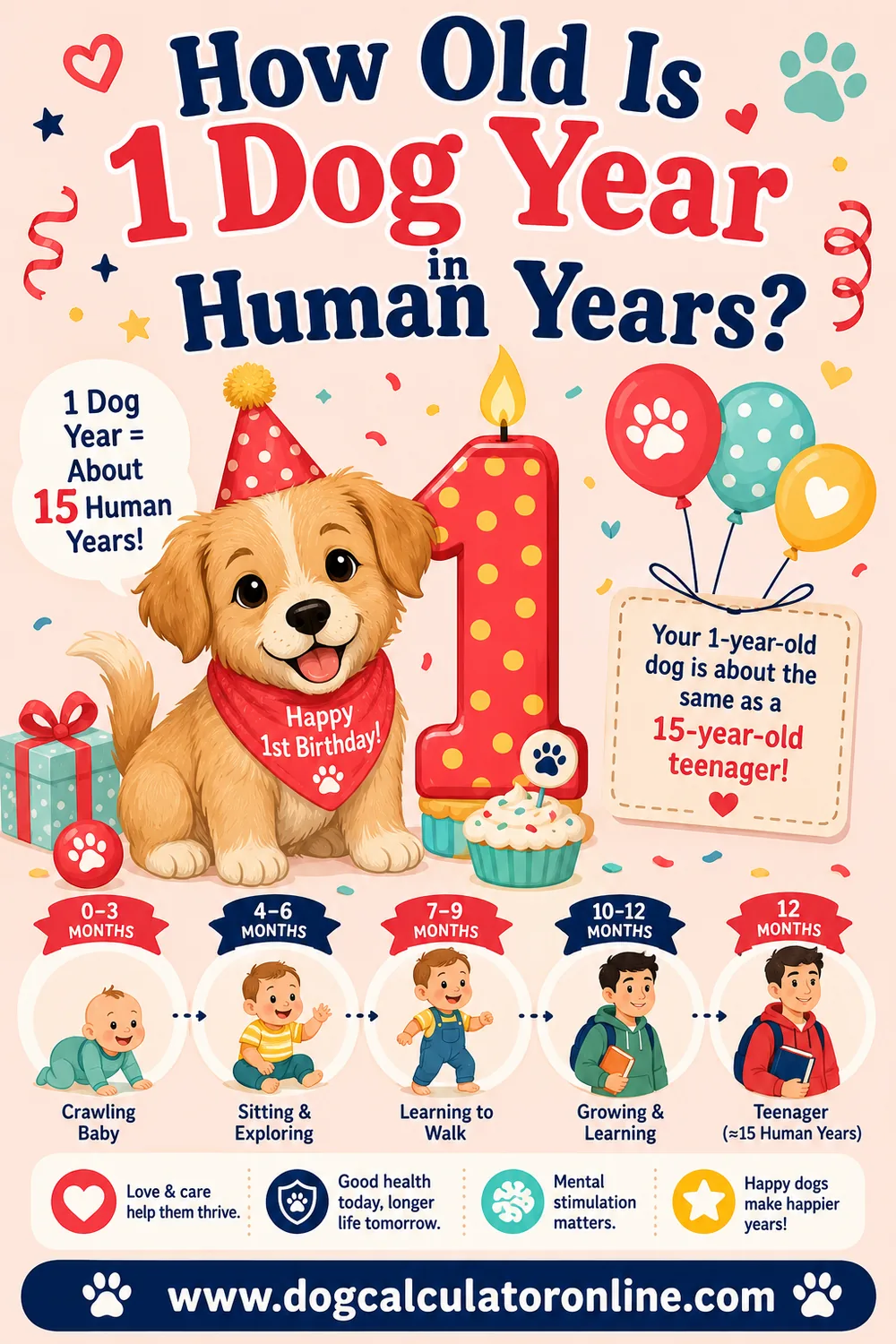
- Year one ≈ 15 human years. Dogs compress infancy through mid-adolescence into their first twelve months.
- Year two ≈ 9 more human years. Development continues fast, but not as fast as year one. That brings the total to about 24.
- Every year after that adds 4–7 human years, depending on the dog's adult size.
So at exactly age 2, a Yorkie, a Beagle, a Labrador, and a Great Dane are all sitting at roughly the same human-equivalent age: 24. It's the last birthday where size doesn't matter. From here on, the small dog ages about 4 human years per calendar year while the giant ages about 7 — and their paths diverge for the rest of their lives.
Compare that with the old "multiply by 7" myth, which calls a 2-year-old dog a 14-year-old human. A 2-year-old dog is done growing, fully mature sexually, and settling into adult behavior. That's a young adult in their mid-twenties, not a ninth-grader.
Why Year Two Is Worth 9 Human Years
Year one earns its 15 human years through explosive growth. Year two is quieter but still busy:
- Physical maturity completes. Small and medium breeds finished growing months ago; large and giant breeds finally close out bone growth and fill in adult muscle between 18 and 24 months.
- The brain catches up with the body. Adolescent impulsiveness fades. Most owners notice their dog "settling" somewhere in the second year — better focus, fewer zoomie-fueled decisions, more reliable recall.
- Hormones stabilize. Whether or not a dog is spayed or neutered, the behavioral turbulence of adolescence winds down.
- Adult routines lock in. Sleep patterns, energy levels, and food needs level off into what will be normal for years.
That's roughly the human journey from 15 to 24: finishing physical development, gaining self-control, and becoming a functioning adult. Nine human years in one dog year.
What the 2019 DNA Study Says About Age 2
The University of California San Diego's 2019 epigenetic study offers a second lens. By comparing DNA methylation patterns in Labrador Retrievers and humans, researchers derived:
Human age = 16 × ln(dog age) + 31
For a 2-year-old dog, that's 16 × ln(2) + 31 ≈ 42 human years.
Forty-two sounds high — and it's a great example of what the formula does and doesn't measure. At the molecular level, dogs accumulate age-related DNA changes extremely fast early in life, then the curve flattens. A 2-year-old Lab's methylation profile resembles a middle-aged human's, even though its body and behavior are those of a young adult.
| Method | 2-year-old dog in human years | What it measures |
|---|---|---|
| AVMA size-adjusted guideline | ≈ 24 | Life stage, maturity, care needs |
| UCSD epigenetic formula | ≈ 42 | Molecular (DNA methylation) age |
| Old 7:1 myth | 14 | Nothing useful |
For decisions about food, exercise, and vet care, the life-stage answer — 24 — is the one to use. The DNA number is fascinating context. The free dog age calculator shows both.
Age 2 Is Your Dog's Physical Prime
In human terms, 24 is peak fitness — and that maps beautifully onto dogs. A healthy 2-year-old dog is typically:
- At full strength and stamina. This is the age of effortless fetch marathons, long hikes, and top running speed.
- At their adult weight. Whatever your dog weighs now (assuming healthy body condition) is the baseline your vet will reference for years. It's worth writing down.
- Fully coordinated. The gangly adolescent phase is over; movement is confident and efficient.
- Mentally sharp and trainable. With adolescence behind them, 2-year-olds often make big training leaps. It's a great age for advanced skills, dog sports, or fixing lingering bad habits.
It's also the age where good habits pay compound interest. Research on Labradors has shown that dogs kept lean live meaningfully longer than overweight ones — and portion discipline is much easier to maintain from age 2 than to impose at age 7.
How the Math Changes After Age 2
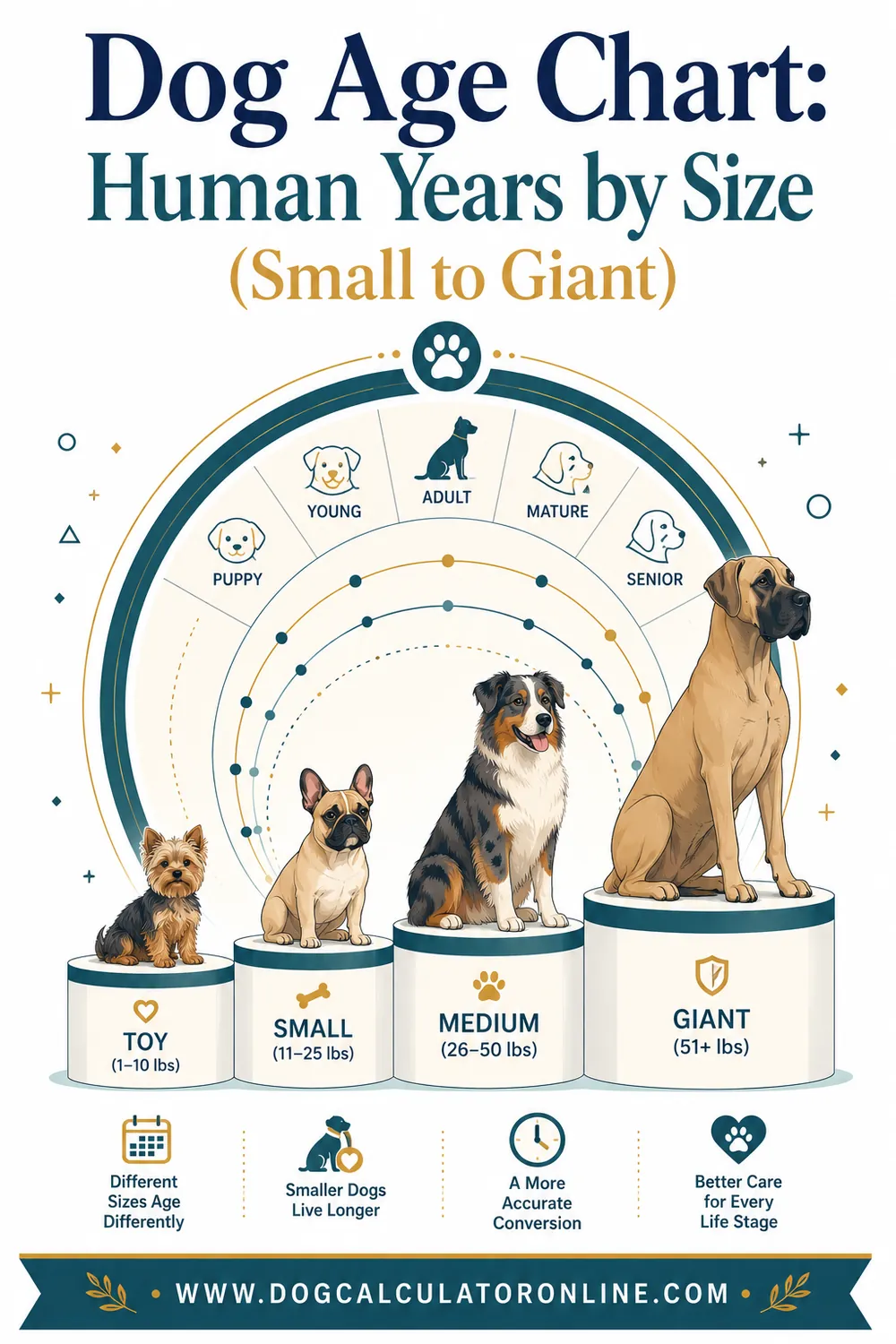
Your dog's second birthday is the fork in the road. From age 3 on, add human years by size class:
| Size class | Adult weight | Human years added per dog year (after 2) |
|---|---|---|
| Small | Under 20 lb | +4 |
| Medium | 21–50 lb | +5 |
| Large | 51–90 lb | +6 |
| Giant | Over 90 lb | +7 |
Run it forward a few years and the divergence is striking:
- At age 5: small ≈ 36, medium ≈ 39, large ≈ 42, giant ≈ 45
- At age 8: small ≈ 48, medium ≈ 54, large ≈ 60, giant ≈ 66
- At age 12: small ≈ 64, medium ≈ 74, large ≈ 84, giant ≈ 94
Same calendar, very different biological clocks. That's why any honest converter asks for your dog's weight — and why the dog age calculator handles the size adjustment for you automatically.
Smart Care Moves for a 2-Year-Old Dog
Twenty-four is young, but a few decisions at this age shape the decades — well, the dog-decades — ahead:
- Confirm the adult-food transition is done. By 2, virtually every dog, including giants, should be on adult food. If yours is still on puppy formula, ask your vet about switching.
- Dial in portions. Adult metabolism is slower than adolescent metabolism. If your dog is thickening around the waist, recalibrate against the feeding guide on your food label and confirm with your vet.
- Establish a dental routine. Most dogs show some dental disease by age 3. Starting brushing at 2 is far easier than starting at 8.
- Keep the annual exam. Once-a-year vet visits are the norm for healthy young adults. Bloodwork now can establish a healthy baseline for later comparison.
- Exercise the brain, not just the legs. Two-year-olds are at peak learning capacity. Puzzle feeders, new commands, and sniff walks keep that sharp mind busy.
As always, your own vet knows your dog best — these are conversation starters, not prescriptions.
Converting In-Between Ages (2 and a Half, 30 Months…)
Real dogs don't age in neat whole years, and the months between birthdays two and three are easy to convert: just pro-rate the size-based yearly step.
- Small dog at 2.5 years: 24 + (0.5 × 4) = 26 human years
- Medium dog at 2.5 years: 24 + (0.5 × 5) = 26.5 human years
- Large dog at 2.5 years: 24 + (0.5 × 6) = 27 human years
- Giant dog at 2.5 years: 24 + (0.5 × 7) = 27.5 human years
The same logic works for any fraction — a medium dog at 2 years 3 months is 24 + (0.25 × 5) ≈ 25. If mental math isn't your idea of fun, the free dog age calculator accepts years and months directly and applies the right multiplier for your dog's weight.
One habit worth starting now: record your dog's weight at this birthday. The size class you use for the conversion — and for a lot of future health context — is based on healthy adult weight, and age 2 is the first birthday where that number is final.
Why Vets Retired the 7:1 Rule
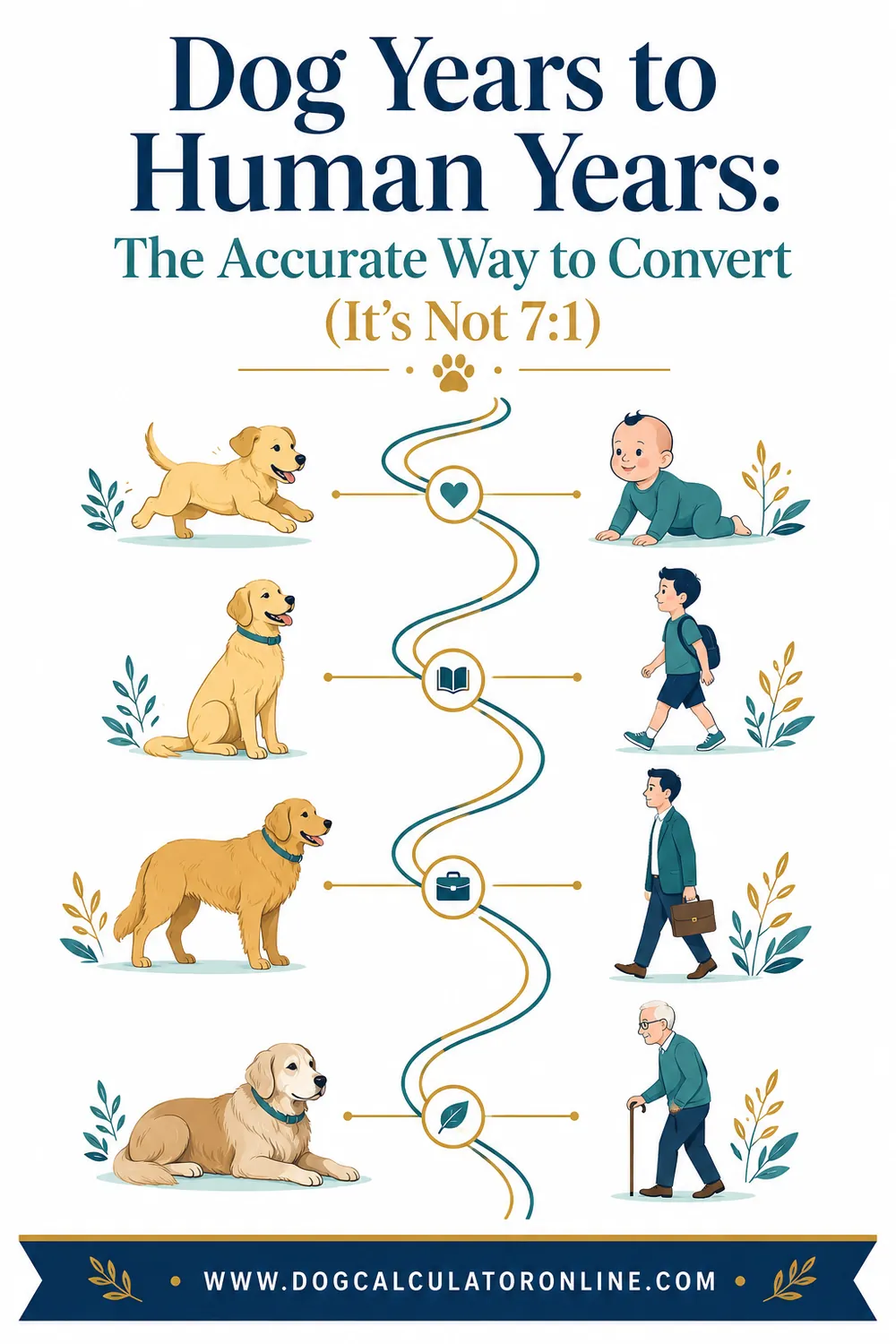
The "multiply by seven" formula probably began as mid-1900s shorthand: humans lived to about 70, dogs to about 10, so one dog year became seven human years. Easy to remember, wrong almost everywhere. It calls a 1-year-old dog a second-grader when they're biologically a teenager, and it can't explain why a 10-year-old Chihuahua is thriving while a 10-year-old Great Dane is elderly.
The size-adjusted method fixes both failures: it front-loads the first two years (15 + 9) to match real canine development, then splits by weight class to match the well-documented fact that big dogs age faster after maturity. It's the difference between a slogan and a model — and at age 2, it's why your dog gets the satisfying, accurate answer of 24 instead of the myth's absurd 14.
Related Guides
If this helped, these go deeper on the same question:
- How Old Is 1 Dog Year in Human Years?
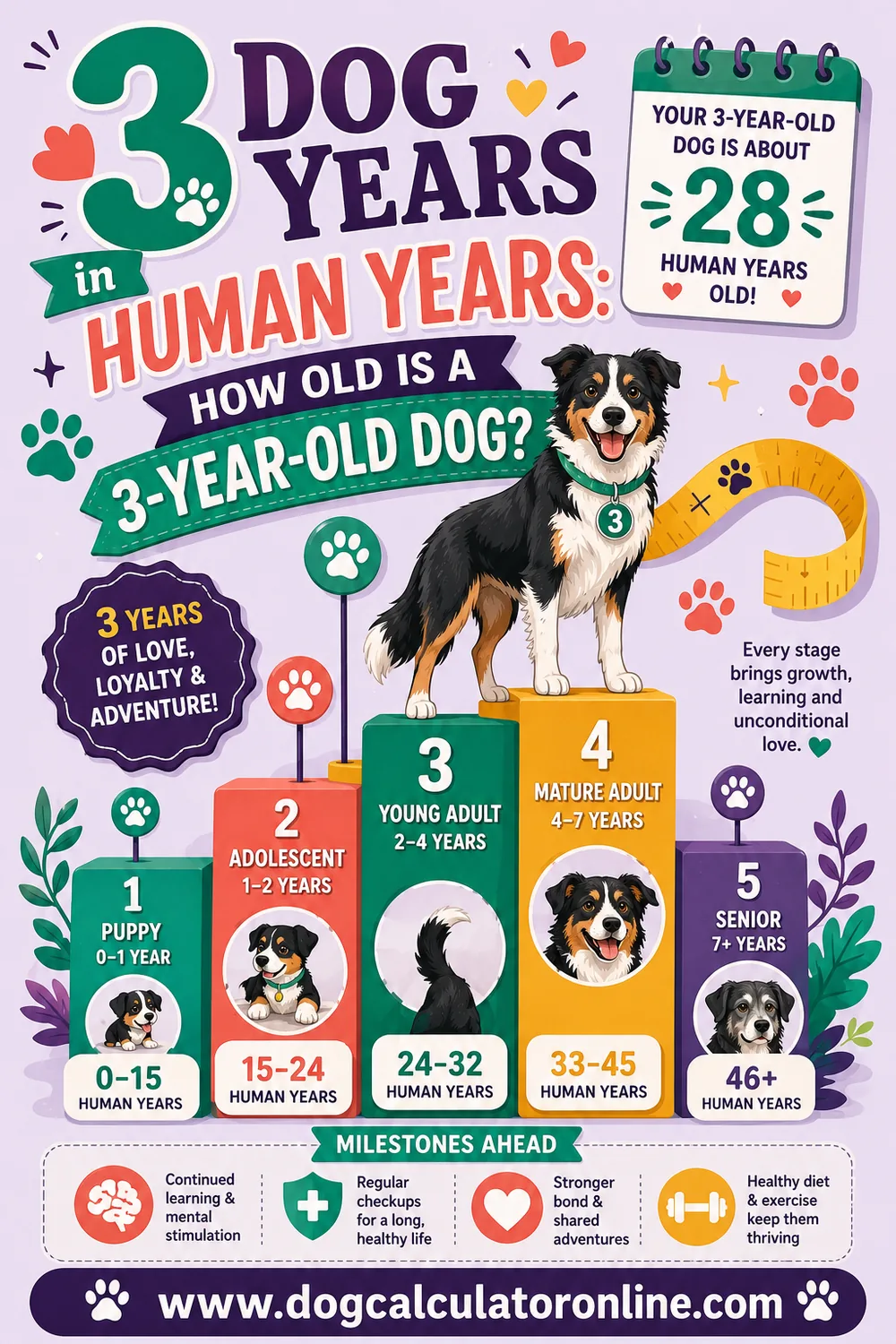
- 3 Dog Years in Human Years: How Old Is a 3-Year-Old Dog?
- Dog Years to Human Years: The Accurate Way to Convert (It's Not 7:1)
- Dog Age Chart: Human Years by Size (Small to Giant)
And if you just want your own dog's number, the free dog age calculator does it in one tap.
FAQ
How old is a 2-year-old dog in human years?
About 24. The vet-backed method gives 15 human years for year one and about 9 for year two, and at this age the answer is the same for all breed sizes.
Is a 2-year-old dog 14 in human years?
No — that's the outdated 7:1 rule. A 2-year-old dog is fully grown and behaviorally maturing, which matches a human in their early-to-mid twenties, not a young teen.
Does size matter at age 2?
Not yet. Small, medium, large, and giant breeds all sit around 24 human years at their second birthday. Size-based differences begin at age 3, when small dogs add about 4 human years per year and giants add about 7.
What does the DNA study say a 2-year-old dog is?
The 2019 UCSD epigenetic formula (16 × ln(age) + 31) gives about 42. That reflects fast molecular aging early in life, not life stage — for everyday purposes, 24 is the more useful figure.
Is a 2-year-old dog still a puppy?
No. By 2, even giant breeds have finished growing. A 2-year-old is a young adult — though plenty of dogs keep their puppy-like playfulness for years.
When will my 2-year-old dog calm down?
Many dogs settle noticeably between 18 months and 3 years, depending on breed energy. A 2-year-old with lots of drive isn't behind schedule — high-energy breeds mellow later.
The Bottom Line
Two dog years equal about 24 human years — the last age where every size of dog shares the same number. Your dog is a young adult in their physical prime, and the habits you set now (lean body weight, dental care, annual checkups) are the cheapest longevity boosters you'll ever buy.
Curious where your dog lands next year, or in five? The free dog age calculator converts any age with the proper size adjustment, plus the DNA-study figure — no math required.