15 Dog Years in Human Years: How Old Is a 15-Year-Old Dog?
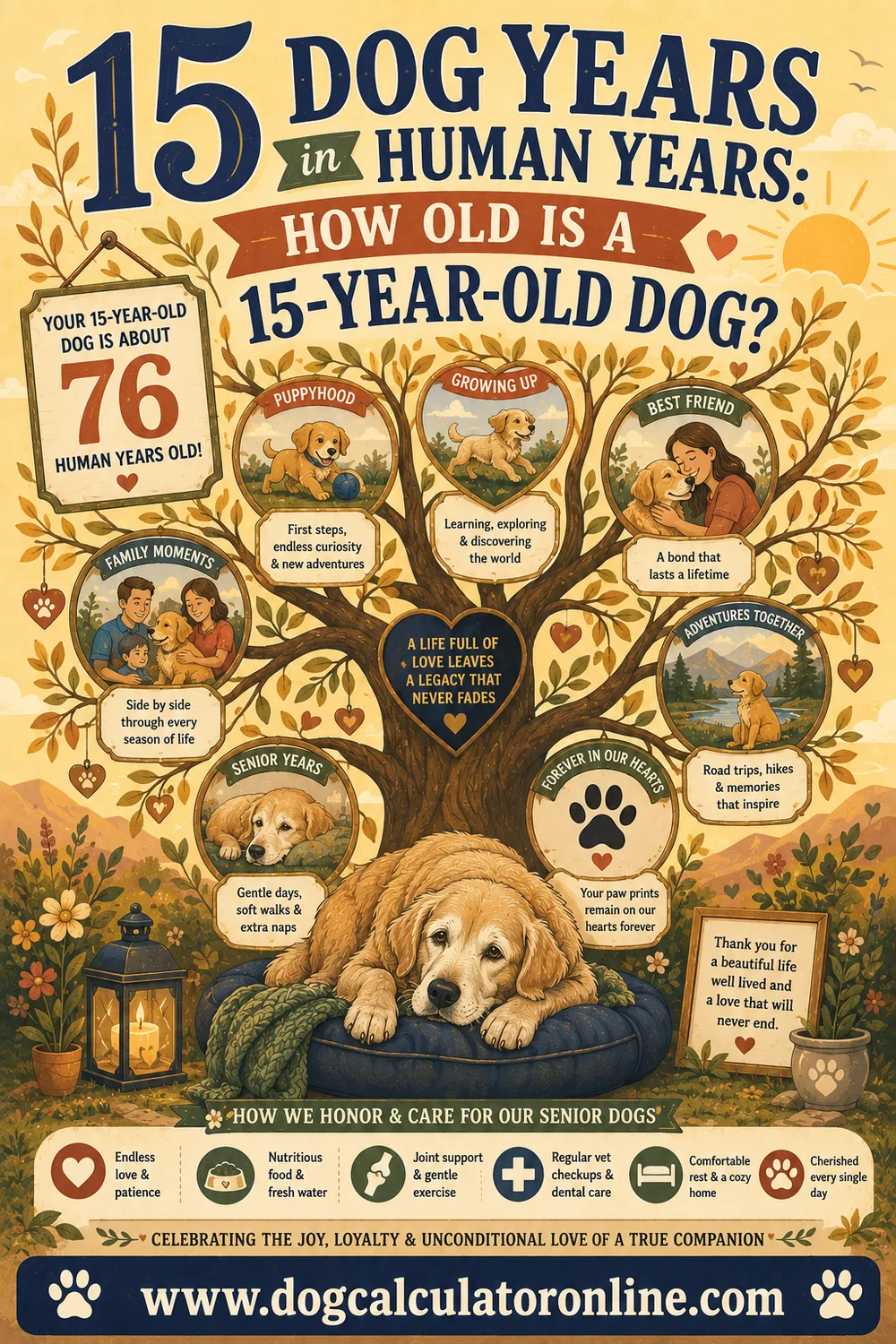
A 15-year-old dog is about 76 to 115 in human years, depending on size: roughly 76 for a small dog, 89 for a medium, 102 for a large, and 115 for a giant breed. Fifteen is a landmark birthday — the age where small dogs earn their "distinguished elder" title and any bigger dog enters genuine record-book territory.
For your dog's precise number, the free dog age calculator handles the size-adjusted math plus the 2019 DNA-study formula instantly. Here's the full story of 15.
🐾 Quick check: how old is a 15-year-old dog?
Tap your dog’s size class to see the human-year equivalent at age 15:
Tap a size above to see the answer.
The Short Answer: 15 Dog Years ≈ 76–115 Human Years
The size-adjusted guideline used by veterinary organizations gives a dog about 15 human years for year one, 9 more for year two, then 4–7 per year based on adult weight. For a 15-year-old, that's 24 plus thirteen size-adjusted years:
| Size class | Adult weight | Math | 15 dog years in human years |
|---|---|---|---|
| Small | Under 20 lb | 24 + (13 × 4) | ≈ 76 |
| Medium | 21–50 lb | 24 + (13 × 5) | ≈ 89 |
| Large | 51–90 lb | 24 + (13 × 6) | ≈ 102 |
| Giant | Over 90 lb | 24 + (13 × 7) | ≈ 115 |
By the old 7:1 myth, every 15-year-old dog is 105. For a small dog that's a 29-year overshoot — and it matters, because a 76-year-old equivalent often has genuinely good time left, while "105" sounds like a countdown. The size-adjusted numbers give a fairer picture of where your dog actually stands.
Fifteen Candles: Who Gets Here
- Small breeds (≈76): Reaching 15 is realistic and reasonably common. Chihuahuas, Toy Poodles, Maltese, Shih Tzus, and small terriers regularly hit the mid-teens. A healthy small 15-year-old is like a mid-seventies human — old, but often comfortably so.
- Medium breeds (≈89): Uncommon and impressive — the canine late-80s. Some famously long-lived mediums (Beagles, Australian Cattle Dogs) do get here; most medium dogs don't.
- Large breeds (≈102): A centenarian, effectively. Large dogs at 15 are extremely rare and typically make local-legend status at their vet clinic.
- Giant breeds (≈115): Essentially unrecorded. Giant breeds typically live 8–10 years; 15 would be roughly double the average.
Fun fact for perspective: the most famous canine longevity record — Bluey, an Australian Cattle Dog — reached 29 years. Verified super-elders are vanishingly rare, but they show what the upper edge of the species looks like.
The DNA Study's Answer: About 74
The 2019 UC San Diego study built its formula from DNA methylation — age-tracking chemical marks on DNA — measured in about a hundred Labrador Retrievers:
Human age = 16 × ln(dog age) + 31
For age 15: 16 × ln(15) + 31 ≈ 74 human years.
That's below even the small-dog guideline figure of 76, and far below the large-dog 102 — the clearest illustration of how the two systems diverge at life's far end. The epigenetic curve does nearly all its climbing early (a 1-year-old already reads 31) and creeps thereafter, adding barely one human-equivalent year per dog year by the mid-teens.
Both numbers are legitimate answers to different questions. "How much molecular-marker change has accumulated?" — about 74. "What life stage is this dog in, and what care fits?" — 76 to 115 by size, which is why vets use the size-adjusted view. The free dog age calculator shows both together.
What a 15-Year-Old Dog Is Like
Owners of very old dogs describe the same sweet, slow world:
- Masters of routine. The 15-year-old knows the schedule to the minute and prefers it unbroken. Predictability is comfort; changes are stress.
- Champion sleepers. Sixteen-plus hours a day is normal. The good stuff — meals, sniffing the yard, sitting against your leg — happens in the awake windows, and matters enormously.
- Selective senses. Hearing and vision are usually well faded. Many owners switch fully to touch, scent, and visual-approach communication without ever quite deciding to.
- Occasional confusion. Cognitive aging is common by 15 — night restlessness, standing at the wrong side of doors, forgetting the route home from the yard. It's manageable with vet guidance, and it doesn't dim a dog's capacity for contentment.
- Unfiltered honesty. A 15-year-old dog wags for what it loves and walks away from what it doesn't. There's a certain magnificence to it.
Caring for a Dog in the Mid-Teens
The plan at 15 is comfort, monitoring, and joy — proportions set by your vet:
- Frequent vet partnership. Twice-yearly exams are the floor at this age; many vets prefer more frequent check-ins for teenaged dogs, with bloodwork and urinalysis tracking kidneys, liver, and thyroid.
- Pain management, proactively. Nearly every 15-year-old has some arthritis. Under-treated pain masquerades as "slowing down." Your vet has real options — use them rather than assuming age explains everything.
- Home like a good care facility. Non-slip floors, ramps, night lights, low-entry beds, water within a short stroll of every nap spot.
- Small, reliable pleasures. Short sniff walks, sun patches, gentle grooming, favorite people. At 76-to-115 human years, happiness is logistics — make the good things easy to reach.
- Watch weight and appetite closely. Muscle loss and appetite dips are common in the very old and always worth reporting. Some dogs need calorie-denser food; that's a vet-guided change.
- Track quality of life honestly. Brief daily notes — ate well, walked, wagged — keep you and your vet aligned on how the good days are running. For a healthy 15-year-old small dog, the honest answer is often: very well indeed.
How Dogs Get to 15: The Recurring Ingredients
Fifteen-year-old dogs aren't random luck. Ask vets what their oldest patients have in common and the same ingredients come up:
- Small frames. Size is the dominant factor — the 4-human-years-per-year aging rate of small breeds simply leaves more runway. Genetics deals this card at birth.
- A lifetime of lean. The best-documented owner-controlled factor in dog longevity is body condition. The landmark Labrador feeding study showed lean-kept dogs living significantly longer than heavier littermates — and the oldest-old are almost never overweight dogs.
- Maintained teeth. Chronic dental infection burdens the heart, kidneys, and immune system for years. The 15-year-olds tend to be dogs whose mouths got attention in midlife.
- Vet visits that never lapsed. Conditions caught on routine senior bloodwork — kidney drift, thyroid change — get managed for years. The same conditions found late get fought for months.
- Daily movement, forever. Not athletic feats: just walks that never stopped. Muscle maintained through the senior years is what keeps a 15-year-old standing up easily.
None of this guarantees anything — biology keeps its own counsel. But if you're reading this with a 10-year-old at your feet, the list above is the practical recipe for maximizing the odds of celebrating a fifteenth.
Converting the In-Between Ages
Dogs at this stage are often described in halves — "fifteen and a half" carries real information when a year equals 4–7 human ones. The pro-rating is simple: add the fraction of the yearly step.
- Small dog at 15.5: 76 + (0.5 × 4) = 78 human years
- Medium dog at 15.5: 89 + (0.5 × 5) ≈ 91.5
- Small dog at 15 years 3 months: 76 + (0.25 × 4) = 77
At this altitude every quarter-year is roughly a human year, which is exactly why vets like seeing very senior dogs every few months rather than annually. For instant precision with years, months, and size class, use the free dog age calculator — it was built for exactly this arithmetic.
What a Geriatric Vet Visit Looks Like at 15
If your dog just hit 15, the check-ups themselves change character — less "annual once-over," more "rolling conversation." Knowing what's typically on the agenda makes each visit count:
- Weight and body condition first. For a very old dog, the trendline matters more than the number. A pound lost on a 12-lb senior is a bigger deal than it sounds, so most clinics weigh geriatric patients at every single visit.
- A hands-on mobility check. The vet will flex joints, watch your dog walk, and feel for muscle loss along the spine and hind legs — often catching discomfort a stoic dog has been hiding at home.
- Bloodwork and urinalysis as routine, not as a response. At this age labs are the early-warning system, tracking kidney, liver, and thyroid values against your dog's own previous results.
- A look in the mouth. Dental disease is nearly universal in the very old and quietly affects appetite and comfort. What to do about it is a case-by-case call your vet will talk through with you.
- Your report from home. This is where your daily notes shine. Appetite, water intake, sleep quality, accidents, night pacing — the small observations often steer the visit more than the exam does.
Come armed with questions, too, and don't save the awkward ones. "What should I watch for next?" and "what would make you want to see us sooner?" are exactly what a six-month interval is designed around.
Small Fifteen vs. Big Fifteen: Same Birthday, Different Playbooks
Because 15 means 76 for one dog and 102+ for another, the care emphasis genuinely differs by size. Same love, different logistics:
| Small dog at 15 (≈76) | Large dog at 15 (≈102+) | |
|---|---|---|
| Life-stage reality | Senior with real runway — often 1–3 good years ahead | Extreme elder — every season is a bonus |
| Walks | Two or three short daily strolls, still genuinely energetic on good days | Brief, gentle outings; the yard may be the whole map |
| Vet cadence | Every 6 months, more if labs say so | As often as the vet advises — often quarterly |
| Big risks to watch | Dental disease, heart murmurs, luxating knees, weight creep | Mobility loss, muscle wasting, difficulty rising |
| Home priorities | Steps up to the couch, warm bedding | Traction everywhere, ramps, possibly a support harness |
| Owner mindset | Plan in years | Plan in months, celebrate in weeks |
The overlap is still bigger than the differences — routine, lean weight, pain management, and easy joys serve both dogs. But if you've owned a small senior before and now have a big one at 15 (or vice versa), recalibrating expectations to the right column keeps you responsive to the dog you actually have. When in doubt about what's reasonable to expect, your vet has seen the whole spectrum.
Marking the Milestone: A Senior-Safe Fifteenth
A fifteenth birthday deserves acknowledgment — and the best celebrations for a very old dog double as enrichment:
- The slowest, sniffiest walk of the year. Pick somewhere rich in smells, budget triple the usual time, and let your dog read every message board. For a dog whose eyes and ears have faded, the nose is the last great sense — feed it.
- A gentle feast, kept sensible. A puzzle feeder loaded with their normal food plus a small vet-approved topper beats anything rich enough to upset a 15-year-old stomach. When in doubt about a treat, skip it or ask your vet.
- A comfort gift. A heated (dog-safe) bed pad for arthritic joints, a new ramp, or plusher bedding — presents that get used 16 hours a day.
- The photo session. Gray muzzles photograph beautifully in soft morning light. Future you will treasure these more than almost anything else on this list.
- A quiet guest list. Very old dogs often love one familiar visitor and find five overwhelming. Celebrate at your dog's social speed.
However you mark it, the day itself is the point: fifteen years of mornings together is a genuinely rare thing, and both of you earned it.
Related Guides
If this helped, these go deeper on the same question:
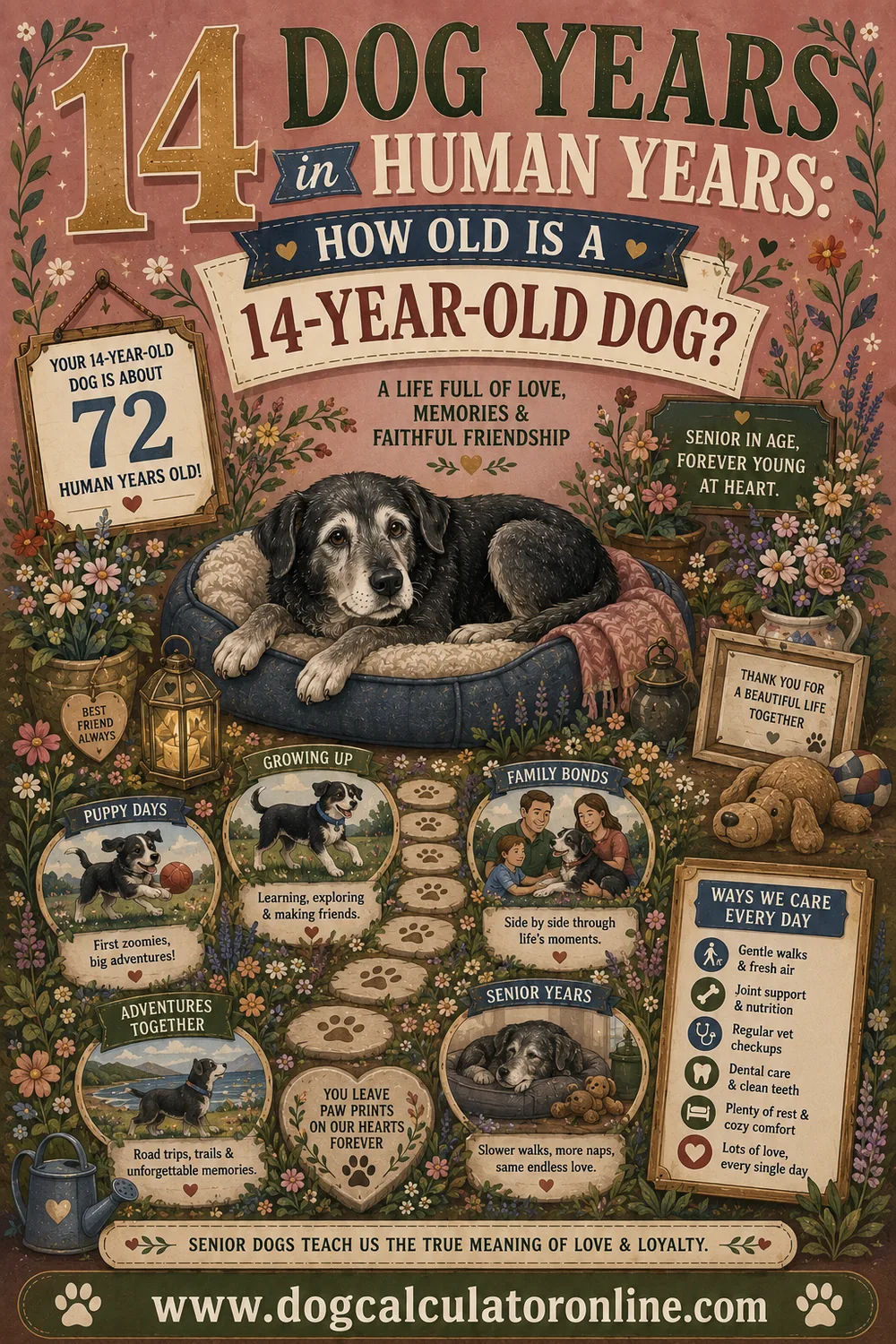
- 14 Dog Years in Human Years: How Old Is a 14-Year-Old Dog?
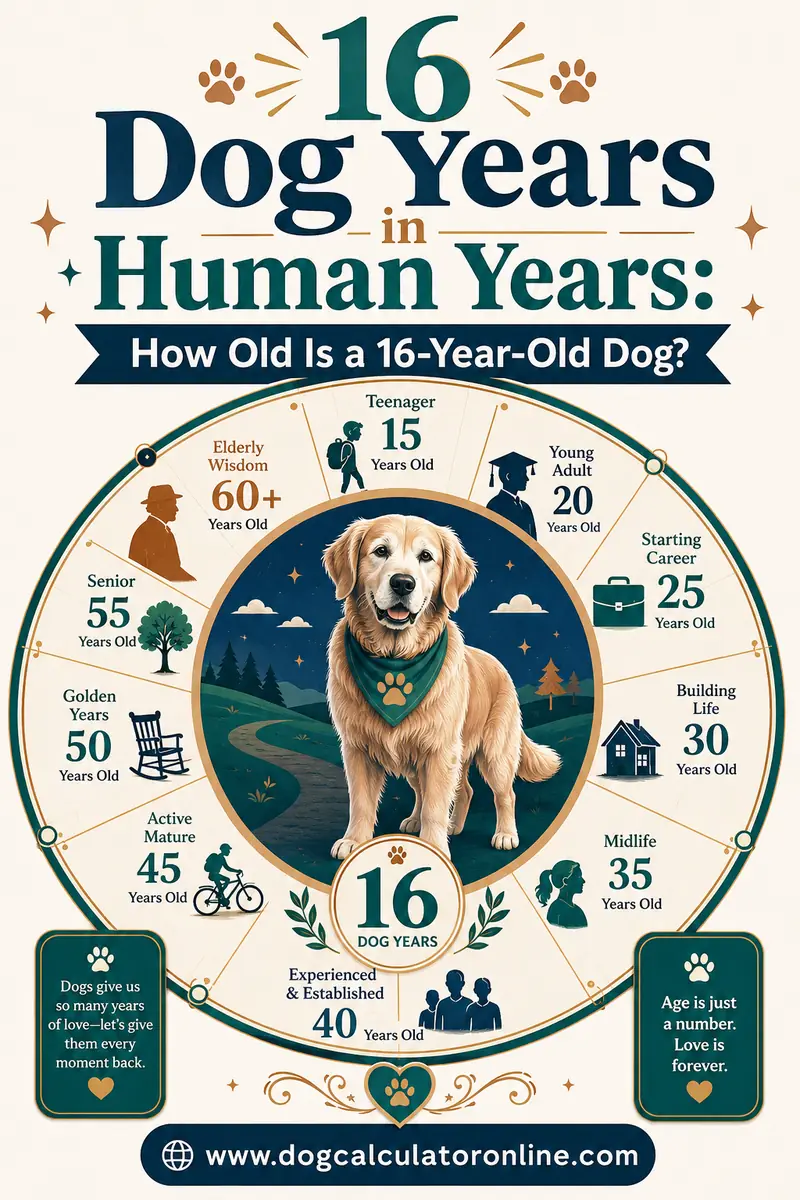
- 16 Dog Years in Human Years: How Old Is a 16-Year-Old Dog?
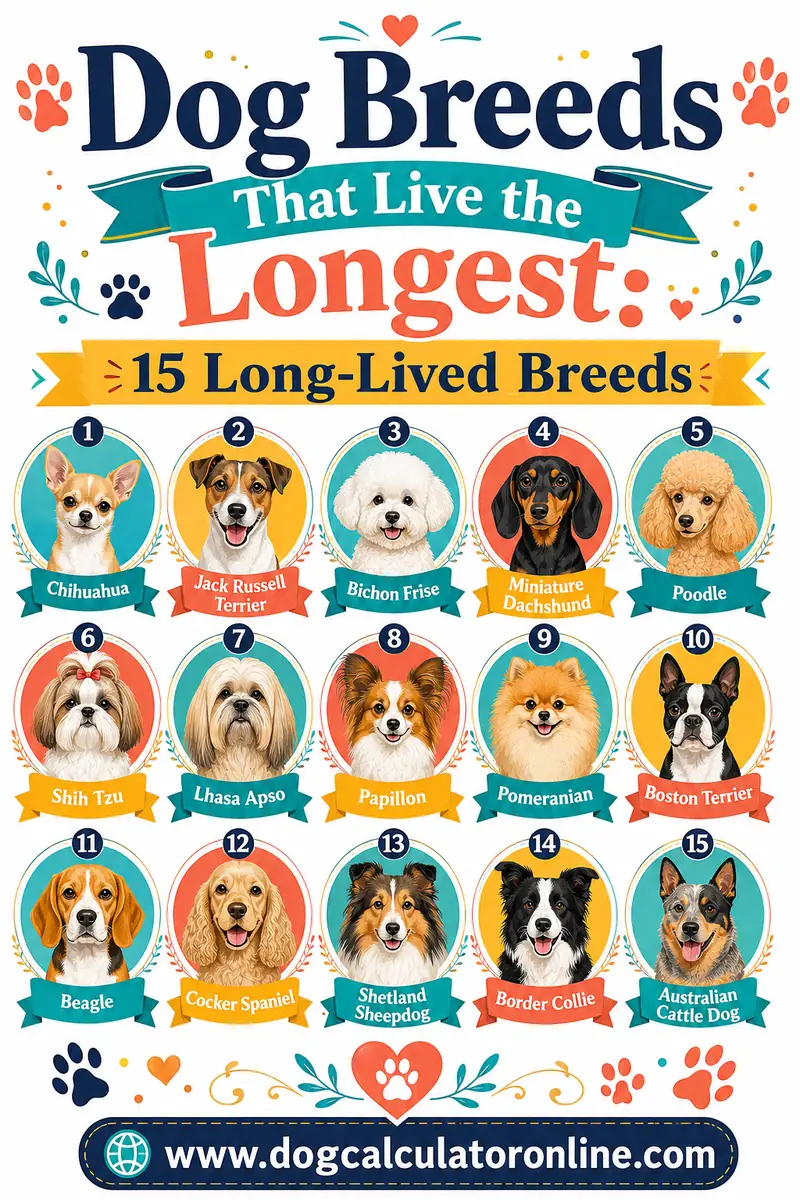
- Dog Breeds That Live the Longest: 15 Long-Lived Breeds
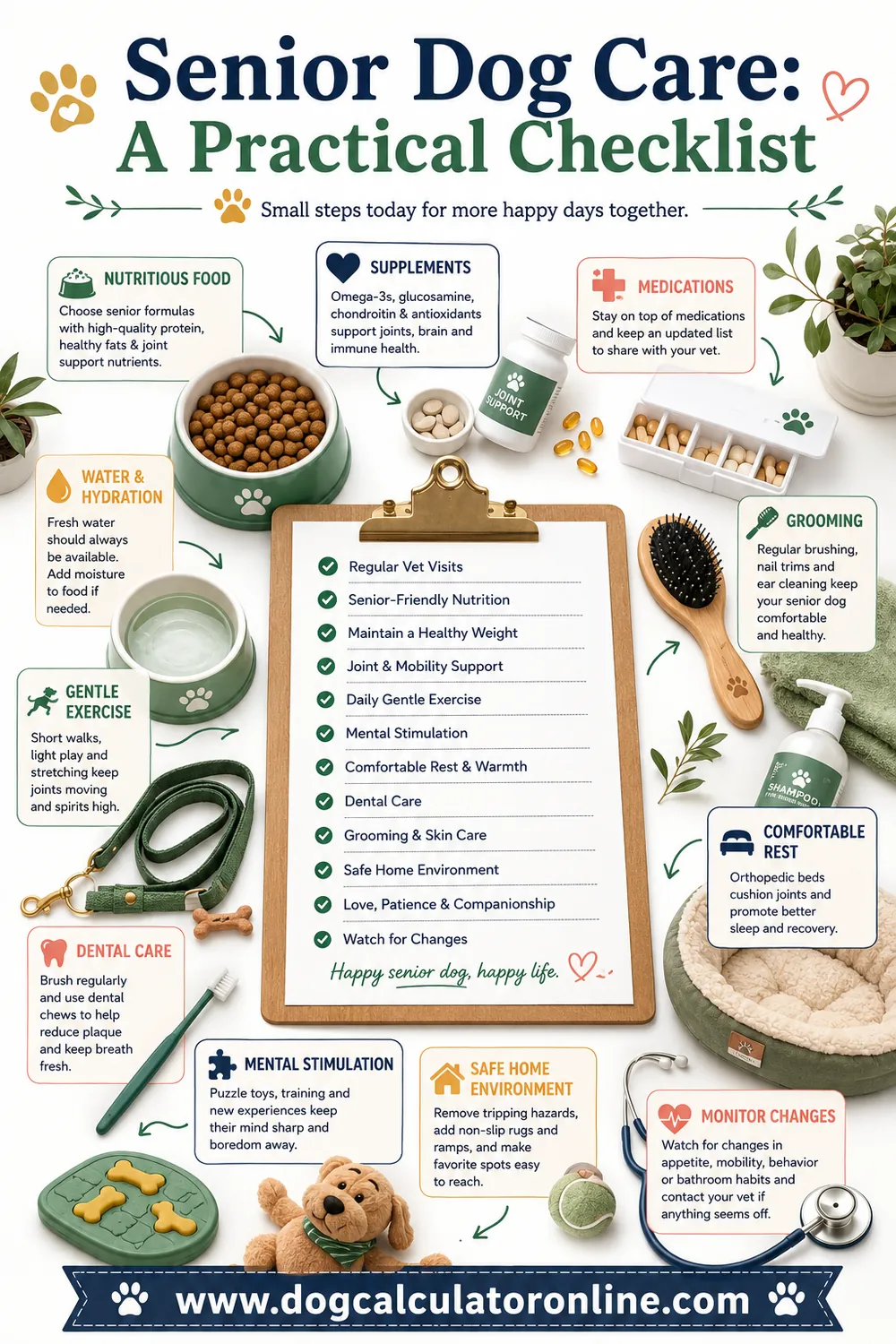
- Senior Dog Care: A Practical Checklist
And if you just want your own dog's number, the free dog age calculator does it in one tap.
FAQ
How old is a 15-year-old dog in human years?
About 76–115 depending on size: 76 for small dogs, 89 for medium, 102 for large, and 115 for giant breeds, using the vet-backed size-adjusted method.
Is a 15-year-old dog 105 in human years?
Only by the outdated 7:1 rule. A small 15-year-old is closer to 76 — a meaningful difference, since mid-seventies often comes with good years still ahead.
Is it common for dogs to live to 15?
For small breeds, yes — many reach 14–16. It's uncommon for medium breeds, rare for large breeds, and virtually unheard of for giants.
What does the DNA study say about a 15-year-old dog?
About 74 human years, by the 2019 UCSD formula. The epigenetic clock flattens in late life, so it reads lower than the life-stage guideline — an interesting scientific contrast, not a care guide.
How can I help my 15-year-old dog live longer?
Keep weight lean, manage arthritis pain through your vet, hold a steady routine, do gentle daily movement, and monitor appetite and behavior closely. Frequent vet visits catch problems while they're still small.
What breeds live to 15 most often?
Small breeds dominate: Chihuahuas, Toy Poodles, Maltese, Shih Tzus, Dachshunds, Jack Russell Terriers, and similar. Among mediums, Beagles and Australian Cattle Dogs are noted for longevity.
How much exercise does a 15-year-old dog need?
Whatever your dog can do comfortably — for most, that's two or three short, unhurried walks a day with generous sniffing time. Movement preserves muscle and mood, but the dog sets the distance. If your dog lags, pants hard, or stiffens afterward, shorten the route and mention it at the next vet visit.
Should I change my dog's food at 15?
Not automatically. Some very old dogs need fewer calories, others need more to hold weight, and some benefit from different textures if teeth are sore. Because the right answer depends on your dog's weight trend and bloodwork, food changes at this age are best made with your vet rather than off a label.
The Bottom Line
Fifteen dog years equal about 76–115 human years — a graceful 76 for the little ones, an off-the-charts 115 for any giant who defies the odds. A dog at 15 has given you a decade and a half; the mid-teens are for repaying it in comfort, routine, and easy-to-reach joy.
Get your dog's exact human age — size-adjusted, DNA-study figure included — free at the dog age calculator.