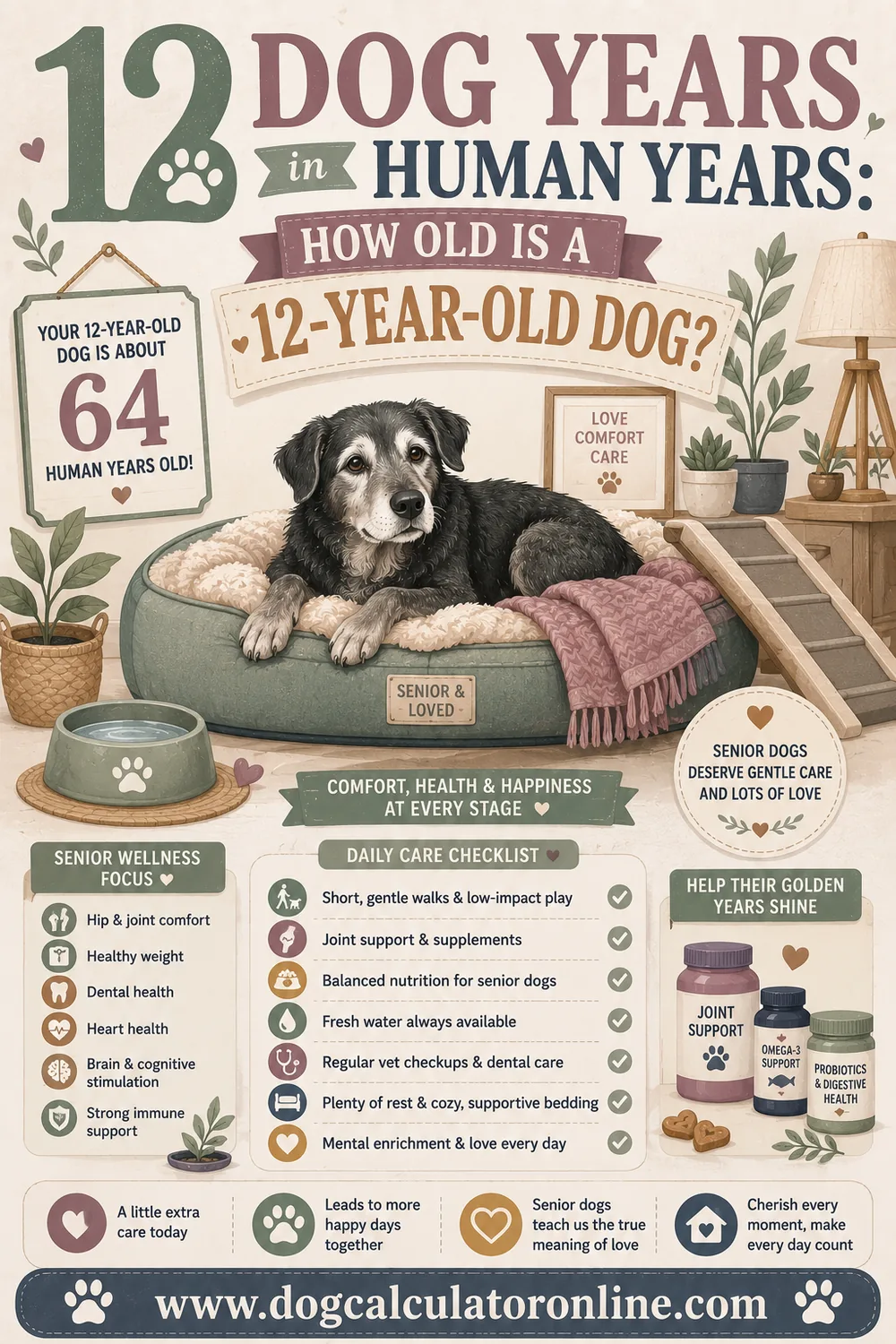
12 Dog Years in Human Years: How Old Is a 12-Year-Old Dog?
A 12-year-old dog is about 64 to 94 in human years, depending on size: roughly 64 for a small dog, 74 for a medium, 84 for a large, and 94 for a giant breed. At this age, every dog is a senior — the question is whether yours is a young-ish retiree or a certified great-grandparent.
For the exact figure, the free dog age calculator applies your dog's size automatically and shows the 2019 DNA-study number too. Here's what 12 means, and how to make these years comfortable and good.
🐾 Quick check: how old is a 12-year-old dog?
Tap your dog’s size class to see the human-year equivalent at age 12:
Tap a size above to see the answer.
The Short Answer: 12 Dog Years ≈ 64–94 Human Years
Using the size-adjusted guideline veterinary organizations endorse — about 15 human years for year one, 9 for year two, then 4–7 per year by adult weight — a 12-year-old is 24 plus ten size-adjusted years:
| Size class | Adult weight | Math | 12 dog years in human years |
|---|---|---|---|
| Small | Under 20 lb | 24 + (10 × 4) | ≈ 64 |
| Medium | 21–50 lb | 24 + (10 × 5) | ≈ 74 |
| Large | 51–90 lb | 24 + (10 × 6) | ≈ 84 |
| Giant | Over 90 lb | 24 + (10 × 7) | ≈ 94 |
The 7:1 myth calls every 12-year-old dog 84 — right for a large breed by coincidence, but a 20-year miss for a small one. At this end of life the differences are stark: a 12-year-old Maltese may have several good years ahead, while a 12-year-old Great Dane is among the oldest of its kind.
Twelve by Size: Four Very Different Seniors
- Small breeds (≈64): Established senior, often still lively. With typical lifespans of 14–16 years, a healthy 12-year-old small dog frequently has real quality time left — think energetic early retirement.
- Medium breeds (≈74): Solid old age. Twelve is at or near the typical lifespan ceiling for many medium breeds; dogs here deserve full senior support and get extra credit for every spry moment.
- Large breeds (≈84): Elderly and impressive. A 12-year-old Lab has beaten the odds. Priorities are comfort, mobility, and close vet partnership.
- Giant breeds (≈94): Extraordinary. Giants rarely see 12; one who does is the canine equivalent of a nonagenarian and should be treated accordingly — gently, gratefully, and with a camera nearby.
What the DNA Study Says: About 71
The 2019 UC San Diego study built an epigenetic clock by comparing DNA methylation patterns in about a hundred Labrador Retrievers with those of humans. The formula:
Human age = 16 × ln(dog age) + 31
For age 12: 16 × ln(12) + 31 ≈ 71 human years.
Notice something odd: the guideline says a large 12-year-old is 84, but the Labrador-derived DNA formula says 71. By this point in life the epigenetic curve has flattened almost completely — between ages 10 and 14 it adds only about 5 human-equivalent years. The molecular clock essentially says old dogs stop accumulating methylation change quickly; the life-stage guideline says their bodies and care needs keep advancing.
For practical purposes — food, vet schedules, mobility support — follow the size-adjusted number and, above all, the dog in front of you. The DNA figure is a fascinating footnote, and the free dog age calculator displays both.
Living Well at 64–94: The Comfort Years
Twelve-year-old dogs are honest about what they need. The common threads:
- Routine is treasured. Old dogs anchor themselves to predictable meals, walks, and bedtimes. Big schedule shake-ups are genuinely stressful now; consistency is kindness.
- Mobility needs engineering. Arthritis is nearly universal by this age. Ramps, traction rugs, orthopedic bedding, and shorter-but-frequent walks preserve independence. If your dog struggles to rise, hesitates at stairs, or has stopped jumping, tell your vet — modern comfort options are much better than "just getting old" resignation.
- Senses have softened. Many 12-year-olds hear and see less. Approach where they can see you, keep floor plans stable, use scent and touch cues. Dogs handle sensory aging with more grace than we do.
- Nighttime may change. Some senior dogs pace, vocalize, or seem confused after dark — possible signs of canine cognitive decline. Mention them at the next visit; early management helps.
- Appetite is information. A senior skipping meals isn't being fussy until a vet says so. Dental pain, nausea, and organ changes all speak through the food bowl first.
The 12-Year-Old Care Plan
At this age, the veterinary rhythm matters more than any single intervention. The essentials, with specifics left to your own vet:
- Twice-yearly exams, minimum. Six months at this life stage is like 2–5 human years. Many vets like seeing very senior dogs even more often.
- Regular senior bloodwork and urinalysis. Kidney, liver, and thyroid trends caught on labs — before symptoms — are the difference between managing a condition and chasing it.
- Weight vigilance in both directions. Extra pounds strain old joints; unplanned weight loss is a flag that always warrants investigation.
- Pain awareness. Dogs hide discomfort. Slowness, licking joints, reluctance on stairs, or grumpiness when touched are how arthritis talks. Your vet has options — never medicate a dog from your own cabinet.
- Gentle daily movement. Motion is lotion for old joints, and sniff-heavy strolls exercise the brain at the same time.
- Quality-of-life check-ins. Good days should outnumber hard ones. Keeping brief notes on appetite, mobility, and joy makes conversations with your vet clearer if health wobbles.
Cognitive Aging at 12: What's Normal, What's CCD
Somewhere between "sleeps more" and "seems confused" lies one of the most under-discussed parts of canine old age: cognitive change. By 12, many dogs show some mental slowing — longer processing time for commands, less interest in novelty, deeper sleep. That's normal aging, the canine version of walking into a room and forgetting why.
Canine cognitive dysfunction (CCD) is the step beyond — a recognized condition vets screen for with the DISHA pattern:
- Disorientation: getting stuck behind furniture, standing at the hinge side of doors, staring at walls
- Interaction changes: withdrawal from family, or new clinginess
- Sleep-wake reversal: pacing and vocalizing at night, sleeping all day
- House soiling: accidents from a formerly reliable dog
- Activity changes: aimless wandering, repetitive behaviors, or marked apathy
Two things every owner of a 12-year-old should know. First, these signs are worth reporting, not enduring — vets have management options, from enrichment plans and diet to medications where appropriate, and earlier is better (that's your vet's call, never a home experiment). Second, several DISHA signs mimic treatable physical problems: a dog having accidents may have a urinary infection; a dog pacing at night may be in pain. The diagnosis matters, so the vet visit matters.
The encouraging part: mental exercise genuinely helps aging brains. Sniff walks, food puzzles, gentle training refreshers, and stable routines are all protective, pleasant, and free.
The Aging Math at 12 — and Where It Goes Next
A question owners ask around this birthday: how fast is my dog aging now? The size-adjusted method has a tidy answer — after age two, each dog year adds a fixed number of human years based on weight class. Here's the year-by-year picture around 12:
| Size class | At 10 | At 12 | At 14 | Human years added per dog year |
|---|---|---|---|---|
| Small | 56 | 64 | 72 | ~4 |
| Medium | 64 | 74 | 84 | ~5 |
| Large | 72 | 84 | 96 | ~6 |
| Giant | 80 | 94 | 108 | ~7 |
Two useful takeaways hide in that table. First, the gap between sizes keeps widening: at 10 dog years a small dog and a giant were 24 human years apart, at 12 it's 30, and by 14 it's 36. Second, partial ages pro-rate cleanly, which matters when a vet asks for a precise age: a medium dog at 12 years 6 months is 74 + (0.5 × 5) ≈ 76.5, and a large dog at 12 years 3 months is 84 + (0.25 × 6) ≈ 85.5.
One classification note that trips people up at this age: use your dog's healthy adult weight, not their current senior weight. Old dogs often lose muscle, but a Golden Retriever who has drifted down to 49 lb at 12 still ages like the large-breed dog she is.
A Good Day at 12: A Sample Senior Schedule
What does the theory look like on an ordinary Tuesday? Here's a day built around what most 12-year-olds do best — routine, gentle movement, and plenty of recovery time:
- Morning: Slow wake-up (old joints appreciate a few minutes to boot up), a short potty trip, then breakfast at the same time as yesterday. If your vet has your dog on joint support or any prescription, mornings are easy to anchor it to.
- Mid-morning: The main walk — 15–25 unhurried minutes with sniffing as the featured activity, not an interruption. Let your dog write the route. In summer, this slot beats afternoon heat; in winter, wait for the day to warm.
- Midday: The long nap. Seniors sleep 14–18 hours a day, and deep midday sleep is normal. A quiet, draft-free spot away from household traffic makes it quality sleep.
- Late afternoon: Five to ten minutes of brain work — a snuffle mat, a food puzzle, or a relaxed refresher of old tricks. Mental exercise tires an old dog pleasantly without taxing joints.
- Evening: Dinner on schedule, a short second stroll for the bladder's sake, then family time within eyeshot of everyone. Most old dogs' favorite enrichment is simply being where you are.
- Night: Last potty trip right before bed to reduce accidents, then lights out on an orthopedic bed. A night light near the water bowl helps dogs with dimming vision navigate confidently.
The pattern to notice: several small activity blocks instead of one big one, everything at predictable times. Twelve-year-olds don't need less of a life — they need the same life served in gentler portions.
Senior-Proofing the House, Room by Room
Mobility aids got a mention in the care plan; here's the full walkthrough. An afternoon of small adjustments can add real independence for a dog who's 64–94 in human years:
- Floors: Hard floors are the number-one senior obstacle. Runner rugs or yoga-mat strips along your dog's main routes — bed to bowl to door — restore traction. Keeping nails short and trimming the fur between paw pads improves grip further.
- Stairs: A baby gate at the top prevents nighttime falls if vision or balance is fading. If stairs are unavoidable, carpet treads help; if they're avoidable, relocate the essentials to one floor.
- Food and water station: Raised bowls spare arched necks on taller dogs, and a second water bowl on each level of the house means hydration never requires a stair climb.
- Sleeping spots: One orthopedic bed per favorite room beats one bed the dog must trek to. Place them away from drafts and off cold tile.
- Furniture and car: Ramps or steps for the couch and car protect joints on the way up and — just as important — on the way down. Teach ramp use with treats before it's urgently needed.
- The yard: Check for gaps in fencing an arthritis-stiff dog could stumble into, and add a shallow step or ramp at the porch if the drop-off is tall.
None of this is expensive, and your dog will use most of it within the hour you set it up. The goal is a house where a 12-year-old can do everything they want to do without asking for help — which, being a dog, they wouldn't anyway.
The Twelve-Year Perspective
A 12-year-old dog has been with you through roughly a sixth of the average human life — and in their own accelerated time, they've traveled from newborn to somewhere between 64 and 94. It reframes the small daily choices: at this age, the value of one good walk, one comfortable bed, or one caught-early vet visit is concentrated. There are fewer years left to compound, so each investment pays out faster and matters more.
That's also the honest case for tracking your dog's human-equivalent age at all — not trivia, but calibration. A 12-year-old small dog at "64" and a 12-year-old Lab at "84" deserve different expectations for exercise, different vet schedules, and different definitions of a great day. The free dog age calculator keeps that calibration current at every birthday, in seconds.
Related Guides
If this helped, these go deeper on the same question:
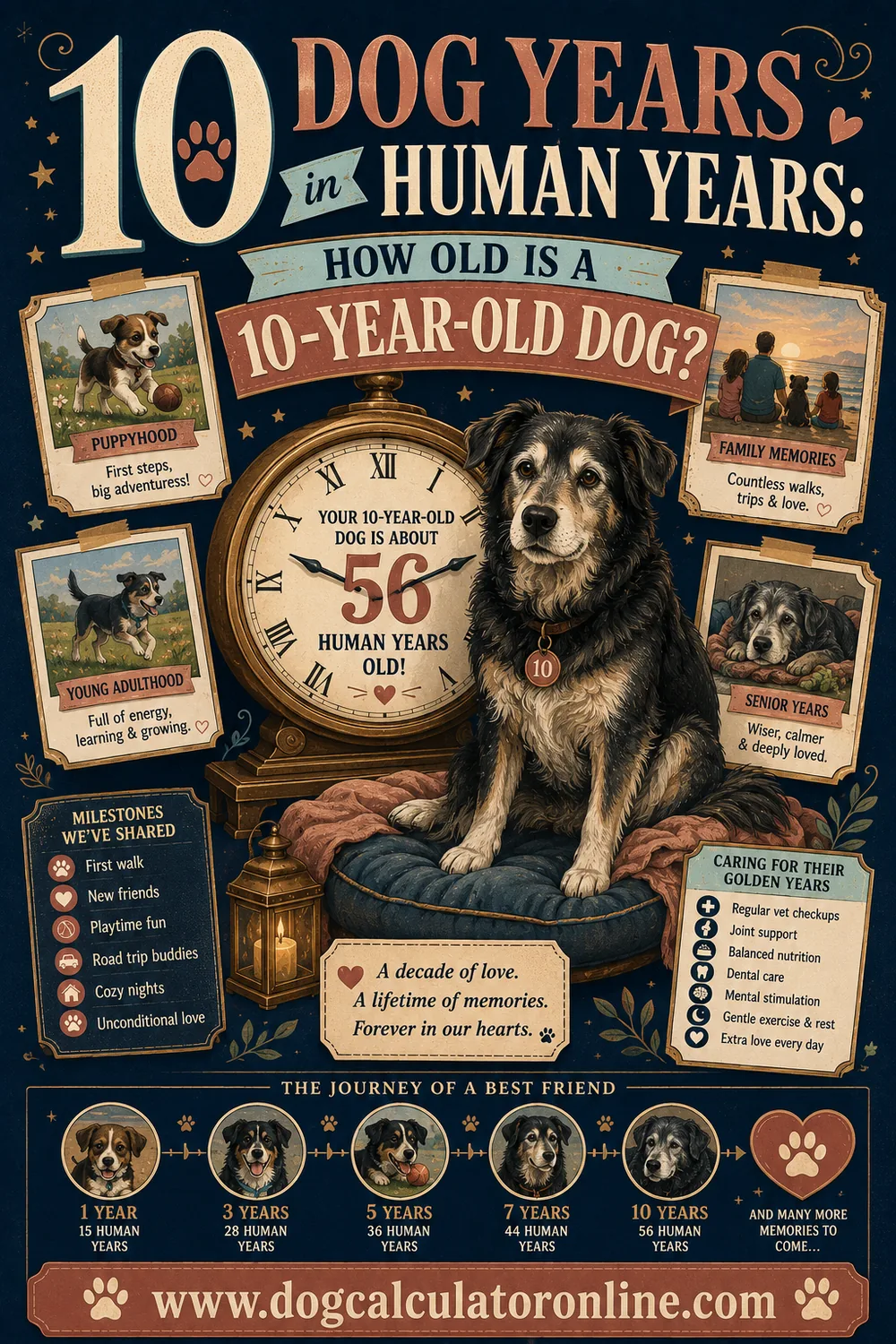
- 10 Dog Years in Human Years: How Old Is a 10-Year-Old Dog?
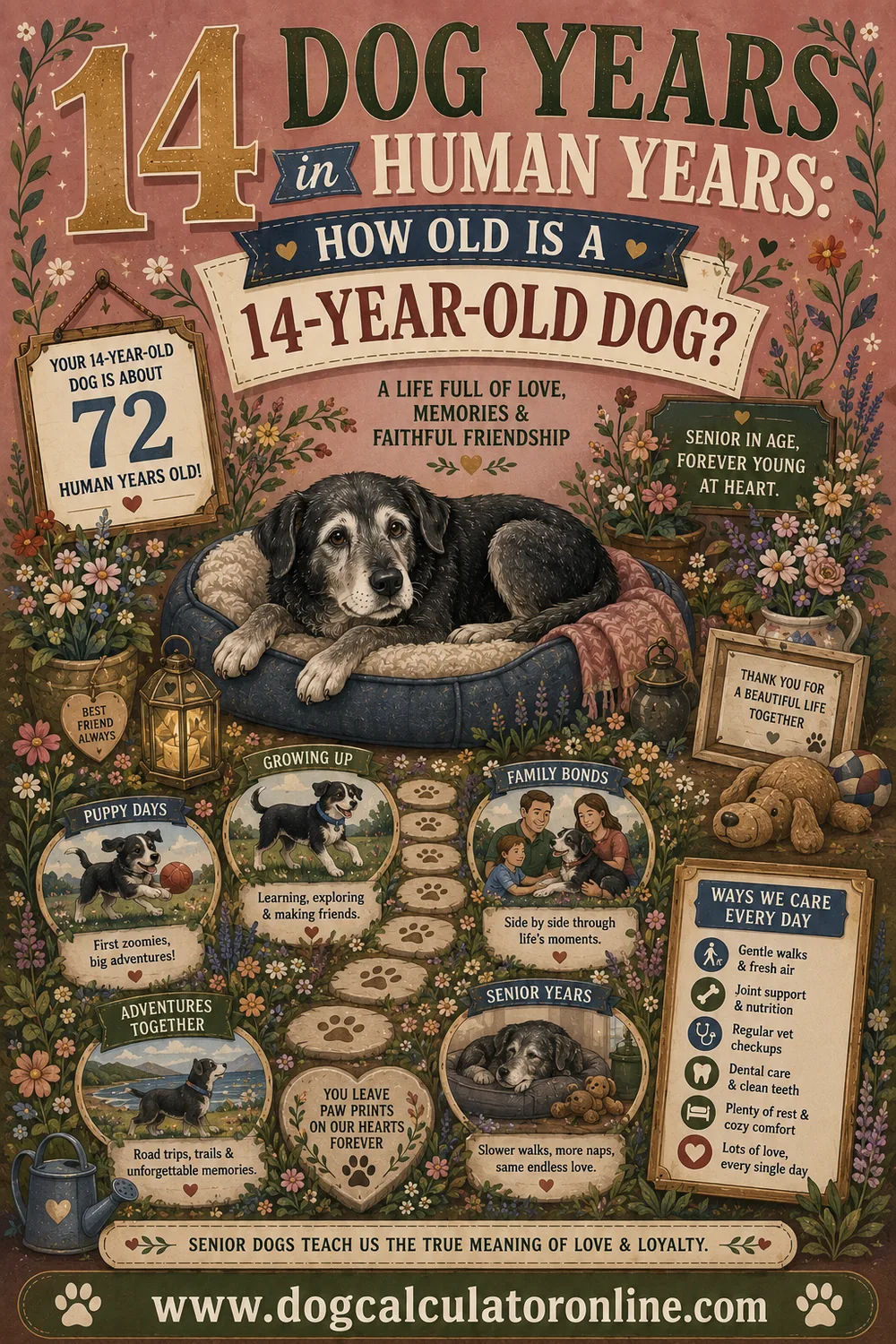
- 14 Dog Years in Human Years: How Old Is a 14-Year-Old Dog?
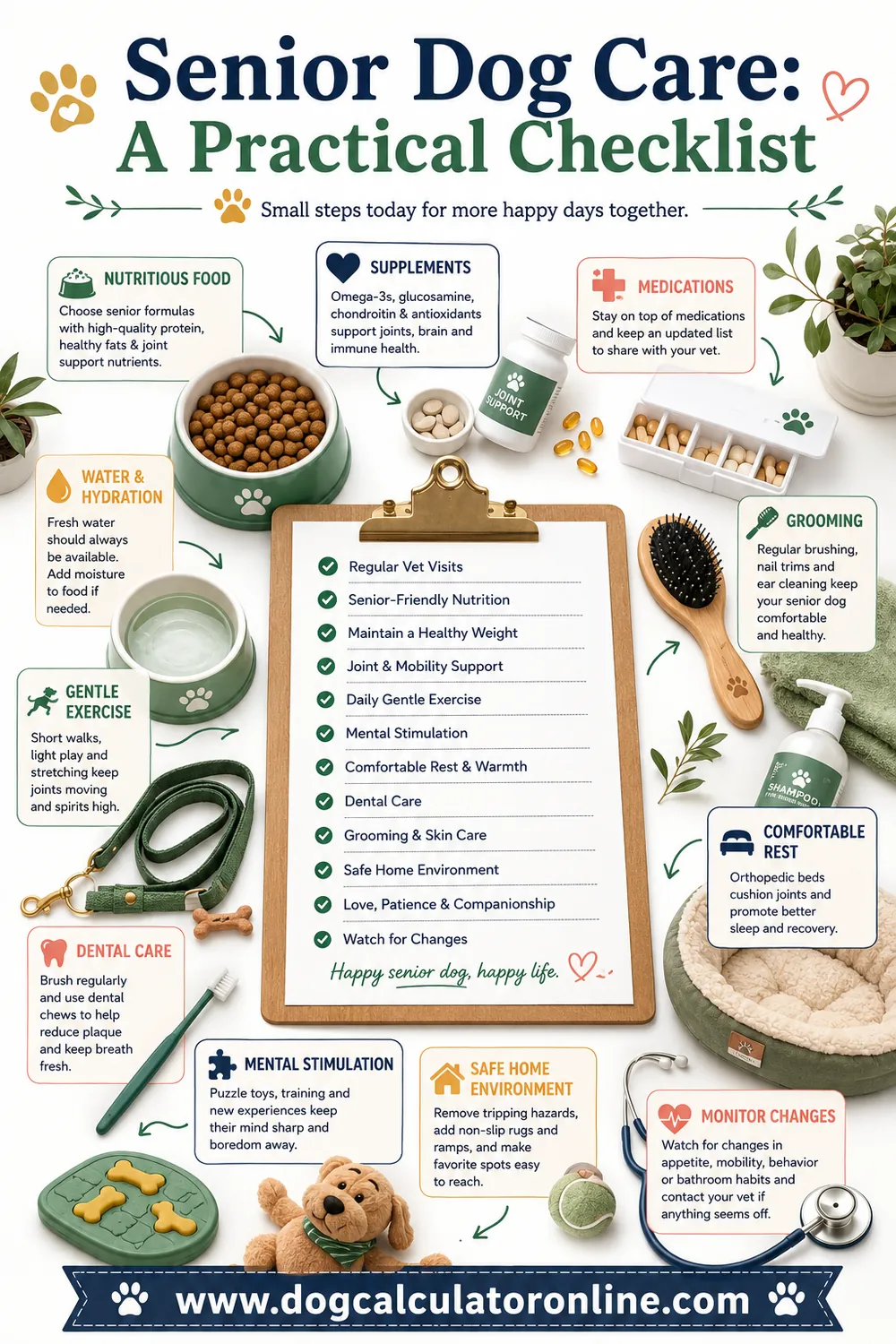
- Senior Dog Care: A Practical Checklist
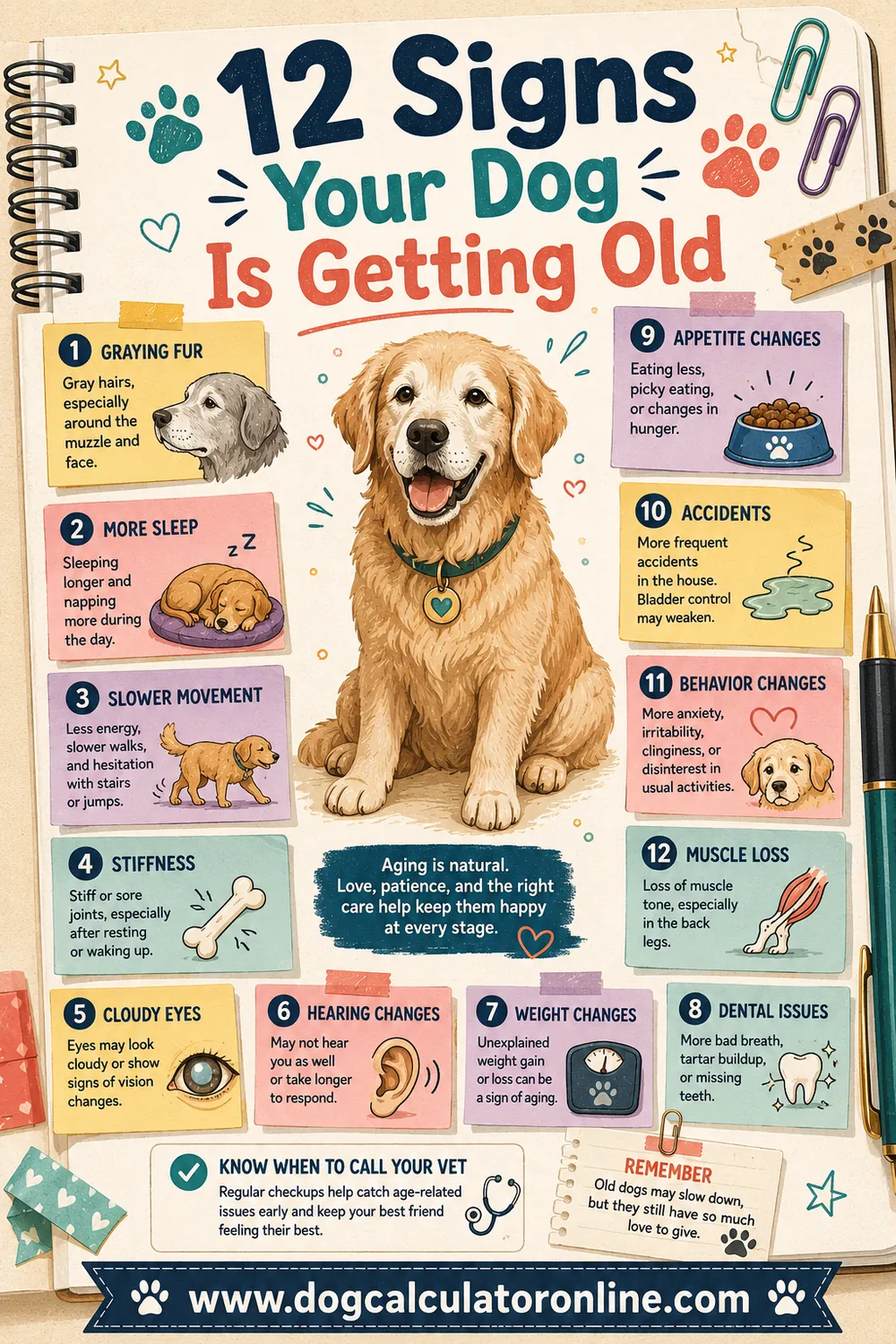
- 12 Signs Your Dog Is Getting Old
And if you just want your own dog's number, the free dog age calculator does it in one tap.
FAQ
How old is a 12-year-old dog in human years?
About 64–94 depending on size: 64 for small dogs, 74 for medium, 84 for large, and 94 for giant breeds, by the vet-backed size-adjusted method.
Is a 12-year-old dog 84 in human years?
Only if it's a large breed — and then only by coincidence with the old 7:1 myth. Small dogs at 12 are about 64; giants are about 94.
Is 12 old for a dog?
Yes — every 12-year-old dog is a senior. But context matters: 12 is comfortably within a small breed's typical lifespan, near the ceiling for mediums, and exceptional for large and giant breeds.
What does the DNA study say for age 12?
About 71 human years, from the 2019 UCSD formula (16 × ln(age) + 31). The epigenetic curve flattens in later life, so it now reads lower than the guideline for big dogs.
How can I keep my 12-year-old dog comfortable?
Twice-yearly vet exams with bloodwork, lean weight, gentle daily walks, orthopedic bedding, traction on slippery floors, and prompt attention to stiffness or appetite changes. Your vet can tailor the specifics.
Can a 12-year-old dog still enjoy life?
Absolutely. Most 12-year-olds still relish food, sniffing, company, and sunshine. The goal of senior care is exactly this — protecting the joys that remain, which are many.
The Bottom Line
Twelve dog years equal about 64–94 human years — a young-hearted 64 for the small dogs, a venerable 94 for the giants. Whatever the size, this is the comfort chapter: steady routines, soft landings, twice-yearly vet care, and full appreciation of every gray-muzzled morning.
Find your dog's exact human age — size-adjusted, with the DNA-study figure included — free at the dog age calculator.