Signs of Dental Disease in Dogs
The first sign most owners notice is bad breath — and by then the disease is usually well established. Dogs conceal oral pain almost completely, which is why the majority show signs of dental disease by age three and most owners have no idea until a vet mentions it. The useful skill isn't spotting a dog in obvious distress; it's knowing what an early mouth looks like, and checking often enough to catch it. This page covers what to look for, how to do a thirty-second home check, and which signs mean book an appointment this week. To see how dental care sits in the wider budget, the dog cost calculator is a useful reference.
What Are the Early Signs?
These are what you want to catch, because early disease is far cheaper and far more treatable.
Bad breath. The most reliable early sign, and the most widely dismissed. Healthy dog breath is neutral to slightly musty. A genuinely unpleasant smell means bacterial activity, and "dog breath" being normal is one of the more damaging myths in dog ownership.
A red line along the gum. Look where gum meets tooth. Healthy gums are pale pink and the join is clean; inflamed gums show a red band. This is gingivitis, and it's the only stage that reverses completely with good home care.
Yellow or brown deposits, especially on the large back teeth. Tartar starts at the gum line and spreads. Once it's hard and bonded, brushing does nothing.
Gums that bleed easily, or a little pink on a chew toy.
Slightly puffy or swollen gum edges.
Reluctance to have the mouth touched in a dog who previously didn't mind — often the first behavioral clue.
None of these look dramatic, which is the problem. A dog with early periodontal disease behaves entirely normally.
What Are the Advanced Signs?
By this stage there is usually real pain, and often infection.
Difficulty eating — chewing on one side, dropping food, tilting the head, taking noticeably longer over meals, or preferring soft food when they used to eat kibble happily.
Drooling, sometimes tinged with blood.
Pawing at the mouth or rubbing the face along furniture and carpet.
Loose or visibly discoloured teeth, or a tooth that's missing without you noticing it come out.
Receding gums exposing the root, which looks longer and darker than the crown.
Facial swelling, typically below one eye. This usually indicates a tooth root abscess and needs seeing quickly.
Weight loss in a dog whose appetite seems fine — a classic sign of a mouth that hurts to use.
Behavior change: withdrawn, irritable, less interested in toys or chews, or snappy when the head is touched. Chronic pain changes temperament, and it's frequently attributed to age instead.
| Stage | What you'd see | Reversible? |
|---|---|---|
| 1 — Gingivitis | Red gum line, bad breath | Yes, fully |
| 2 — Early periodontitis | Tartar, gum recession begins, some bone loss | Partly |
| 3 — Moderate | Significant tartar, pockets, loose teeth | No; damage is permanent |
| 4 — Advanced | Severe recession, mobile teeth, abscesses, bone loss | No; extractions likely |
How Do You Check Your Dog's Mouth?
Thirty seconds, twice a week, and it needs no equipment.
The lip lift. With your dog calm and settled, gently lift the upper lip on one side and look along the gum line. You're checking three things: is the gum line pink and clean or red and puffy, is there brown build-up on the teeth, and do the back teeth look different from the front. Repeat on the other side. That's genuinely all it takes, and it will catch most problems months earlier than waiting for symptoms.
Where to look hardest. The upper back teeth — the large carnassials — are where disease usually starts and where owners rarely look. Front teeth almost always look better than back ones.
The smell test. Take a discreet sniff while you're there. Changes in smell often precede visible changes.
What healthy looks like: pale pink gums, white or off-white teeth, no smell, no swelling, a clean margin where gum meets tooth.
Make it routine. Do it while your dog is settled in the evening, and pair it with brushing — you've already got the lip lifted, as described in how often should you brush a dog's teeth. If your dog objects strongly to having its mouth handled, that's worth investigating in itself.
Which Dogs Are Most at Risk?
Some dogs are far more prone, and knowing where yours sits changes how vigilant you need to be.
Small and toy breeds are the highest-risk group by a wide margin. The same 42 teeth are packed into a much smaller jaw, so crowding traps food and plaque, and there's less bone to lose before teeth become unstable. Yorkshire Terriers, Chihuahuas, Poodles, Dachshunds, Maltese, Pomeranians and Shih Tzus commonly need dental work from a young age.
Flat-faced breeds — Pugs, Bulldogs, French Bulldogs, Boxers, Shih Tzus — have severely crowded and often rotated teeth in a shortened jaw, which is a poor arrangement for oral hygiene.
Older dogs accumulate years of plaque, and many have never had their teeth brushed. Senior dog care tips covers the wider picture.
Dogs fed exclusively soft food get less mechanical cleaning, though the benefit of kibble is often overstated.
Dogs who chew hard objects — antlers, hard nylon, bones, stones — frequently fracture teeth, particularly the upper carnassial. A slab fracture usually means extraction.
Greyhounds deserve a specific mention: they develop dental disease unusually early and severely for their size, for reasons that aren't fully understood.
| Risk factor | Why |
|---|---|
| Toy or small breed | Crowded teeth, less bone reserve |
| Flat-faced | Rotated, overlapping teeth |
| Over 7 years | Accumulated plaque and tartar |
| No home brushing | Plaque hardens within 24–72 hrs |
| Hard chew habit | Fractured teeth |
| Greyhound | Breed predisposition |
What Else Can Look Like Dental Disease?
Not everything in a dog's mouth is periodontal disease, and a few things get missed because everyone assumes it is.
A fractured tooth. Extremely common and often silent. Look for a tooth with a flat broken surface, particularly the large upper carnassial. If there's a pink or dark spot in the middle of the break, the pulp is exposed — that's painful and lets bacteria into the root. Antlers, bones, hard nylon chews and stones cause most of these.
Oral masses. Any lump on the gum, palate or under the tongue needs checking. Some are benign overgrowths, some are not, and the ones that matter are far more treatable when small. A lump that bleeds, ulcerates or grows is urgent.
Retained baby teeth. Common in small breeds. An adult canine erupting alongside a baby one that hasn't fallen out creates a permanent plaque trap and pushes teeth out of alignment. Usually removed at neutering if still present.
Stomatitis. Severe generalised inflammation of the mouth lining, going well beyond the gum margins. Painful, and managed differently from ordinary periodontal disease.
Something stuck. A stick fragment wedged across the palate, a bone splinter between teeth, or a grass seed in the gum will produce sudden pawing, drooling and refusal to eat. It looks alarming and is often quickly fixed.
Non-dental causes of bad breath. Kidney disease, diabetes and gastrointestinal problems all change breath smell — a sweet or ammonia-like odor rather than a rotten one is worth mentioning to your vet specifically.
The practical point: if something in the mouth looks wrong and doesn't match the pattern of plaque and gum disease, say so at the appointment rather than assuming it's all the same problem.
When Should You See a Vet?
Book an urgent appointment for: facial swelling, a dog that won't eat, obvious mouth pain, bleeding that doesn't stop, or a tooth that's visibly broken with pink or dark tissue showing at the fracture — that's an exposed pulp, which is painful and lets infection into the root.
Book within a week or two for: bad breath, red or bleeding gums, visible tartar, difficulty eating, drooling, or any loose tooth.
Mention at the next routine check: mild breath change, small amounts of tartar, or a dog who's become slightly reluctant about having its mouth touched.
Have the mouth examined annually regardless. Many insurance policies require it, and a vet will see things you can't — much of what matters sits below the gum line and only appears on dental X-ray. Does pet insurance cover dental explains why the annual check matters for claims.
A word on what treatment involves: if disease is found, the answer is usually a professional clean under anaesthetic, with extractions if teeth can't be saved. That's a real cost — set out in dog dental cleaning costs — and it is genuinely worth doing. Dogs routinely become brighter, more playful and more interested in food after painful teeth are dealt with, which tells you plainly how much they were hiding.
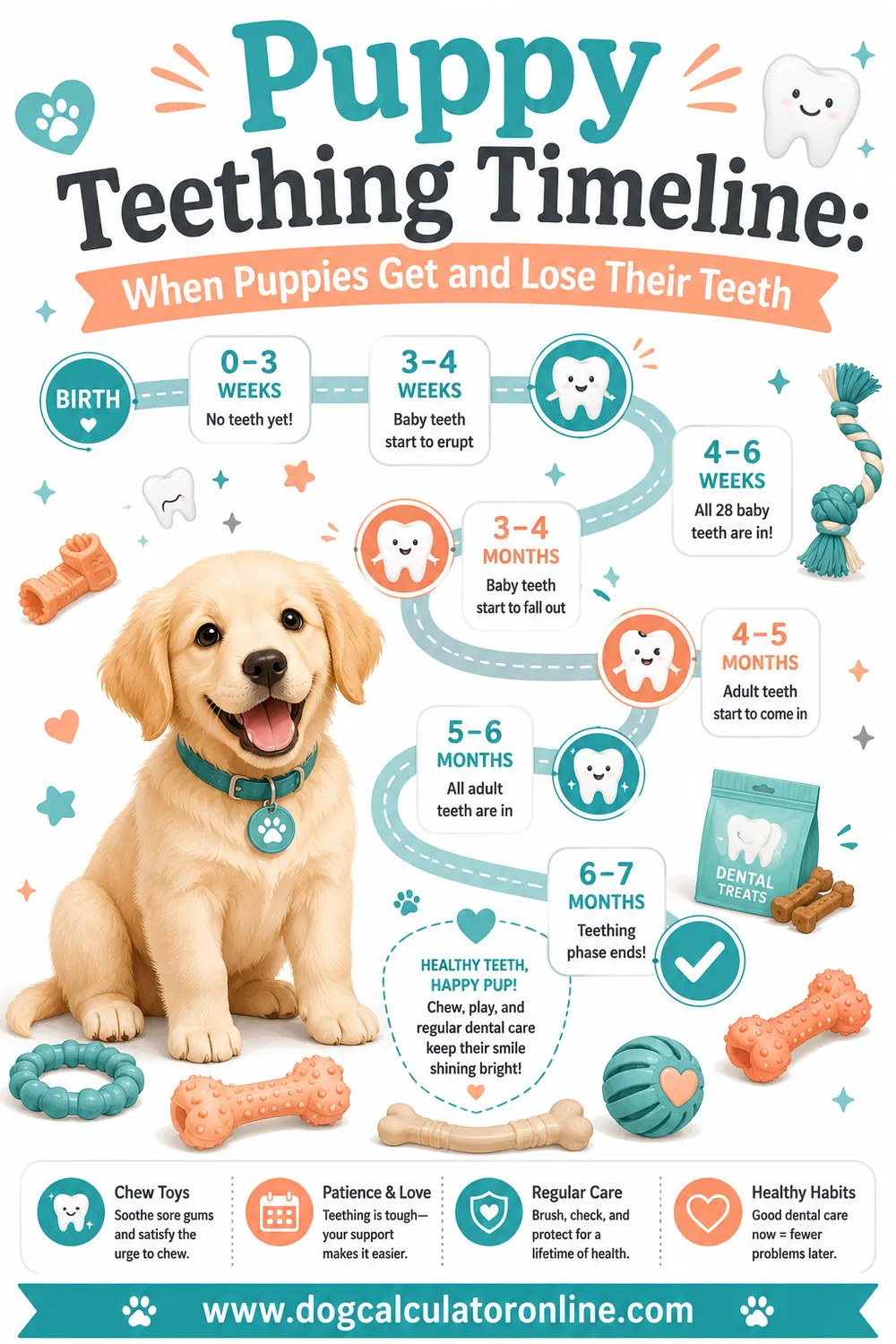
One thing not to worry about: puppies losing teeth between roughly three and six months is normal, and mildly sore gums during that period are expected rather than a sign of disease. The puppy teething timeline sets out what's normal at each stage.
Why Does Dental Disease Matter Beyond the Mouth?
Two reasons, and the second is the one people underestimate.
Pain, continuously. A dog with advanced periodontal disease is living with the equivalent of untreated toothache, every hour, for years. Because dogs don't complain, this gets normalised — the dog is "getting old", "gone quiet", "off its food a bit". Owners are frequently startled by how much personality returns after treatment.
Systemic effects. Diseased gums are an open route into the bloodstream. Chronic periodontal infection is associated with changes in the heart, liver and kidneys, and while the strength of the causal link is still debated, the association is consistent enough that veterinary bodies treat oral health as part of general health rather than a cosmetic extra.
There's also a quieter cost: dogs with painful mouths stop chewing, stop playing with toys, and become harder to give medication to. Quality of life narrows in ways that are easy to attribute to age.
The encouraging part is that this is one of the most preventable problems in dogs. Regular brushing, a couple of thirty-second checks a week, and an annual veterinary examination between them prevent the great majority of what's described on this page — for a fraction of what treatment costs.
Frequently Asked Questions
What are the first signs of dental disease in dogs?
Bad breath and a red line where the gums meet the teeth are the earliest reliable signs, often before any behavior change. Yellow or brown deposits on the back teeth follow. Dogs behave completely normally at this stage, which is why regular checks matter.
Is bad breath in dogs normal?
No. Healthy dog breath is neutral or slightly musty. A genuinely unpleasant smell indicates bacterial activity and usually gum disease. Treating bad breath as normal is one of the main reasons dental disease goes unnoticed for years.
How do I check my dog's teeth at home?
Lift the upper lip gently and look along the gum line on both sides, paying particular attention to the large back teeth. You're checking for redness at the gum margin, brown build-up, and any smell. Thirty seconds, twice a week, is enough.
Are dogs in pain from dental disease?
Yes, often significantly — but they hide it almost completely, because concealing weakness is instinctive. Many owners only realize how uncomfortable their dog was after treatment, when it becomes noticeably brighter and more playful.
Which dogs get dental disease most?
Small and toy breeds by a wide margin, because the same number of teeth are crowded into a smaller jaw. Flat-faced breeds, older dogs, Greyhounds, and any dog whose teeth are never brushed are all at elevated risk.
Can dental disease be reversed?
Only at the gingivitis stage, where inflamed gums recover fully with proper cleaning. Once bone loss and gum recession begin, the damage is permanent — treatment then aims to stop further loss and remove teeth that can't be saved.
The uncomfortable truth is that dental disease is usually silent until it isn't, and by the time a dog is showing you something is wrong, it has been uncomfortable for a while. A thirty-second lip lift twice a week is the single most useful habit you can build, because it turns an invisible problem into a visible one. See where dental care fits in the yearly picture with the dog cost calculator.