Puppy Socialization Checklist
There's a window between roughly 3 and 16 weeks when a puppy's brain is unusually open to deciding what counts as normal, and what happens in it shapes temperament for life. Miss it and you get a dog that finds ordinary things frightening; use it well and you get one who takes the world in its stride. The catch is that the window closes weeks before most puppies finish their vaccinations, which is why "wait until they're fully vaccinated" is the single most damaging piece of advice new owners receive. This page is a practical checklist of what to expose your puppy to, how to do it safely before vaccinations are done, and how to tell useful exposure from the kind that backfires. The puppy weight calculator is a handy companion for tracking growth alongside it.
Why Does the Window Matter So Much?
Between about three and sixteen weeks, puppies are in a developmental stage where novelty is interesting rather than alarming. Anything encountered calmly in that period gets filed as ordinary. After it closes, the default flips — unfamiliar things are treated as potential threats until proven otherwise, and it takes far more work to change that.
This is why an adult dog that has never seen a child, a bicycle or a trash can may react badly to all three, while a well-socialized dog barely notices them. It's also why remedial work with a fearful adult dog is slow: you're not filling a gap, you're overwriting a conclusion the dog already reached.
The vaccination problem. Most puppies aren't fully covered until 12 to 16 weeks — right as the window shuts. Waiting means missing most of it. The veterinary consensus, including position statements from behavior bodies, is that the behavioral risk of under-socialization outweighs the disease risk when sensible precautions are taken, because behavioral problems are the leading cause of death in young dogs through euthanasia and relinquishment.
What "sensible precautions" means before full cover: carry your puppy in public rather than putting them down, avoid places used heavily by unknown dogs, only meet dogs you know are vaccinated and healthy, and use clean private gardens. Full detail on timing is in when can puppies go outside.
Which People Should Your Puppy Meet?
The single most valuable category. Aim to have your puppy meet at least 50 different people before 16 weeks — sounds like a lot, and it adds up quickly once you're counting.
- Men, especially tall men and men with deep voices
- Women
- Children of different ages — toddlers, primary age, teenagers
- Babies, including the sound of crying
- Elderly people, including anyone moving slowly or using a stick
- People wearing hats, hoods, sunglasses, high-vis
- People in uniform — delivery drivers, postal workers
- People with beards
- Someone using a wheelchair, walking frame or crutches
- People carrying bags, boxes, umbrellas
- Someone jogging or running past
- A vet and a vet nurse, ideally in a "happy visit" with no examination
- A groomer, likewise
How it should go: the puppy chooses to approach, gets a treat and a calm greeting, and moves on. What you're avoiding is a crowd of strangers reaching over the puppy's head all at once — that's overwhelming, not social.
Which Sounds Should They Hear?
Sound sensitivity is one of the more common and more limiting fears in adult dogs, and it's largely preventable.
- Traffic, including trucks and motorbikes
- Doorbell and knocking
- Vacuum cleaner, washing machine, hairdryer
- Television, music at varying volumes
- Thunderstorms and fireworks — sound recordings work well for these
- Sirens
- Children shouting and playing
- Bins being emptied, deliveries arriving
- Cooking noises, pans clattering
- Lawnmowers and power tools
Recordings are genuinely useful for the ones you can't schedule. Play fireworks or thunder at very low volume while your puppy eats or plays, and increase gradually over weeks. Never so loud it interrupts what they're doing.
What Surfaces, Places and Handling Should You Cover?
Surfaces to walk on:
- Grass, gravel, sand, mud
- Tile, laminate, carpet
- Metal drain covers and grates
- Wooden decking
- Stairs, gently and not repeatedly
- Wobbly or unstable surfaces, low and safe
Places to visit — carried before full vaccination:
- A busy street, from your arms
- A parking lot
- Outside a school at pick-up time
- A garden center or pet shop that allows dogs
- A friend's house, and their garden
- The vet waiting room, just to sit
- A café with outdoor seating
- Different cars, plus short journeys
Handling — do a little every day, since this is what makes vets and groomers manageable:
- Paws held and toes separated
- Ears looked in
- Mouth opened, teeth touched
- Tail and collar handled
- Being lifted and held
- Being brushed
- Being weighed on scales
- Lying on their side calmly
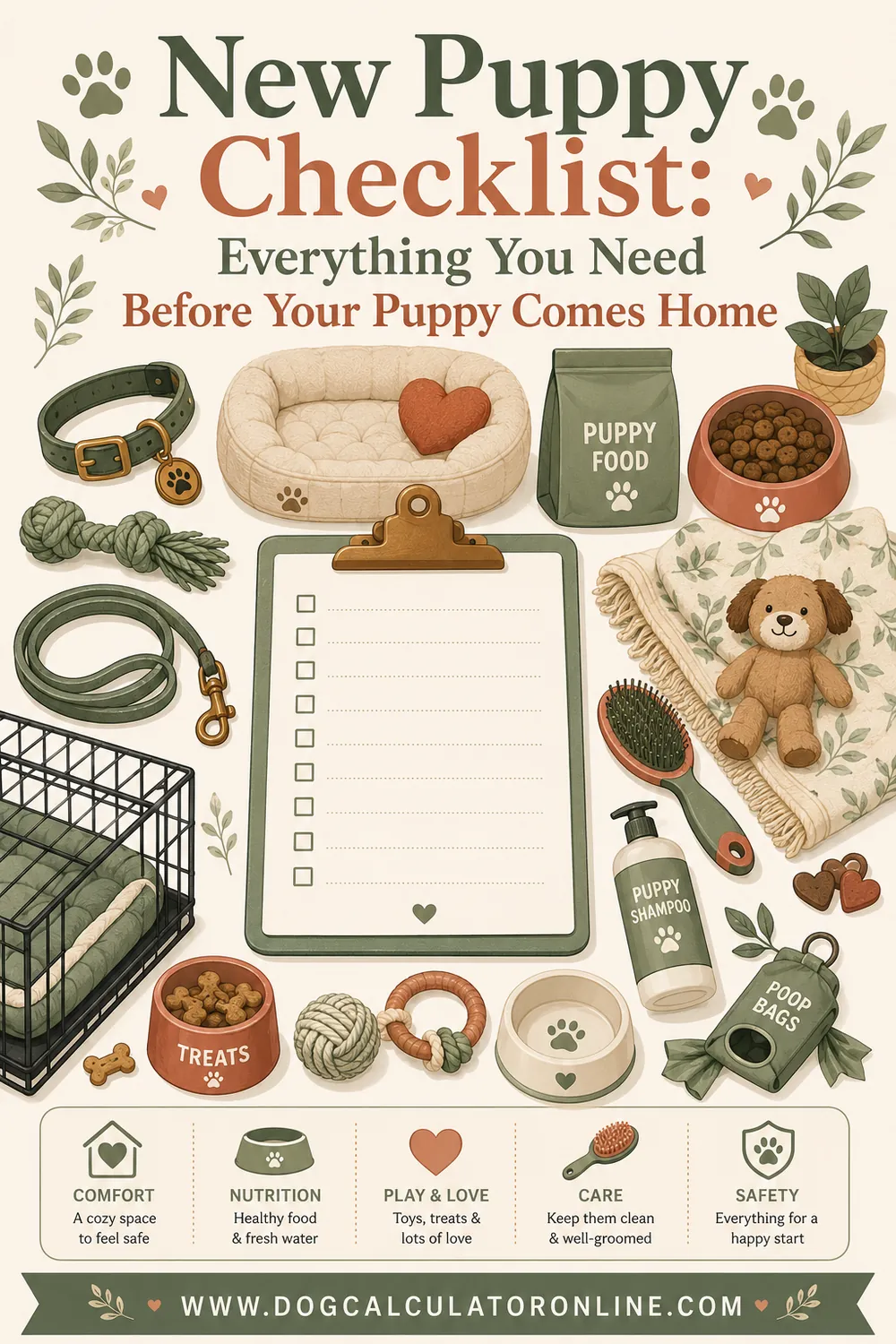
The handling list overlaps heavily with the practical items in the new puppy checklist, and doing both together saves time.
What Does Good Exposure Look Like?
This is the part that matters more than the list, because bad socialization is worse than none. Frightening a puppy in the name of exposure creates exactly the fear you were trying to prevent.
| Good exposure | Bad exposure |
|---|---|
| Puppy chooses to approach | Puppy carried or dragged toward something |
| Calm, brief, positive | Long, intense, overwhelming |
| Treats and praise throughout | No reward, or telling off for being nervous |
| One or two new things at a time | Ten new things in one outing |
| Puppy can retreat freely | Puppy cornered or held in place |
| Ends before the puppy tires | Continues past distress |
Watch the body language. A relaxed puppy has a loose body, soft mouth, wagging tail, and moves toward things. A worried one tucks its tail, flattens its ears, yawns, licks its lips, freezes, backs away or tries to hide. If you see the second set, increase the distance and let the puppy watch from further away rather than pushing on.
Never force it. "They need to get used to it" is the reasoning behind most fear that gets created rather than prevented. A puppy that observes something scary from twenty metres away while eating chicken is learning it's safe. A puppy held in place while it panics is learning the opposite.
Quality over quantity. Three calm positive experiences beat ten rushed ones. If your puppy is tired, stop — an overtired puppy can't process anything well, which is why sleep matters as much as exposure. See puppy sleep schedule by age.
What About Other Dogs?
Important, and the category where people most often get it wrong.
Before full vaccination: only meet dogs you know are fully vaccinated and healthy — friends' dogs, family dogs, a well-run puppy class that requires proof of first vaccinations. Avoid parks used heavily by unknown dogs.
What to look for in a playmate: a calm, tolerant adult dog who tells a puppy off appropriately teaches far more than a boisterous adolescent. Puppies learn bite inhibition and social manners from adults who set boundaries — which is also why a well-socialized puppy tends to be easier about mouthing, covered in how to stop puppy biting.
Puppy classes are worth doing if they're well run: small groups, size-matched play, supervision that interrupts before things get too rough, and time spent on handling and calm behavior rather than a free-for-all. A chaotic class where a small puppy gets steamrollered by larger ones does harm.
Watch the ratio. Puppies who only ever play with other dogs can become more interested in dogs than people, which causes problems with recall later. A mix of dog time and human time is what you want.
Don't force greetings. A puppy who doesn't want to approach another dog is allowed not to. Growth and development timings that affect play style are in puppy growth stages week by week.
How Do You Fit It Into a Real Week?
The list above looks daunting written down. In practice it's two or three short outings a week plus whatever happens at home, and most of it costs nothing.
A workable week for a ten-week-old puppy:
| Day | What happens |
|---|---|
| Mon | Carried trip to a local shopping street, 10 min |
| Tue | Visitors at home — one or two new people, calm greetings |
| Wed | Sit in the car at a supermarket parking lot, watching trolleys and people |
| Thu | Play date with a known vaccinated adult dog |
| Fri | Happy visit to the vet — weigh, treat, leave |
| Sat | Café with outdoor seating, or a garden center |
| Sun | Quiet day; sound recordings at home, handling practice |
Underneath that, the everyday things count and are easy to forget to arrange: run the vacuum while the puppy has a chew, let them investigate an open washing machine, walk them across the kitchen tiles, have the radio on.
Two rules that make it manageable. First, anything counts once, so you don't need to repeat every item — a few good exposures to men in hats is enough. Second, stack nothing. One new category per outing. A trip that includes a new place, new people, a new surface and a new sound all at once is a lot for a ten-week-old brain.
Being alone counts too. It's the category nobody puts on a socialization list, and it matters as much as any of them. A puppy that is never left in its first months learns that company is constant, and finds the first real absence genuinely distressing. Short planned separations — a few minutes behind a baby gate, a settled nap in another room, ten minutes while you go to the shop — teach a puppy that being alone is ordinary and temporary.
Keep a list. Tick things off, and you'll quickly see the gaps — usually children, men, and anything with wheels. Those three are the categories most likely to cause trouble later, and the ones a household without kids or cars misses entirely without noticing.
Frequently Asked Questions
When is the puppy socialization window?
Roughly 3 to 16 weeks, with the most valuable period between 8 and 12 weeks. During this stage puppies accept novelty easily; afterwards the default shifts toward caution, and changing an established fear takes far more work than preventing it.
Can I socialize my puppy before vaccinations?
Yes, and you should. Carry your puppy in public rather than putting them on the ground, use clean private gardens, and only meet dogs you know are vaccinated. Waiting until full cover means missing most of the window.
How many people should my puppy meet?
Aim for at least 50 different people before 16 weeks, covering a range of ages, appearances and ways of moving. Men, children and anyone using a mobility aid are the categories most often missed and most likely to cause problems later.
What if my puppy is scared of something?
Increase the distance and let them observe from where they're comfortable, pairing it with treats. Never force them closer. Frightening exposure creates the fear you're trying to prevent, and a bad experience can undo weeks of good work.
Is it too late to socialize a puppy over 16 weeks?
No, though it takes more patience. The window narrows rather than slamming shut, and continued positive exposure through adolescence still matters. For a puppy showing real fear, a qualified behaviourist is worth involving early.
How much socialization is too much?
If your puppy is tired, overwhelmed or showing stress signals, it's too much. Two or three short positive outings a week beat daily marathons, and puppies need a great deal of sleep to consolidate what they've learned.
One last thing worth knowing: there's often a fear period somewhere around 8 to 11 weeks, and another in adolescence, where a previously bold puppy suddenly finds ordinary things alarming. It's developmental rather than a setback, and the right response is to ease off — more distance, gentler exposure, nothing forced — until it passes in a week or two. Pushing a puppy through a fear period is one of the more reliable ways to create a lasting phobia.
The thing to hold onto is that the checklist matters less than how you work through it. Calm, brief, rewarded exposure at a distance the puppy is comfortable with is what builds a confident adult dog — and a rushed tick-list can do genuine harm. Track how your puppy is developing physically alongside it with the puppy weight calculator.