How to Stop Puppy Biting
Almost every new owner goes through two weeks of wondering whether they've adopted a small crocodile. Puppy biting is completely normal, it peaks somewhere between 8 and 16 weeks, and the great majority of it resolves by six months with consistent handling. The important thing to understand is that you're not trying to stop your puppy using its mouth — you're teaching it how hard is acceptable, and that's a lesson best learned young. This page covers what works, what makes it worse, and the handful of situations where biting is a symptom of something else. If you're tracking your puppy's development generally, the puppy weight calculator is a useful companion.
Why Do Puppies Bite?
Several reasons at once, and understanding which is which changes what you do about it.
Play. Puppies explore and play with their mouths, the way toddlers use hands. In a litter, this is how they learn everything about social interaction.
Bite inhibition learning. This is the important one. When a puppy bites a littermate too hard, the other puppy yelps and stops playing. Over hundreds of repetitions, puppies learn to moderate pressure. A puppy taken from its litter too early — before eight weeks — often has notably poor bite inhibition, which matters far more in an adult dog than the biting itself.
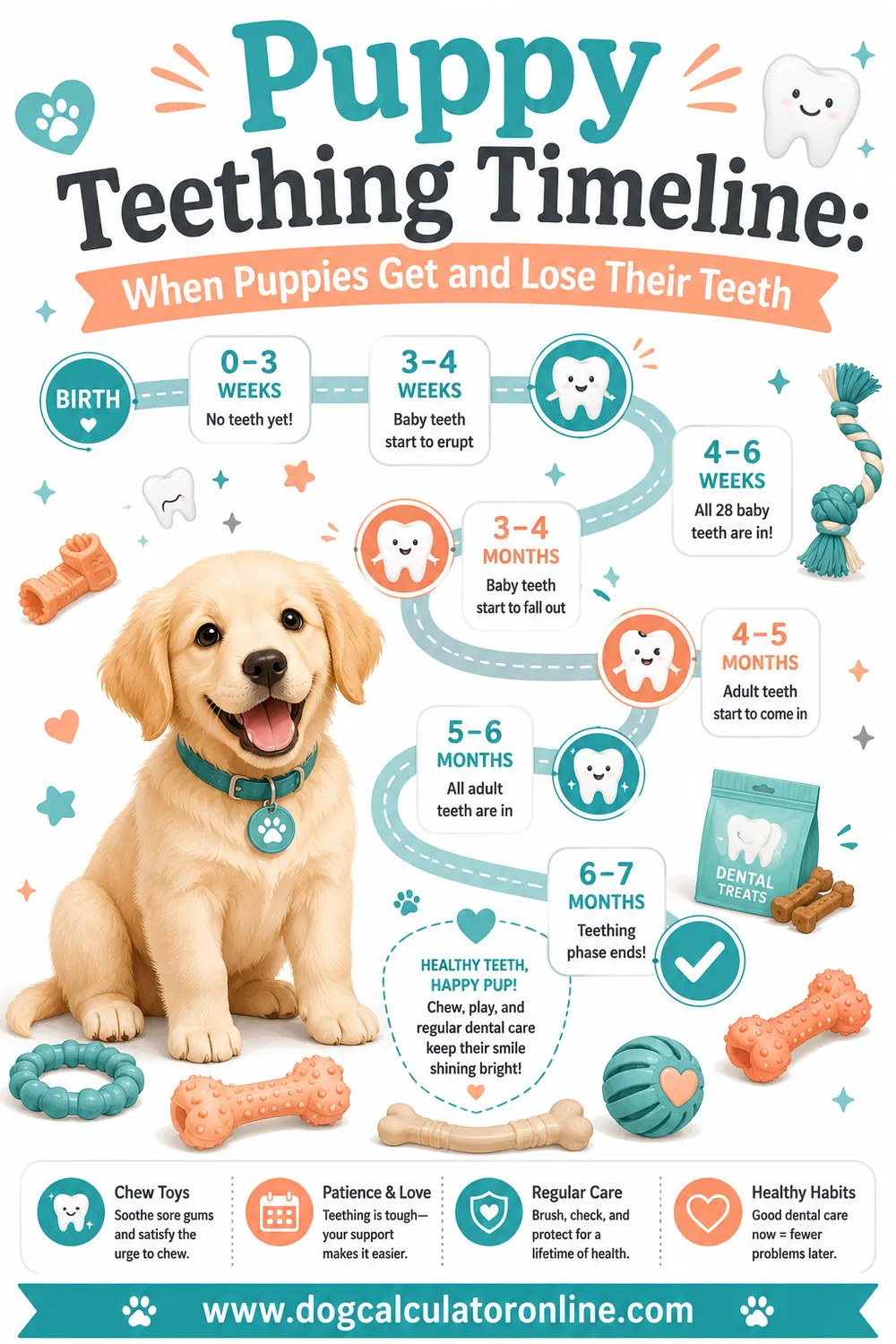
Teething. Between roughly three and six months, adult teeth push through and gums are genuinely sore. Chewing relieves it. The puppy teething timeline sets out the stages.
Overtiredness. The most under-recognized cause. An overtired puppy becomes frantic and mouthy in exactly the way an overtired toddler becomes impossible.
Overstimulation. Too much excitement, particularly with children or rough play, and the puppy tips over into mouthiness.
Attention seeking. If biting reliably makes you squeal, jump up and interact, it works — and gets repeated.
Breed drive. Herding breeds nip at heels and ankles because that's what they were bred to do. Collies, Shepherds and Corgis often mouth more, and target moving legs specifically.
What Actually Works?
Consistency across everyone in the household matters more than which technique you pick.
Redirect to a toy. The core method. The moment teeth touch skin, calmly put a toy in the puppy's mouth instead. You're not stopping the behavior, you're moving it onto something acceptable. Keep toys in every room, because a toy two rooms away is useless.
End the game. If redirecting doesn't work, stand up, fold your arms, and disengage for 20 to 30 seconds. No talking, no eye contact. The lesson is direct: teeth on skin ends the fun. This is the single most effective consequence available, and it only works if it happens every single time.
Time-outs, done gently. For a puppy that won't settle, calmly put them behind a baby gate or in their pen for a minute or two. Not as punishment — as a reset. Very often what they actually needed was sleep.
Reward the good moments. Puppies get almost no feedback for not biting. Treat and praise for licking your hand, mouthing gently, taking a treat carefully, or settling near you calmly.
Manage the triggers. Give a chew before the predictable evening witching hour. Keep tug toys handy for a heel-nipper. Give a stuffed frozen toy when children are around.
Teach "leave it" and "gentle." Both give you a usable cue rather than only a reaction.
Meet the needs first. A puppy biting from boredom needs stimulation, not correction — see how much exercise does a puppy need, keeping in mind that sniffing and training count for more than walking at this age.
What Makes It Worse?
Several widely repeated methods actively backfire.
| Don't | Why |
|---|---|
| Hitting, smacking or nose-tapping | Teaches hands are threatening; creates fear and defensive biting |
| Holding the mouth shut | Frightening, and often escalates into a struggle |
| Alpha rolls / pinning | No basis in modern behavior science; damages trust and can cause real aggression |
| Shouting | Reads as exciting joining-in to many puppies |
| Squealing loudly | The "yelp" method winds many puppies up further rather than stopping them |
| Rough play with hands | Directly teaches that hands are toys |
| Punishing growling | Removes the warning without changing the feeling — you end up with a dog that bites without warning |
| Inconsistency | One person allowing mouthing undoes everyone else's work |
The yelping method deserves a specific note, because it's so commonly recommended. It mimics what a littermate does, and for some puppies it works well. For plenty of others — particularly excitable ones — a high-pitched squeal is thrilling and makes the biting more intense. If you try it twice and your puppy gets worse, stop and use disengagement instead.
Punishing growling is the one with the most serious consequences. A growl is information: this puppy is uncomfortable. Punish it enough and the growl disappears while the discomfort remains, leaving a dog that goes straight to biting. Always treat a growl as useful communication.
What About Children?
The situation most likely to go wrong, because children move quickly, squeal, and are at exactly the right height to get bitten in the face.
Practical rules:
- Always supervise. Not "in the same room" — actively watching
- Teach children to be boring, not exciting, when the puppy gets mouthy: stand still, fold arms, turn away
- No running games with a young puppy, which triggers chase and nip
- Give children a job — holding a tug toy so the puppy has something appropriate to grab
- Use baby gates and pens generously, so nobody has to be perfect all the time
- Protect the puppy too. A puppy that's poked and never allowed to rest will start using its teeth defensively
Teach children to read the puppy. Yawning, turning away, licking lips and moving off are all "I've had enough" — and a puppy whose polite signals are ignored escalates to the ones that work.
The other half of it is exposure: a puppy that meets children calmly and often is far less likely to find them alarming later. That's covered in the puppy socialization checklist.
What Should You Do in the Moment?
Knowing the theory is one thing; having a plan when there's a puppy attached to your sleeve is another. Work through it in this order, and it covers almost every incident.
First, ask what's driving it. Is this play, teething, or an overtired puppy at eight in the evening? The answer changes what you do, and the third one is the most common.
Second, redirect. Toy into the mouth, calmly, no drama. If the puppy takes it, play with the toy for a minute — you've just rewarded the right choice.
Third, disengage if redirecting fails. Stand, arms folded, look away, twenty to thirty seconds of nothing. Then re-engage calmly. If the biting restarts immediately, disengage again.
Fourth, remove yourself or the puppy. Step over a baby gate, or put the puppy in their pen with a chew. Not angrily — this is a reset, and often a nap.
Fifth, look at the day. Has the puppy slept enough? Had any mental stimulation? Been left alone with nothing to chew for three hours? Most persistent evening biting is a symptom of the day's structure rather than the moment itself.
What not to do at any point in that sequence: shout, grab the muzzle, push the puppy away with your hands, or start a wrestling match. All four escalate.
One practical tip that helps enormously: wear long sleeves and avoid loose dangly clothing for a few weeks. Removing the temptation is not cheating, and a puppy that can't grab a trailing dressing gown cord practises the behavior less.
When Does It Stop?
Roughly this timeline, though individual puppies vary:
| Age | What to expect |
|---|---|
| 8–12 weeks | Constant mouthing. Peak intensity. Entirely normal |
| 12–16 weeks | Still frequent; bite inhibition starting to show |
| 4–6 months | Teething chewing; mouthing reducing with consistency |
| 6–9 months | Mostly resolved; occasional lapses when excited |
| 9–12 months | Should be rare. Persistent biting needs professional input |
Progress isn't linear. Expect worse days — during teething, growth spurts, or after a change in routine. What you're watching for over weeks is reducing frequency and softer pressure.
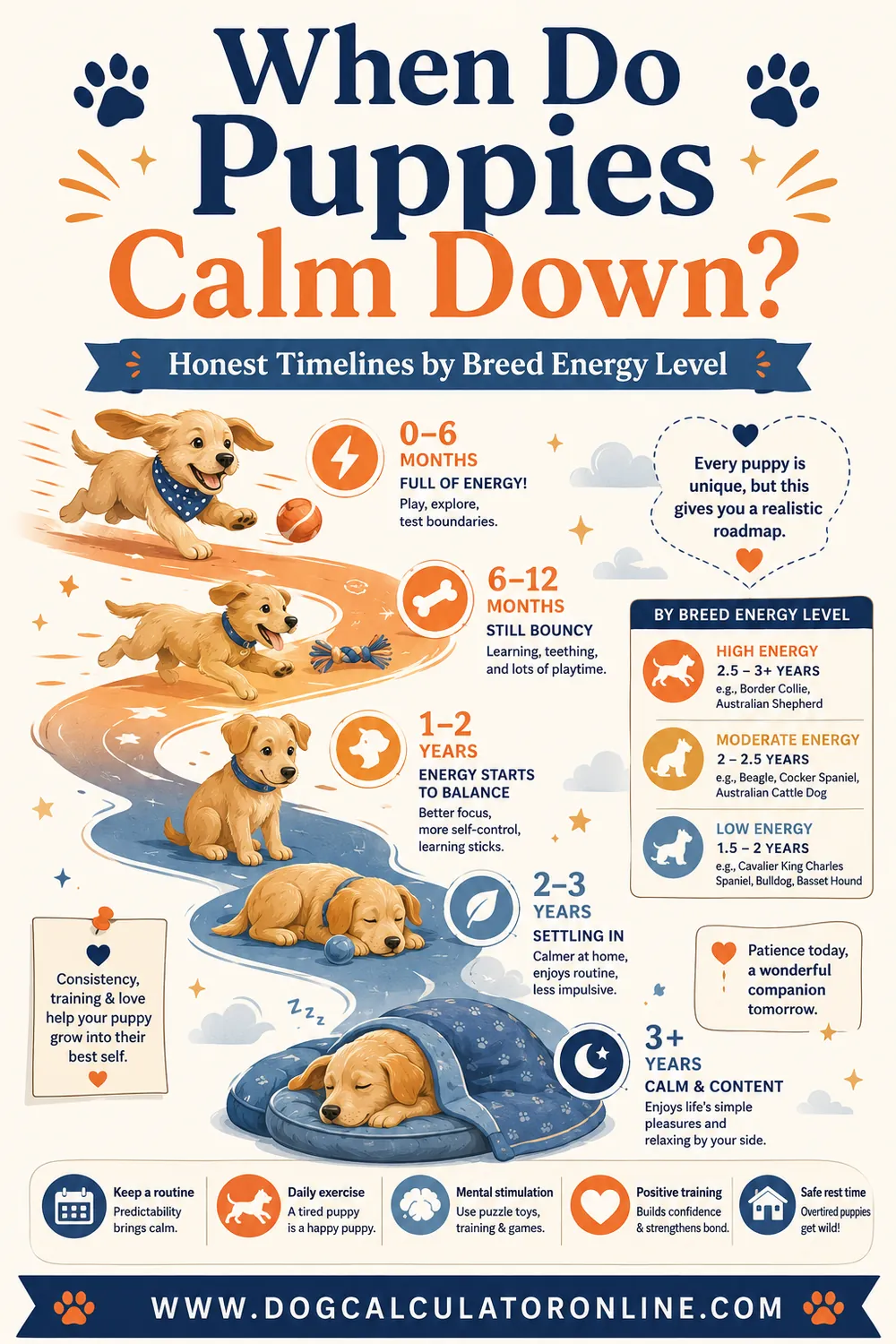
If your puppy is still biting hard at nine months or more, or the biting is getting worse rather than better, get a qualified trainer or behaviourist involved. Adolescence brings its own difficulties, set out in when do puppies calm down.
When Is Biting Not Normal?
Most puppy biting is play. A few situations are different and need proper guidance rather than the methods above.
Resource guarding — stiffening, growling, snapping over food, toys or a stolen item. Do not take things off a guarding puppy to "show them who's boss"; that confirms their fear and makes it worse. Trade for something better instead, and get advice early, because this responds very well to early intervention.
Fear-based biting — a puppy that bites when approached, cornered, picked up or handled, with a tense body and tucked tail. Different from play and needs a different approach.
Pain. A puppy that suddenly starts biting when touched in a particular spot may be hurting. Sudden behavior change always warrants a vet check first.
Genuine aggression, which is rare in young puppies: a stiff still body, hard stare, deep growl, and bites that break skin without the loose wiggly body language of play.
Poor bite inhibition — bites consistently hard enough to break skin at four or five months, with no sign of moderating. Common in puppies removed from the litter before eight weeks, and worth addressing with a professional.
And the everyday one that isn't a behavior problem at all: overtiredness. A puppy that's fine all day and becomes a whirling set of teeth every evening almost certainly needs more sleep, not more training. Young puppies need 18 to 20 hours a day and rarely get it — see puppy sleep schedule by age. Enforced naps solve more evening biting than any technique on this page.
Frequently Asked Questions
How do I stop my puppy biting me?
Redirect to a toy the moment teeth touch skin, and if that fails, end the game — stand up, fold your arms and disengage for 20 to 30 seconds. Do it every single time. Reward gentle mouthing and calm behavior, since puppies get almost no feedback for not biting.
At what age do puppies stop biting?
Mouthing peaks between 8 and 16 weeks and usually resolves by six to nine months with consistent handling. Expect worse days during teething. Biting that's still hard at nine months, or getting worse rather than better, warrants professional help.
Why does my puppy bite more in the evening?
Almost always overtiredness. Puppies need 18 to 20 hours of sleep a day and frequently don't get it, and an overtired puppy becomes frantic and mouthy. Try an enforced nap in a crate or pen rather than more activity.
Should I yelp when my puppy bites?
It works for some puppies and winds others up. A high-pitched squeal is exciting to many, which makes the biting worse. If two attempts make things worse, switch to silently disengaging instead.
Is puppy biting a sign of aggression?
Very rarely. Play biting comes with a loose, wiggly body and no real intent. Genuine warning signs are a stiff still body, hard stare, deep growl, and bites that break skin — and guarding food or toys is a separate issue that needs early professional guidance.
How do I stop my puppy biting my children?
Supervise actively, teach children to freeze and turn away rather than squeal and run, use baby gates generously, and give children a tug toy so the puppy has something appropriate to grab. Also make sure the puppy gets undisturbed rest.
The short version: puppy biting is a developmental stage, not a character flaw, and the fix is consistency rather than force. Redirect, disengage, reward the gentle moments — and check whether an overtired puppy simply needs to sleep. Keep an eye on how the rest of your puppy's development is going with the puppy weight calculator.