Puppy's First Vet Visit Checklist
Book the first appointment for within 48 to 72 hours of the puppy coming home, and take a fresh stool sample with you — most breeder contracts require the check inside 72 hours, and the stool sample is the single most useful thing you can carry through the door. This visit is not really about vaccinations. It is a physical examination looking for the things that are cheaper and easier to deal with early: heart murmurs, hernias, retained testicles, bite misalignment and intestinal parasites, which most puppies carry. It is also the appointment where you set the vaccination timetable that decides when your puppy can safely meet the world. Budget for the first year with the dog cost calculator before the appointment, so the numbers are not a surprise.

🐾 First vet visit: what to sort
Tap an item:
Tap an item above. The stool sample is the thing people forget most often.
When to Book the First Appointment
Sooner than most people realize, and for a specific reason.
Within 48 to 72 hours of the puppy arriving. Many breeder and rescue contracts include a health-check clause with exactly that window, and missing it can void a health guarantee.
Book it before the puppy comes home. Good practices are busy, and you want an appointment slot already in the diary rather than being fitted in a week later.
Even if the breeder has vaccinated. The point of this visit is the physical examination, and a second pair of eyes on a puppy you have just paid for is worth the consultation fee on its own.
Ask for a puppy appointment specifically. Many practices give these a longer slot, which matters when you have questions.
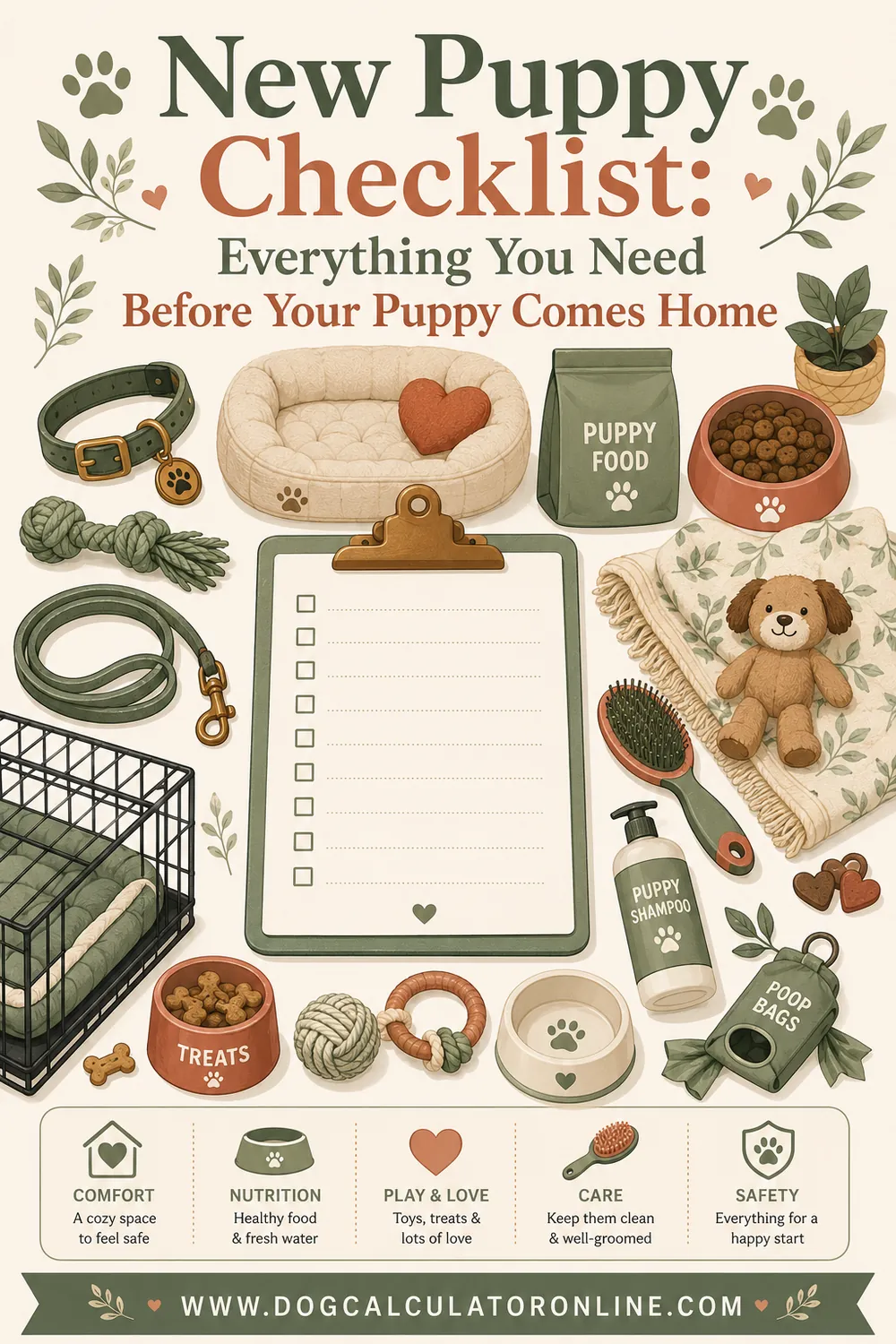
Go earlier if anything is wrong. Vomiting, bloody diarrhea, a puppy that will not get up, or refusal to eat for more than 24 hours are same-day calls, not wait-for-the-appointment problems. The rest of the week-one kit is in the new puppy checklist.
Phone ahead if the puppy is unwell, so the practice can keep it away from the waiting room. Parvovirus is highly contagious and this is standard practice.
What to Take With You
The list is short and half of it gets forgotten.
A fresh stool sample, collected that morning in a sealed bag or pot. Intestinal parasites are extremely common in puppies, and testing is only useful with a sample.
All the paperwork: registration documents, the vaccination card showing what the breeder gave and when, the microchip number, and any worming or flea treatment record with dates.
The food. Take a photo of the label or bring the bag. The vet will want to know brand, life stage and how much you are feeding.
A carrier or a towel. A small puppy in a carrier stays off the waiting-room floor, which is where sick dogs have been.
Treats and a chew. The first visit shapes how the puppy feels about vets for the next fifteen years.
A written list of questions. You will forget three of them otherwise.
Insurance details if you have arranged cover, since some policies want the initial examination logged.
What the Vet Will Actually Do
A first puppy examination is thorough and takes ten to fifteen minutes.
Weight, recorded as a baseline. Every future dose and growth assessment references it, and you can compare it against expected growth with the puppy weight calculator.
Temperature, normally 100°F to 102.5°F (37.8–39.2°C) in a puppy.
Heart and lungs. Listening for murmurs is one of the main purposes of the visit. Many puppy murmurs are innocent and disappear by four to five months, but they need identifying and re-checking.
Eyes, ears, nose and mouth, including whether the bite lines up and whether any baby teeth look likely to cause trouble.
Abdomen, feeling for umbilical and inguinal hernias, which are common and often minor but need noting.
In male puppies, whether both testicles have descended. Retained testicles carry a real cancer risk later and change the neutering conversation.
Joints and gait, especially in large breeds, and a general look at the skin and coat for fleas and mites.
Stool sample analysis for roundworms, hookworms, giardia and coccidia.
The Vaccination Schedule
Typical US timings. Your vet will adjust these based on what the breeder gave and on local disease risk.
| Age | Vaccination | Notes |
|---|---|---|
| 6–8 weeks | DHPP (1st) | Often given by the breeder |
| 10–12 weeks | DHPP (2nd) | Plus leptospirosis in many areas |
| 12–16 weeks | Rabies | Legally required in most US states |
| 14–16 weeks | DHPP (3rd/final) | Protection is complete 1–2 weeks later |
| 16+ weeks | Bordetella, Lyme | Lifestyle-dependent, ask your vet |
| 12–16 months | First boosters | Then per your vet's protocol |
DHPP covers distemper, hepatitis (adenovirus), parainfluenza and parvovirus — the core diseases, and the reason the schedule exists at all.
The final dose matters more than the first. Maternal antibodies interfere with early vaccinations, which is why the series is repeated. A puppy is not reliably protected until one to two weeks after the last dose.
Non-core vaccines depend on where you live and what your dog does. Leptospirosis is recommended in most of the US now; Lyme depends on tick pressure; bordetella is needed for daycare, boarding and classes.
Ask specifically when your puppy can walk on public ground. The answer shapes the socialization plan, and the trade-offs are covered in when can puppies go outside.
Mild lethargy or a sore spot for a day after vaccination is normal. Facial swelling, hives, vomiting or collapse within hours is a reaction and needs immediate veterinary attention.
Worming, Fleas and the Microchip
The routine preventive work that starts at this visit.
Puppies are wormed from about two weeks old, then every two weeks until twelve weeks, then monthly to six months. Many are born with roundworms transmitted from the mother, which is normal rather than a sign of a bad breeder.
Roundworms can infect people, particularly children, which is the reason the schedule is as aggressive as it is.
Flea and tick prevention starts at a weight and age your vet will specify. Never use a cat product on a dog or an adult-dog product on a puppy — permethrin toxicity is a genuine emergency.
Heartworm prevention is standard across most of the US and usually starts by eight weeks, before testing is meaningful. This is a lifelong monthly commitment in endemic areas.
Microchipping is either already done by the breeder or is done at this visit or the next. Check the number scans and, crucially, that the registration is transferred into your name — an unregistered chip is useless.
Ask about the neutering timetable rather than assuming six months. Current guidance varies considerably by breed and size, and there is real evidence that early neutering in large breeds affects joint development. The trade-offs are set out in best age to spay or neuter a dog.
What the First Visit Costs
US figures, and they vary widely by region.
| Item | Typical US cost |
|---|---|
| First consultation and examination | $50–100 |
| DHPP, per dose | $25–50 |
| Full puppy vaccine series | $75–200 |
| Rabies vaccination | $15–30 |
| Fecal parasite test | $25–50 |
| Deworming treatment | $15–30 |
| Microchip and registration | $25–60 |
| First-year veterinary total | $300–500 |
Many practices sell a puppy package bundling the vaccine series, worming and a few consultations. These are usually 20% to 30% cheaper than paying item by item, and worth asking about at the first visit.
Ask for a written estimate for the whole first-year plan. A good practice will produce one without hesitation.
Budget for the unplanned as well. Foreign-body surgery — a swallowed sock or toy — runs $2,000 to $5,000 and is one of the commonest puppy emergencies.
Decide about insurance now rather than later. Pre-existing conditions are excluded, so anything found at this first examination will not be covered if you insure afterwards.
The wider numbers are in first year puppy costs and average vet costs for a dog.
Questions Worth Asking
Take this list on your phone.
When can my puppy walk on public ground, given local disease risk? The most useful question in the appointment.
How much should I be feeding, and when do I change amounts? Bring the food label.
Is my puppy's weight where it should be for this breed and age?
What is the worming and flea schedule for the next six months?
When should this breed be neutered, and why that age?
What signs would mean I should call you rather than wait? Get a specific answer — most vets will list vomiting, bloody diarrhea, lethargy, difficulty breathing and repeated straining.
What are your out-of-hours arrangements, and what is the number? Save it in your phone before you leave the parking lot.
Which non-core vaccines do you recommend here, and why?
Making the Visit a Good Experience
The behavioral side matters as much as the medical side, and it is easy to get right.
Skip the meal before the appointment so treats are interesting, unless the puppy is very small and prone to low blood sugar.
Keep the puppy off the waiting-room floor. Carrier, lap or towel.
Let the staff feed treats before anything is done. Many practices are happy to do this, and it changes how the puppy feels about the table.
Do not comfort frantically. A high-pitched reassuring voice tells a puppy that something is worth worrying about. Calm and matter-of-fact works better.
Book a "happy visit" — a two-minute walk in, treat on the scales, walk out, no examination. Most practices welcome these and they are free. Two or three of them prevent a lifetime of dread.
Practice handling at home in ten-second doses: paws, ears, gums, tail. This is what makes future examinations easy.
Never use the vet as a threat or a punishment, and try not to let the only trips be unpleasant ones.
FAQ
How soon should a new puppy see a vet?
Within 48 to 72 hours of coming home. Many breeder contracts require it inside that window, and the examination catches heart murmurs, hernias, retained testicles and parasites early. Book the appointment before the puppy arrives, since puppy slots fill quickly.
What should I bring to my puppy's first vet appointment?
A fresh stool sample, the breeder's paperwork and vaccination card, the microchip number, the food label or bag, a carrier or towel, treats, and a written list of questions. The stool sample is the item people forget most often and the one the vet most wants.
What vaccinations does a puppy need?
The core DHPP series at roughly 6–8, 10–12 and 14–16 weeks, plus rabies at 12–16 weeks, which is legally required in most US states. Leptospirosis, bordetella and Lyme are lifestyle and location dependent, so ask your vet what applies where you live.
How much does a puppy's first vet visit cost?
Usually $50 to $100 for the consultation, with vaccinations at $25 to $50 a dose, a fecal test at $25 to $50, and a microchip at $25 to $60. Practice puppy packages typically save 20% to 30% over paying for each item separately.
Is it normal for a puppy to have worms?
Yes. Most puppies are born with roundworms passed from the mother, which is why worming starts at about two weeks and repeats every two weeks to twelve weeks. It is not a sign of neglect, but it does need treating on schedule because roundworms can infect people.
When can my puppy go outside after vaccinations?
Usually one to two weeks after the final dose, which lands somewhere between 14 and 18 weeks. Ask your own vet, because local parvovirus pressure varies a lot, and discuss carrying the puppy out in the meantime so the socialization window is not wasted.
Getting the First Appointment Right
Book inside 72 hours, take a fresh stool sample and the breeder's paperwork, and treat the visit as an examination rather than a vaccination errand — the murmurs, hernias, retained testicles and parasites found at this stage are the cheapest they will ever be to deal with. Get the vaccination dates written down, ask specifically when your puppy can walk on public ground, and settle the worming, flea and heartworm schedule for the next six months. Ask about a puppy package and a written first-year estimate, and sort insurance before anything becomes a pre-existing condition. Then book a couple of free happy visits, so the vet's table stays a place with treats on it. Run the numbers first with the dog cost calculator.