Is Pet Insurance Worth It for an Older Dog? An Honest Assessment
For an older dog, pet insurance is a much closer call than for a puppy: senior premiums often run $90–$150+ per month, everything already in your dog's medical chart is excluded as pre-existing, and some insurers won't start new comprehensive policies past a certain age at all. Insurance can still make sense — seniors face the biggest bills of a dog's life — but only if what's left to cover justifies what you'll pay. This guide runs that assessment honestly, with no carrier pitches. To see where a senior premium fits among all your dog's costs, try the free dog cost calculator.

First, Split the Question in Two
"Older dog" hides two completely different situations:
- Your senior is already insured (enrolled years ago). Then the question isn't whether to buy — it's whether to keep the policy as premiums climb. Usually: yes, emphatically. Conditions that developed while insured are covered for life only while the policy stays active. Canceling a long-held policy on a 10-year-old dog throws away exactly the coverage you spent a decade's premiums building.
- Your senior is uninsured, and you're considering a new policy. This is the hard case, and the rest of this guide is about it.
What Changes When You Insure a Dog at 8, 10, or 12
Premiums are steep and still climbing
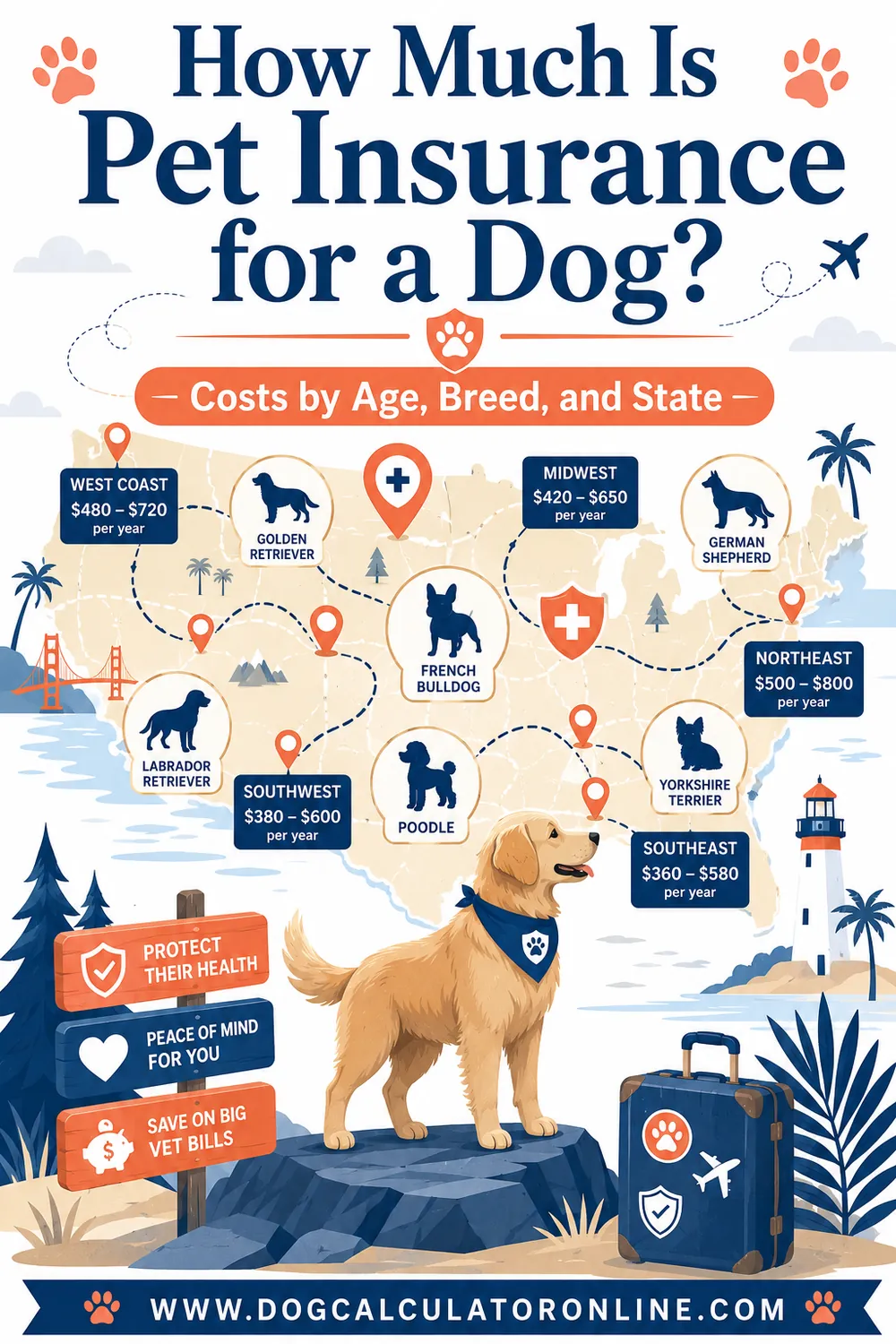
Age is the strongest pricing factor in pet insurance. Where a typical adult dog runs $40–$70/month for accident-and-illness coverage, senior quotes commonly land at $90–$150+ — more for large or high-risk breeds in expensive areas — and continue rising at every renewal. Over a senior dog's remaining years, premiums alone can total $5,000–$12,000. That's the number the coverage has to beat. (Breed and location effects are covered in our guide to what dog insurance costs.)
The pre-existing exclusion bites hardest now
By age eight, most dogs have a chart: the arthritis note, the lump that was aspirated, the dental disease, the murmur "to monitor." Every one of those — and anything an insurer links to them — is excluded on a new policy. What you're really buying is coverage for conditions not yet on record, and each vet visit before enrollment can shrink that set. The mechanics, including curable-condition comebacks and bilateral clauses, are in our pre-existing conditions guide.
Age limits and enrollment screens
Some US insurers cap new accident-and-illness enrollment around age 10–14 (a few have no cap). Others require recent vet records or an exam before issuing senior policies. Accident-only plans, by contrast, usually accept dogs at any age — a meaningful fallback we'll come to.
The Honest Math for a New Senior Policy
Consider a healthy-on-paper 9-year-old Lab mix quoted $110/month ($1,320/year) with a $500 deductible, 80% reimbursement:
- Scenario A — quiet year: $1,320 spent, $0 back. This will be some years, maybe several.
- Scenario B — moderate year ($2,500 in new-condition bills): reimbursement = ($2,500 − $500) × 80% = $1,600. Slightly ahead — if the condition is genuinely new.
- Scenario C — cancer year ($8,000): reimbursement = $6,000. This is the scenario that justifies the whole arrangement.
The swing factor is exclusions. If the eventual big diagnosis traces back to anything pre-enrollment — the old limp becomes the orthopedic claim, the monitored lump becomes the mass removal — reimbursement is $0 and every premium dollar was spent on coverage that couldn't apply. The younger and cleaner the chart, the better the odds; the thicker the chart, the more the deck tilts against a new policy.
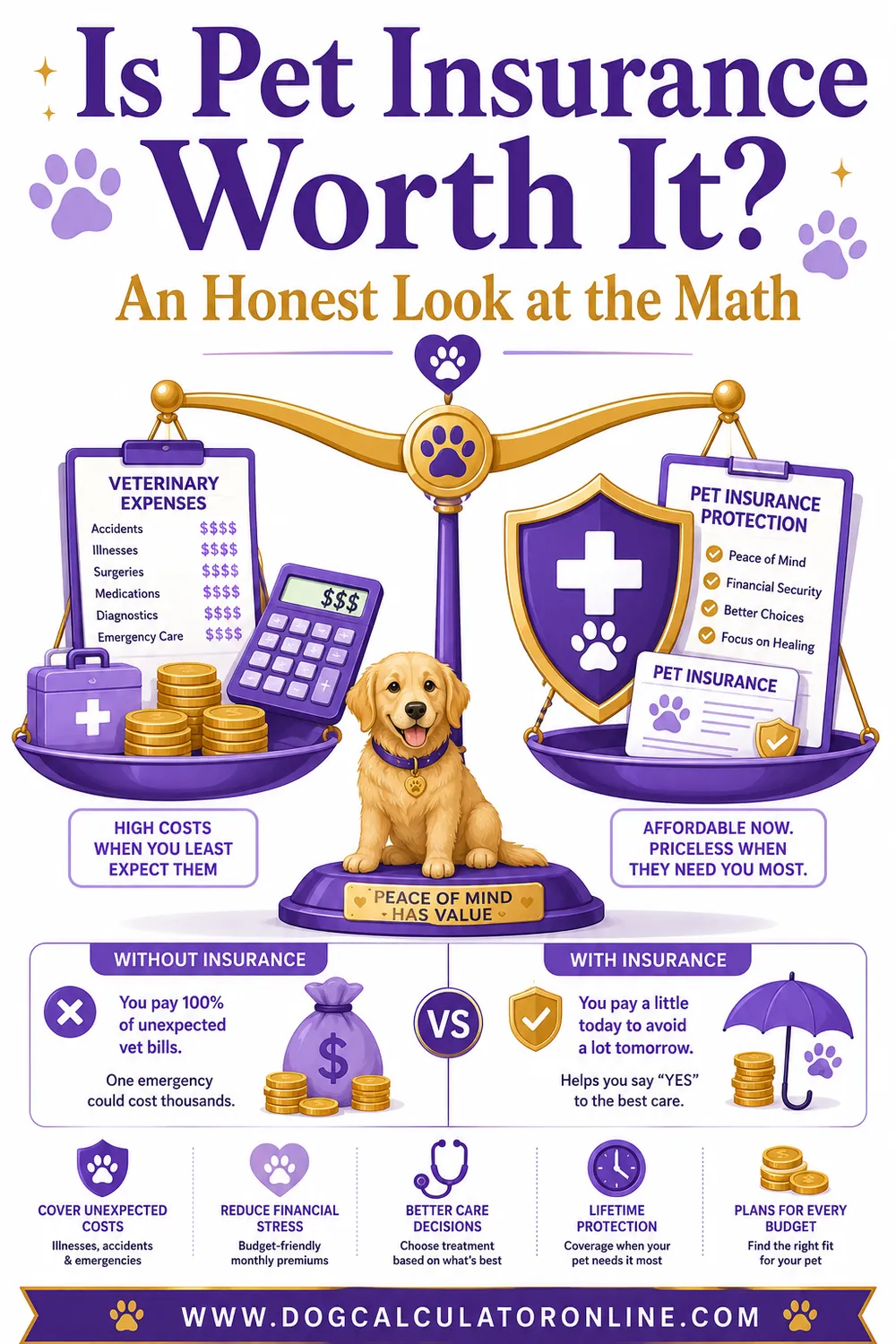
Compare that with the alternative: $110/month auto-transferred into a dedicated savings account is $1,320/year, kept in quiet years. For a senior with substantial existing exclusions, savings frequently protects better than premiums — the money works against any bill, excluded conditions included. This is the same fork as the general worth-it decision, but with the odds shifted by age.
When a New Senior Policy Still Makes Sense
- The chart is genuinely thin. Some 8- and 9-year-olds have little more than vaccine records. With few exclusions, senior coverage functions close to normally, and seniors have the highest odds of the huge claims insurance exists for.
- A $5,000–$10,000 bill would be unpayable. If the realistic alternative to insurance is being unable to say yes to treatment, imperfect coverage beats none. Financial peace has real value in the years when scary diagnoses cluster.
- You can't be trusted to fund the savings account. Behavioral honesty counts. A premium that gets paid beats a transfer that gets skipped.
- You choose it with open eyes about exclusions, rising renewals, and possibly a records review — not from the emergency-room parking lot, where waiting periods make same-week coverage impossible anyway.
When Savings (or Accident-Only) Wins
- Multiple chronic conditions already diagnosed. If arthritis, allergies, and a heart murmur are excluded, the premium buys coverage for a shrinking remainder. Redirect it to savings.
- You hold a real emergency fund. With $5,000+ accessible and replenishable, self-insuring a senior is rational: you keep the surplus in quiet years and cover excluded conditions too.
- The middle path: accident-only. At roughly $15–$25/month with no upper age limits at most insurers, accident-only coverage handles the swallowed corn cob or the bad fall while you self-fund illness care. For seniors locked out of illness coverage — by age caps or by economics — it's the practical compromise. The full trade-off is mapped in accident-only vs comprehensive.
A useful frame: insurance protects against unknown future risks. The more of your dog's health story is already written, the less unknown remains — and the more your money should shift from premiums toward a fund that covers the known.
If You Keep or Buy Senior Coverage: Practical Tips
- Never let an existing policy lapse by accident. Autopay, calendar reminders, updated cards. A lapse converts a decade of covered history into pre-existing conditions overnight.
- Manage renewal increases with the deductible, not cancellation. Raising the deductible or dropping 90% to 80% reimbursement keeps catastrophic protection while trimming the premium.
- Enroll before the next vet visit, not after — if the chart is clean. Every documented symptom shrinks coverable territory. (Never hide symptoms; just don't dawdle once you've decided.)
- Ask insurers about age-related requirements up front: enrollment caps, required exams, orthopedic waivers, and how they classify the gray areas already in your dog's records.
- Budget the whole senior picture. Senior dogs cost more across the board — food, dental care, more frequent checkups. See the full annual number with the free dog cost calculator, and check where your dog sits on the aging curve with the dog age calculator.
What Senior Renewal Letters Actually Look Like
If you keep (or start) senior coverage, plan for the increases rather than being ambushed by them. A realistic renewal trajectory for a dog insured continuously since young adulthood:
| Age at renewal | Typical monthly premium | Notes |
|---|---|---|
| 7 | $70–$90 | The ramp begins |
| 9 | $90–$120 | Increases of 10–20% per year are common now |
| 11 | $115–$150 | Deductible adjustments become the main affordability lever |
| 13 | $140–$190+ | Premiums peak alongside claim likelihood |
The instinct at each jump is to shop around — and for a senior with any medical history, that instinct is usually wrong, because a new policy excludes everything the old one covers. The productive responses, in order: raise the deductible, drop 90% to 80% reimbursement, confirm you're getting any multi-pet or annual-pay discounts, and only then consider whether the policy still beats redirecting the premium to savings. Cancellation is a one-way door once conditions exist; treat it as the last resort, decided calmly with the numbers in front of you rather than in irritation at a renewal email.
It also helps to pre-commit: decide now, in writing, what monthly premium would genuinely be too much — and what you'd do instead (savings amount, accident-only fallback, payment-plan backstop). Owners who set that threshold in advance make calm, consistent choices at renewal time; owners who don't tend to lurch between overpaying resentfully and canceling rashly.
Beyond Insurance vs Savings: The Other Tools
For seniors, the realistic toolkit is wider than the binary. Worth knowing about, all carrier-neutral:
- Veterinary payment plans and medical credit lines. Many clinics offer installment plans or accept healthcare credit products with promotional interest periods. They don't reduce the bill, but they solve the timing problem that makes emergencies frightening — useful backup whether or not you're insured.
- Clinic wellness memberships. Some practices sell in-house plans bundling senior exams, bloodwork, and dental discounts for a monthly fee. These aren't insurance (no catastrophic cover), but for seniors with heavy routine needs they can beat paying à la carte — do the arithmetic against your last year of invoices.
- Veterinary school and nonprofit clinics. Teaching hospitals and subsidized clinics can price major procedures meaningfully below private specialty hospitals — worth a call when facing a five-figure estimate.
- The estimate conversation. At any age, but especially for seniors, asking your vet "what does the middle path look like?" often surfaces legitimate staged or conservative treatment options with very different price tags. Vets expect the question; ask it before the crisis.
None of these replace the core decision, but they change its edges: a senior owner with a payment-plan-friendly clinic, a wellness membership, and a partly-funded emergency account is far less exposed than the raw insured-or-not framing suggests.
FAQ
Is it too late to get pet insurance for a 10-year-old dog?
Often not — several insurers enroll dogs at 10 and beyond, though some cap new illness coverage around this age. Expect higher premiums, a records review, and exclusion of everything already in the chart. Accident-only coverage typically remains available regardless of age.
How much is pet insurance for a senior dog?
Commonly $90–$150+ per month for accident-and-illness coverage, versus $40–$70 for a typical adult — with wide variation by breed, location, and plan settings, and continued increases at each renewal.
Should I cancel my older dog's existing pet insurance because premiums went up?
Usually no. Conditions that developed while insured stay covered only while the policy remains active — and senior years are when claims peak. Trim costs by raising the deductible or lowering the reimbursement rate instead of canceling.
Do insurers cover arthritis or lumps my older dog already has?
No. Conditions diagnosed or symptomatic before a new policy starts are pre-existing and excluded, and related future claims may be too. New, unrelated conditions remain coverable.
Is accident-only insurance a good option for seniors?
It's the common fallback: cheap (roughly $15–$25/month), typically no age limits, and it covers injuries — while you self-fund illness care. It's a deliberate compromise, not full protection.
Is a savings account better than insurance for an old dog?
If your dog already has several excluded conditions or you hold a solid emergency fund, often yes — savings pay for anything, exclusions included, and you keep the surplus. If a five-figure bill would be impossible and the chart is thin, insurance still earns its place.
The Bottom Line
For seniors, insurance worth-it math hinges on one variable: how much of your dog's health story is already in the chart. Already insured? Keep the policy alive at almost any reasonable cost. Uninsured with a thin chart and thin savings? A senior policy — or at least accident-only — can still be rational. Uninsured with a thick chart? Redirect the premium into a dedicated fund. Whatever you choose, choose it with full numbers on the table — the free dog cost calculator builds your senior dog's complete annual budget in about a minute.