Dog Sleeping Positions and What They Mean
Most guides to this topic read like a horoscope. The truthful version is narrower and more useful: a dog's sleeping position tells you a great deal about temperature and joint comfort, a little about how safe he feels, and almost nothing about his personality. The belly-up pose in particular is sold as proof of total trust when it is mainly a dog dumping heat through a thinly furred abdomen. Where positions genuinely earn attention is when they change — a dog who stops lying flat, or who suddenly curls tighter every night, is telling you something worth acting on. Our dog age calculator helps you judge whether a change fits your dog's stage of life.
🐾 How does your dog sleep?
Tap the position you see most often:
Tap an option above. Position is mostly about temperature and joints, not mood.
What Sleeping Positions Can and Cannot Tell You
Before the individual poses, it is worth knowing which questions this evidence can answer.
Position is a good thermometer. Curling reduces exposed surface area and conserves heat; sprawling and exposing the belly loses it. A dog who has switched from a ball to a sprawl has usually experienced a change in room temperature, not a change of heart.
Position is a good joint report. Lying fully flat requires the hips and shoulders to be comfortable in extension. Dogs with hip dysplasia, arthritic elbows or back pain adopt narrower, more supported positions, and they change position more often through the night.
Position is a weak mood reading. There is no research base connecting particular sleeping poses to temperament, and the confident personality readings you will find elsewhere are invented. A dog who curls up is not more anxious than one who sprawls; he may just be a Whippet in a cold room.
Position is only meaningful in context. The same pose means different things on a hot July afternoon and in a strange kennel. Surface matters too — few dogs sprawl on tile, and most will sprawl on a thick rug.
The change is the signal, not the pose. This is the single most useful sentence on the page. Whatever your dog does normally, a sustained departure from it is worth a look.
The Positions, Decoded
Here is the whole set in one place, with the reading that is actually supportable.
| Position | What it looks like | Most likely meaning |
|---|---|---|
| Side sleeper | Flat on one side, legs extended | Deep sleep, comfortable joints, warm enough |
| Donut / curl | Tight ball, nose to tail, tucked limbs | Conserving heat; also common on unfamiliar ground |
| Belly up | On the back, legs in the air | Cooling down; secondarily, relaxed and unbothered |
| Sploot / superman | Chest down, back legs stretched behind | Flexible hips and a cool floor; common in puppies |
| Lion pose / sphinx | Chest down, head on paws, front legs forward | Dozing rather than sleeping; ready to get up |
| Back to back | Spine against you or another dog | Social contact with a clear line of sight |
| Burrower | Under blankets, cushions, laundry | Denning instinct, strongest in terriers and dachshunds |
| Head elevated | Head propped on a rim, cushion or step | Sometimes comfort; if new, ask about breathing |
The first four are all normal in a healthy dog and rotate through a single night. Dogs are polyphasic sleepers and change position frequently; sampling one moment tells you very little.
Only two rows on that table should ever prompt a phone call. A dog who will not lie flat, and a dog whose settled pattern has changed markedly over days or weeks.
The Side Sleeper
If you want one position to be pleased about, this is it.
Full lateral recumbency is where the deepest sleep happens. Muscles relax, the limbs extend, and this is the position in which you will see paddling paws and muffled woofs — the twitching that accompanies REM sleep.
It requires the dog to feel unbothered. Getting up from flat on your side takes longer than getting up from a crouch, so dogs adopt it where they are not expecting to need to move quickly. A dog who sleeps flat out in a busy hallway is a comfortable dog.
It also requires comfortable joints. This is why side sleeping often declines with age, and its disappearance in an older dog is a reasonable prompt to ask about arthritis rather than to assume a preference has changed.
Twitching in this position is normal and healthy. Do not wake a twitching dog. Dreaming dogs woken abruptly can snap reflexively, and there is nothing to rescue them from.
The Curled-Up Donut
The most common position worldwide, and the most over-interpreted after belly-up.
Curling is primarily thermal. A ball has the smallest surface-to-volume ratio a dog can achieve, and the tail over the nose warms inhaled air. Expect more curling in winter, in draughty rooms, and in thin-coated and small breeds that lose heat fast.
It is also the default on unfamiliar ground. Kennels, hotel rooms, the first two weeks in a new home. It protects the vital organs and allows a fast rise. That is not the same as saying a curled dog is anxious in his own house.
Bed design pushes dogs toward it more than owners realize. A bolstered bed that is slightly too small forces a curl whatever the dog would prefer. If you want to know your dog's actual preference, offer a flat mat alongside the bed and see which he picks — and check the sizing against a proper dog bed size guide rather than eyeballing it.
A dog who used to sprawl and now always curls is worth watching. In a cold snap, that is heating. In a warm house, it may be pain, and it is one of the earlier changes owners notice in dogs developing back or hip problems.
Belly Up: The Most Over-Interpreted Position
This is the pose that launched a thousand captions, and the popular reading is only a third right.
The abdomen is the least insulated part of a dog. Thin fur, close blood supply, and paws pointing upwards where the only sweat glands are. Exposing it is the most efficient cooling posture available to a dog without panting, which is why it appears on hot days and near radiators.
It does also signal that the dog is unbothered. A vulnerable position is not adopted by a worried dog, so the trust element is real. But it is a floor, not a ceiling — a dog who never lies belly-up is not withholding trust, he may simply be cold or old.
Some dogs cannot do it comfortably. Deep-chested breeds and dogs with spinal or hip issues often find it awkward. Barrel-chested, flexible dogs do it constantly. That is conformation, not character.
Do not read it as an invitation to a belly rub, automatically. Rolling over during interaction with a person is a different behavior from sleeping belly-up, and in an alert dog it can be appeasement. A sleeping dog on his back is comfortable; an awake dog rolling as you approach may be asking you to back off.
The Sploot, the Superman and the Burrower
Three positions that get asked about constantly and mean less than people hope.
The sploot is a hip flexibility trait with a cooling bonus. Back legs stretched straight behind, belly on the floor. Corgis, Frenchies and puppies do it most. Pressing the abdomen and inner thighs to a cool floor sheds heat efficiently, which is why it appears on tile in summer.
One caveat on splooting: it should be symmetrical and effortless. A dog who splots on one side only, or who has recently started, may be avoiding weight on a sore limb. Symmetrical splooting in a young flexible dog is nothing.
Superman — chest down, all four legs extended — is a puppy specialty. It allows an instant launch back into activity, which is exactly what a puppy wants between naps. It usually fades in adulthood.
Burrowing under blankets is a denning instinct, and some breeds have it strongly. Dachshunds, terriers and many small breeds will tunnel into anything available. It is not a sign of insecurity. Give a burrower a blanket he is allowed to use, and check he can get out easily — the same ventilation logic that applies to covering a crate applies to bedding.
Where Your Dog Sleeps Matters More Than How
Location carries more information than posture, and it is easier to read.
Sleeping touching you is social contact, not dependence. Dogs are contact sleepers by default; free-ranging dogs pile up. A dog who sleeps against your leg is doing the ordinary thing, and it is a version of the same impulse behind following you from room to room.
Back-to-back contact is the interesting variant. It gives the dog physical reassurance while keeping his eyes on the room, and it is very common in dogs who like company but prefer to keep watch.
Sleeping in doorways is about traffic, not guarding. Doorways are where the air moves and where everyone passes. Dogs who lie in them are usually keeping tabs on movement, and it is worth redirecting simply because people trip over them.
A dog who has started sleeping away from the family is worth noticing. Withdrawal is one of the more reliable soft signs of pain or illness in dogs, particularly in older ones, and it deserves more attention than any change of pose.
Crate sleepers usually pick a corner. That is normal. If your dog cannot stretch out at all in his crate, the crate is too small — our crate size calculator sizes it properly in a few seconds.
Position Changes That Are Worth a Vet Visit
This is the part of the topic that has real clinical weight.
A dog who will not lie flat, or who props his head and chest up to sleep, needs a chest examination. Dogs with fluid on the chest or heart failure find lying flat uncomfortable because it worsens breathing, so they sleep propped, sit up to breathe, or stand with the elbows out. That is an urgent sign, particularly alongside heavier breathing or panting at rest.
Restlessness through the night is a pain signal. A dog who circles repeatedly, changes position every few minutes, or gets up and lies down again is often uncomfortable. Owners tend to report this as "unsettled" rather than as pain, and it is one of the more useful things to mention to a vet.
A newly rigid, hunched or "praying" posture is an emergency. Front end down, hindquarters up, held while awake, points to abdominal pain, and abdominal pain in a dog is never a wait-and-see.
Sleeping much more overall matters more than sleeping differently. If the total has climbed as well as the shape, read why dogs sleep so much for the medical differentials, because that combination has a longer list behind it.
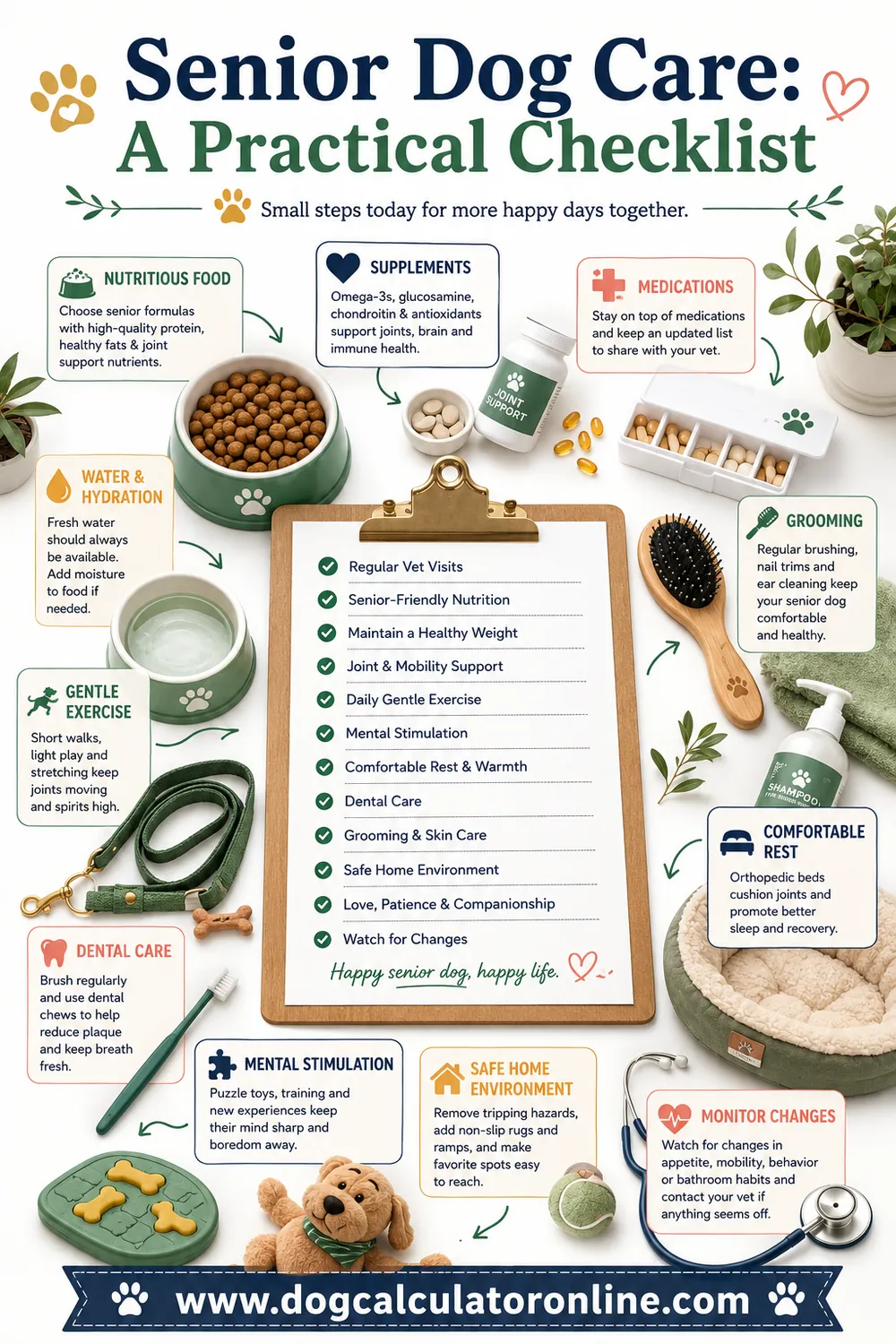
Older dogs deserve a lower threshold. Position changes in a senior are more likely to reflect arthritis, cognitive change or cardiac disease than preference, and the practical adjustments in our senior dog care guide — orthopedic bedding, non-slip flooring, a bed at floor level — address most of them.
FAQ
Does sleeping on his back mean my dog trusts me?
Partly, but it mostly means he is warm. The belly is the least insulated part of a dog, so exposing it is an efficient way to cool down. Trust is a prerequisite rather than the message, and a dog who never does it is not less bonded.
Why does my dog sleep pressed against me?
Contact sleeping is the canine default; free-ranging dogs sleep in heaps. Your dog is warm, socially satisfied and using you as a fixed point. It is not a sign of dependence unless he also cannot cope when left alone, which is a separate question.
Is it bad if my dog twitches and paddles in his sleep?
No, it is a normal feature of REM sleep and appears most in dogs sleeping flat on their side. Do not wake a twitching dog. Prolonged rigid paddling with drooling or loss of awareness is different and should be filmed and shown to your vet.
Why has my dog stopped sleeping stretched out?
Lying fully flat requires comfortable hips, shoulders and spine, so its disappearance often reflects joint pain rather than preference. Cold rooms cause it too. If the house is warm and the change has stuck for more than a couple of weeks, ask for a mobility check.
Do dogs sleep in different positions as they get older?
Yes, and usually toward more supported, tightly tucked postures as joints stiffen. Seniors also change position more often overnight and may start seeking softer or lower surfaces. Orthopedic bedding and non-slip flooring help more than most owners expect.
Should I be worried if my dog sleeps sitting up?
Yes. A dog who props himself up, sits to sleep, or stands with elbows out and neck extended may be struggling to breathe lying down. That pattern is associated with fluid in the chest and heart disease, and it warrants a same-day veterinary appointment.
Read the Change, Not the Pose
Sleeping positions are a genuinely useful window, provided you ask them the right question. They will tell you reliably whether your dog is too hot or too cold, whether his joints are comfortable in extension, and whether he feels able to switch off in that room. They will not tell you what sort of dog he is, and any chart claiming that a curled dog is anxious or a sprawled dog is confident is filling space. Learn your dog's baseline over two weeks, then pay attention to departures from it — especially refusing to lie flat, restlessness overnight, or sleeping away from the family. Our dog age calculator gives useful context, because what counts as a normal change at ten is not normal at three.